







2025 Internet News

Article Image

Justice Department launches largest-ever compensation effort for Backpage trafficking victims

  • Over $200 million in forfeited assets will be distributed to sex trafficking victims exploited through Backpage.com between 2004 and 2018.

  • The DOJ calls this the largest victim compensation effort of its kind, targeting illicit profits from one of the internet’s most notorious sex trafficking platforms.

  • Victims have until Feb. 2, 2026, to file petitions for financial compensation through a dedicated website and hotline.


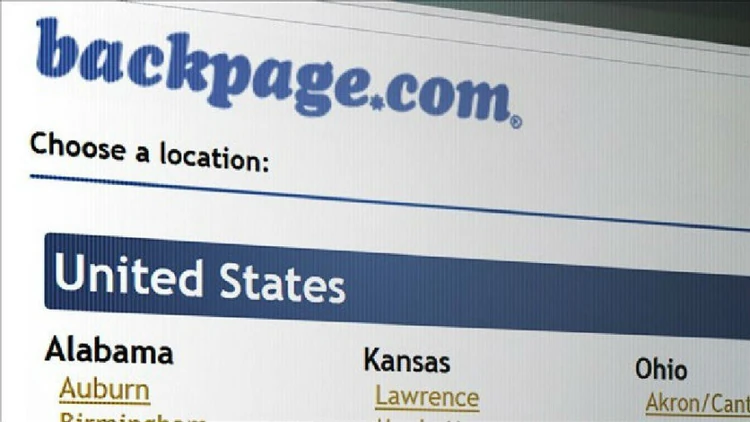
The U.S. Department of Justice (DOJ) announced today the launch of a historic victim compensation initiative, aimed at distributing more than $200 million in forfeited assets to those whose sex trafficking was facilitated through the now-defunct website Backpage.com. This marks the largest victim remission process ever undertaken in a human trafficking case.

“Backpage.com facilitated the exploitation of women and children as one of the largest online advertisers for commercial sex and sex trafficking over its 14-year existence,” said Acting Assistant Attorney General Matthew R. Galeotti of the DOJ’s Criminal Division. “Today’s announcement underscores the Department’s unwavering commitment to use forfeiture to take the profit out of crime and to compensate victims.”

A long-awaited victory

Between January 1, 2004, and April 6, 2018, Backpage.com operated as a hub for commercial sex advertising, becoming a primary conduit for sex trafficking operations—including the trafficking of minors. After the website was seized by the U.S. government in 2018, years of criminal prosecutions followed. Executives and affiliated businesses were convicted of conspiracy to facilitate unlawful commercial sex, money laundering, and other federal offenses. They are now serving federal prison sentences.

In December 2024, the DOJ secured the forfeiture of over $200 million in assets linked to Backpage's illicit profits. Those funds are now being deployed to support eligible victims, as part of the department’s broader mission to return criminal proceeds to those harmed.

Petition process now open

Victims may now begin filing petitions to claim compensation for financial losses incurred as a result of their trafficking. Individuals, their legal representatives, or estates of deceased victims are eligible if the trafficking was facilitated through Backpage.com within the 2004–2018 timeframe.

The DOJ has appointed Epiq Global Inc. as the Remission Administrator. Victims can access the petition form and additional information at www.backpageremission.com or contact Epiq directly by phone (1-888-859-9206 toll-free or 1-971-316-5053 for international callers), email, or mail. The final deadline to submit a claim is February 2, 2026.

The investigation and forfeiture process was a joint effort among the U.S. Postal Inspection Service, the FBI, and IRS Criminal Investigation. Federal agents followed financial trails, tracked down illicit transactions, and coordinated the seizure of assets.

“Sex trafficking is one of the most horrific crimes we confront as a society,” said IRS-CI Chief Guy Ficco. “The money always leaves a trail—and that’s where we come in.”

The DOJ emphasized that no payment is required to participate in the compensation process and urged victims to rely only on the official website and channels for information.

Delivering justice beyond prosecution

This landmark remission effort reflects the DOJ’s increasing emphasis on compensating victims—not just punishing perpetrators. Since 2000, its Money Laundering and Asset Recovery Section (MLARS) has returned more than $12 billion in forfeited funds to crime victims.

“Today’s announcement shows the FBI’s commitment to ensuring that those who profit from human trafficking face the consequences of their actions,” said FBI Assistant Director Jose A. Perez. “We will continue to work alongside partners to thwart this industry by decimating its capacity for monetary gain while seeking safeguards for its victims.”


For More Information:
Visit: www.backpageremission.com
Call: 1-888-859-9206 (toll-free) or 1-971-316-5053 (international)
Deadline to file: February 2, 2026.


Article Image

Consumer groups launch 'People's AI Action Plan' to counter free-for-all development

  • More than 90 labor, civil rights, environmental, and consumer groups rally to demand people-first AI policy

  • Coalition says Trump’s executive order is a “billion-dollar giveaway to Big Tech” that threatens workers, public safety, and democracy

  • The People’s AI Action Plan aims to put everyday Americans—not tech billionaires—at the center of AI governance


A coalition of more than 90 organizations from across the labor, consumer rights, environmental justice, and civil society sectors unveiled the People’s AI Action Plan today, calling it a direct counter to the Trump administration’s forthcoming artificial intelligence executive order, which critics say is being driven by Big Tech interests.

The new People’s AI Action Plan is being launched just days before the White House is expected to release its industry-backed AI agenda on July 23. Advocates warn that the administration’s plan prioritizes Silicon Valley profits over public safety, workers’ rights, and democratic accountability.

“The White House AI Action Plan is written by Big Tech interests invested in advancing AI that’s used on us, not by us,” said Sarah Myers West and Amba Kak, co-directors of the AI Now Institute. “It’s time for a People’s Action Plan that puts the needs of everyday Americans over corporate profits.”

A warning against deregulated AI expansion

The coalition denounced what it described as the Trump administration’s ongoing efforts to deregulate the AI industry and shield tech companies from accountability. These concerns have intensified in the wake of a failed congressional proposal that would have given tech companies 10 years of immunity from state-level AI laws—an idea defeated after a 99-1 public-driven backlash.

“Trump’s latest AI directive is a billion-dollar giveaway to Big Tech that puts corporate profits ahead of public safety,” said J.B. Branch of Public Citizen. “Instead of enforcing guardrails, this administration is gutting oversight.”

Nurses, too, expressed alarm about the increasing use of untested AI tools in healthcare settings.

“We support AI when it improves care—not when it turns patients into guinea pigs to boost profits,” said Cathy Kennedy, RN and president of National Nurses United.

What the People’s AI Action Plan demands

The plan outlines a vision for AI that supports:

  • Good jobs and worker protections

  • Accountability and transparency in AI use

  • Clean, safe, and equitable energy and infrastructure

  • Strong public institutions and community input

  • Fair competition and relief from tech monopolies

The coalition asserts that AI governance must be democratic, inclusive, and focused on public well-being. That includes limiting AI deployment in coercive settings like immigration enforcement, schools, and workplaces—especially where civil rights violations have already occurred.

Article Image

FCC axes Net Neutrality rules, which weren't in effect anyway

  • FCC removes Net Neutrality rules from its books, even though they were not in effect.
  • A federal appeals court, in a suit brought by telecom companies, had held the rules were improper.
  • The argument has gone back and forth since the Obama administration.

Net Neutrality is not a topic that brings crowds of demonstrators surging into the streets but it has important implications in a world that is driven largely by online communications.

The Obama administration's Federal Communications Commission (FCC) constructed a framework of rules and regulations intended to ensure that everyone had equal access to broadband. That made telecommunications companies responsible for providing service on just, reasonable and nondiscriminatory terms to users across the nation.

Those rules were repealed during Donald Trump's first term in office earlier this year and reinstated during President Biden's term. But earlier this year, a U.S. Court of Appeals ruled — in a suit brought by major telecom companies — that the rules had been wrongfully adopted and that broadband providers cannot be treated as utilities.

Telecoms aren't utilities?

The court determined that broadband is an "information service" not a "telecommunications service," meaning the FCC lacks the authority to impose net neutrality regulations under the Communications Act. 

Today, the Federal Communications Commission issued an order announcing its decision to remove the agency’s Net Neutrality rules. The agency neglected to provide advance notice or give the public an opportunity to comment. 

The consumer group Free Press called the FCC's action "little more than political grandstanding." 


"It’s true that the rules in question were first stayed by the 6th Circuit and then struck down by that appellate court — in a poorly reasoned opinion. So today’s bookkeeping maneuver changes very little in reality," said Matt Wood, the group's vice president of policy and general counsel.

Rules protecting Net Neutrality have broad bipartisan public support; the issue generated record numbers of public comments during prior agency proceedings on these essential open-internet safeguards, Wood said. 


"There’s no need to delete currently inoperative rules, much less to announce it in a summer Friday order. The only reason to do that is to score points with broadband monopolies and their lobbyists, who’ve fought against essential and popular safeguards for the past two decades straight," Wood said. "It also shows subservience to Elon Musk’s incredibly destructive government-by-chainsaw attitude — which seems to have outlived Musk himself in some corners of the Trump administration."