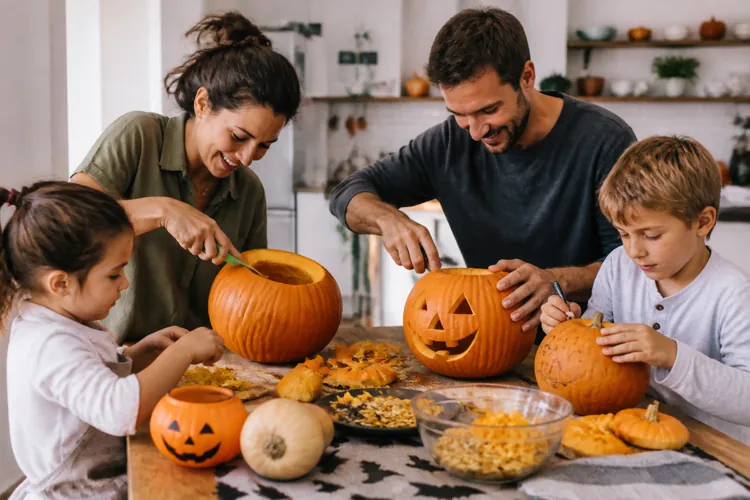

Pumpkin carving is a leading source of Halloween injuries, with cuts potentially damaging tendons, nerves, and blood vessels in the hand.
Poorly fitting costumes, shoes that slip, and masks that block vision can increase the risk of trips and falls.
Choosing safer carving tools, improving visibility, and following basic trick-or-treating rules can help families avoid preventable injuries.
Between picking out costumes, decorating pumpkins, and heading out for candy, Halloween offers plenty of ways for families to celebrate. But a few seasonal activities can also lead to injuries that put a damper on the festivities.
The American Academy of Orthopaedic Surgeons (AAOS) is reminding families to take precautions before Halloween celebrations get underway. According to the U.S. Consumer Product Safety Commission, an estimated 3,200 Halloween-related injuries were treated in hospital emergency departments annually from 2020 through 2023. Pumpkin carving accounted for 55% of those injuries.
While a fall or cut might seem like a minor mishap, some injuries can be more serious than they initially appear. Taking a few simple steps can help families enjoy their Halloween activities while reducing the risk of an unexpected trip to the emergency room.
Pumpkin carving and costumes pose injury risks
Pumpkin carving deserves particular attention because a slipping knife can cause more than a surface-level cut. According to the AAOS, injuries to the hand can damage tendons, nerves, or blood vessels, potentially affecting movement or sensation.
The organization warns that numbness, tingling, or difficulty moving a finger after a carving injury should be evaluated promptly. Even cuts that appear small may require medical attention if they affect the structures beneath the skin.
Costumes can also create hazards. Outfits that drag on the ground, shoes without good traction, and masks that limit visibility can make it easier to trip or fall. Dark streets and unfamiliar walking routes add another challenge for trick-or-treaters.
Simple steps can make Halloween safer
Families can reduce the risk of injuries by making a few adjustments before the festivities begin. Here are some tips from the AAOS:
Think about the logistics of your costume. Look for outfits that fit properly and won't drag on the ground. Sturdy, comfortable, slip-resistant shoes are a better choice than high heels, flip-flops, or clogs. Bright colors and reflective tape can help children remain visible after dark, while face paint can provide an alternative to masks that obstruct vision. The AAOS also recommends choosing flame-resistant costumes and accessories.
Leave sharp tools to adults when carving pumpkins. Let younger children decorate with paint, markers, or other non-carving supplies. Adults should work in a clean, dry, well-lit area and use tools designed specifically for carving pumpkins. If a cut occurs, apply pressure with a clean cloth and raise the injured area above the heart. Seek medical care if the cut is deep or bleeding continues after 10 to 15 minutes. Clean the wound with soap and water and cover it with a clean bandage.
Adult supervision is key. On Halloween night, children younger than 12 should be accompanied by an adult. Families should stick to sidewalks, cross at designated crosswalks, carry flashlights, and approach only well-lit homes. Older children going without parents should travel together and follow a planned route.
Skip fire. Avoid using candles in jack-o'-lanterns in favor of glow sticks or artificial pumpkin lights.
A little preparation can help keep the night's biggest scares where they belong: in the decorations, not the emergency room.