


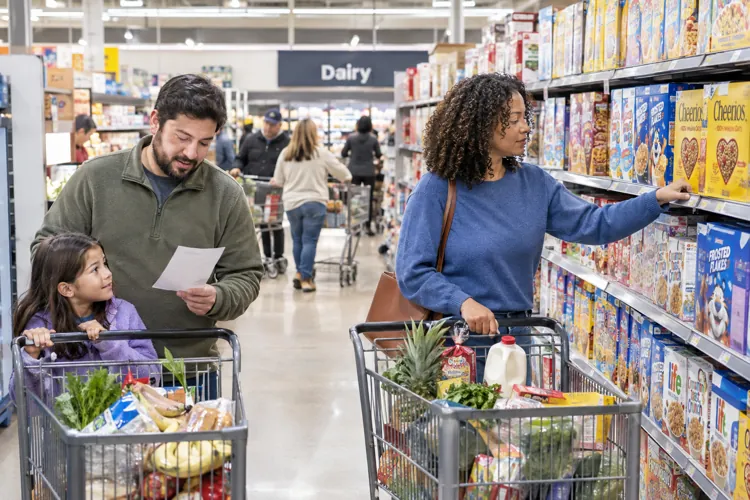

Grocery prices jumped 0.4% in October, reversing September's 0.1% decline and ending a period of relative stability in food costs.
Snacks and beef led the increases, rising 1.0% and 0.9%, respectively, while fruits, vegetables and dairy products also became more expensive.
Few prices declined: Nonalcoholic beverages were the only major grocery category to register a decrease, falling 0.3%, while cereals and bakery products were unchanged.
The October Consumer Price Index, released earlier this week, shows a sharp jump in food prices.
The Labor Department's October CPI shows food prices increased 0.4% last month, about the same as the overall inflation rate. Grocery prices, which had been relatively stable for much of the summer and early fall, rose 0.4%.
The increase stands in stark contrast to previous months, with the cost of food consumed at home declined slightly or barely rose..
In fact, the sharp increase represents a noticeable reversal from September, when grocery prices actually declined 0.1%. The latest report suggests that inflationary pressure is returning to several everyday grocery staples, with some categories experiencing significantly larger increases than the overall food index.
Snacks and beef lead the price increases
According to the Bureau of Labor Statistics (BLS), snack prices posted one of the largest increases in October, jumping 1.0% in just one month.
Beef prices weren't far behind, rising 0.9%. That was considerably higher than the 0.5% increase for the broader category that includes meat, poultry, fish and eggs.
The increases weren't limited to those two categories. Prices for fruits and vegetables rose 0.6%, while dairy and related products also increased 0.6%. The broader category of other food purchased for home consumption, which includes snacks, increased 0.7%.
These increases are significant because they affect products that many families buy regularly. Unlike discretionary purchases, groceries are expenses that consumers have relatively little ability to avoid.
A monthly increase of 1%, if sustained for an entire year, would translate into an annual price increase of nearly 13%. That doesn't mean snack prices will continue rising at October's pace, but it illustrates how quickly repeated monthly increases can add up.
Very little relief at the supermarket
While prices increased across most major grocery categories, consumers did find a little relief in one area. The index for nonalcoholic beverages declined 0.3% in October, following a 0.9% increase in September.
Prices for cereals and bakery products were unchanged. Those were the exceptions.
Of the six major grocery food categories tracked by the BLS, four registered price increases, one declined and one remained unchanged.
That broad pattern suggests the October increase wasn't simply the result of a sharp rise in one or two products. Higher prices were spread across much of the supermarket, suggesting that the high price of diesel fuel, used to transport all grocery items, is beginning to be felt more deeply in the prices consumers pay.
Eating out is getting more expensive, too
Consumers hoping to avoid rising grocery bills by eating out aren't finding much relief.
The CPI shows restaurant prices increased 0.5% in October, accelerating from September's 0.2% increase.
Prices for full-service restaurant meals rose 0.7%, while prices at limited-service establishments, including fast-food restaurants, increased 0.4%.
The increases mean consumers are paying more whether they prepare meals at home or purchase them at restaurants.
A sudden change after months of stability
Perhaps the most striking finding in October's report is how quickly grocery inflation has accelerated.
In June, grocery prices increased just 0.2%. They declined 0.1% in July, were unchanged in August and fell another 0.1% in September.
Taken together, those four months produced essentially no increase in supermarket prices.
October's 0.4% jump therefore represents a significant change from the recent pattern.
It also comes at a time when many households remain sensitive to even relatively small price increases. Although food inflation has slowed at various points in recent years, that doesn't mean prices have returned to their earlier levels.
A period of stable prices simply means consumers aren't paying much more than they were the previous month. It does little to reverse the cumulative increases that have already occurred.
What consumers can expect
One month's data doesn't necessarily signal the beginning of another prolonged surge in grocery inflation. Food prices can fluctuate because of weather, agricultural production, transportation costs and changing consumer demand.
However, October's report provides evidence that the recent period of stability may be ending.
The BLS was unable to publish most year-over-year inflation comparisons for October because data for October 2025 were unavailable following a lapse in federal appropriations. That makes it more difficult to assess how current food prices compare with those of a year ago.
The clearest takeaway is that grocery prices are rising again, and the increases are affecting a broad range of foods. For consumers, that could mean renewed pressure on household budgets just as the holiday shopping and entertaining season gets underway.