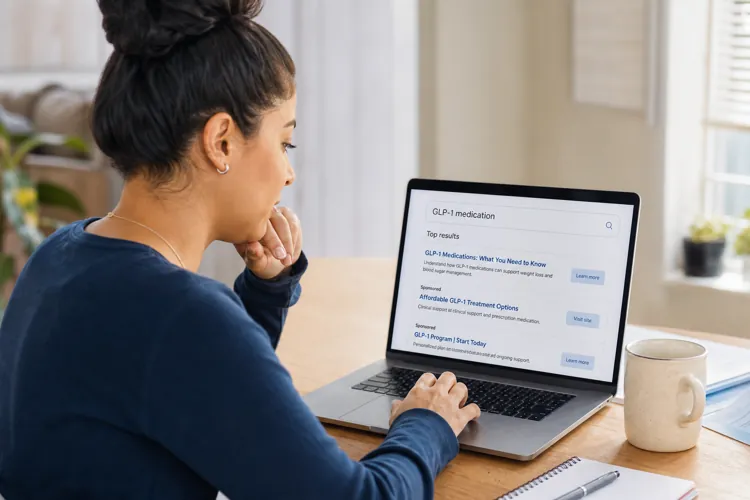

A Yale "secret shopper" study found that most online GLP-1 vendors issued prescriptions with minimal clinician involvement.
Researchers evaluated 49 websites to see how online prescribing worked in real-world conditions.
The findings highlight concerns about patient oversight and the need for stronger safeguards when prescribing these medications online.
As demand for GLP-1 medications continues to grow, more people are turning to online telehealth platforms to obtain prescriptions without visiting a doctor's office. While these services can make treatment more accessible, new research suggests the process may not always include the level of medical oversight many consumers would expect.
A new Yale School of Medicine study, published in JAMA, examined how easy it is to obtain a GLP-1 prescription through direct-to-consumer websites. Researchers wanted to understand what the prescribing process actually looks like and whether patients receive meaningful clinical evaluation before these medications are approved.
“We knew many people were accessing these drugs outside of insurance coverage, but we were surprised that the vast majority of these websites did not require communication with a clinician,” first-author Ashwin Chetty said in a news release.
“In some cases, the request was put in on a Monday evening, approved shortly after, and the prescription was delivered by Tuesday or Wednesday.”
How researchers tested online GLP-1 providers
To evaluate the process, the Yale team conducted what is known as a "secret shopper" study. They created the profile of a 27-year-old man who met the criteria for receiving a GLP-1 medication and submitted prescription requests through 49 different websites between August and December 2025.
The researchers tracked how each website handled the request, including whether the patient was required to speak with a clinician, provide photos, complete questionnaires, or undergo additional screening before receiving a prescription.
They also noted whether the websites prescribed branded medications, compounded versions, or both, how quickly prescriptions were approved, and whether the medication was shipped directly to the patient.
What the findings mean for consumers
The researchers found that 45 of the 49 websites — about 92% — issued a GLP-1 prescription, while 34 websites, or roughly 69%, mailed the medication.
In many cases, the prescription was approved without any real-time conversation with a clinician, relying instead on online questionnaires. Some prescriptions were issued in five minutes or less, and researchers also observed instances where prescriptions were approved despite missing required photos.
According to the study authors, these findings suggest that some online prescribing platforms may prioritize speed over comprehensive clinical evaluation.
They also raised concerns about compounded GLP-1 medications, which are not approved by the U.S. Food and Drug Administration, and called for stronger patient protections, including more robust prescribing practices and clearer disclosure of the potential risks associated with compounded drugs.
“These compounded products have never reached a clinical trial, and they’ve had no FDA review,” said researcher Resha Ramachandran, MD, MPP, MHS. “The companies are creating new drugs and selling them across state lines. It’s alarming that these medications — which have not been tested on patients — are being mass-produced and mass-marketed for profit.
“As we're seeing telehealth platforms grow across the country, and replacing in-person healthcare access, telehealth needs to replicate the patient-clinician experience that happens in the real-world. It can't just be a pay-to-prescribe sort of platform. It needs to be a pay-for-appropriate-treatment platform.”