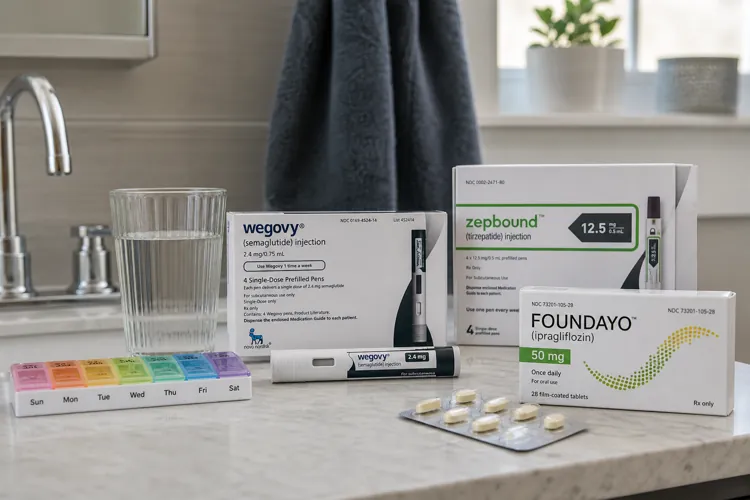

Medicare will begin covering certain GLP-1 weight-loss drugs on July 1 through a new temporary pilot program called the Medicare GLP-1 Bridge.
Eligible beneficiaries will pay a flat $50 monthly copayment for approved medications including Wegovy, Zepbound, and Foundayo.
The demonstration, scheduled to run through the end of 2027, marks the first time Medicare has broadly provided coverage for obesity medications prescribed specifically for weight loss.
Beginning July 1, millions of Medicare beneficiaries will have access to popular GLP-1 weight-loss medications under a new federal demonstration program that dramatically reduces the cost of the drugs for eligible seniors.
The Centers for Medicare & Medicaid Services (CMS) is launching the Medicare GLP-1 Bridge, a temporary pilot program that will provide qualifying Medicare Part D beneficiaries with certain GLP-1 medications for a flat $50 monthly copayment through Dec. 31, 2027.
The initiative represents a significant shift in Medicare policy. Until now, Medicare generally covered GLP-1 drugs such as Wegovy and Zepbound only when prescribed for conditions such as Type 2 diabetes or certain cardiovascular diseases — not for obesity alone, because federal law excludes coverage of drugs used solely for weight loss.
CMS Administrator Dr. Mehmet Oz called the medications "a major medical advancement" when announcing the program, saying too many older Americans have been unable to afford them because of their high cost.
Who qualifies
The new program is available to eligible Medicare beneficiaries enrolled in Part D prescription drug coverage who meet specific medical criteria and obtain prior authorization.
According to CMS, the program covers three medications:
Wegovy (injectable and oral forms)
Zepbound (KwikPen formulation)
Foundayo (oral tablet)
The medications are intended for patients who meet body mass index (BMI) requirements and other clinical eligibility standards established by CMS.
A temporary demonstration
Unlike traditional Medicare drug coverage, the GLP-1 Bridge operates outside the normal Part D benefit. CMS is using a centralized system to process prior authorizations, pharmacy claims, and payments, allowing beneficiaries to access the medications regardless of which Part D plan they have.
The agency says the demonstration is designed to test a new approach to expanding access to obesity treatments while gathering data on costs, utilization, and health outcomes before considering longer-term policy changes.
GLP-1 medications have become some of the most sought-after prescription drugs in recent years because clinical trials have shown they can produce substantial weight loss while also improving health outcomes for many patients with obesity.
However, physicians caution that older adults require careful monitoring. Side effects can include gastrointestinal problems, and experts warn that seniors may face increased risks of muscle loss, frailty, and malnutrition if treatment is not paired with adequate nutrition and physical activity.
Healthcare providers also emphasize that the medications are most effective when combined with lifestyle changes, including improved diet and regular exercise.