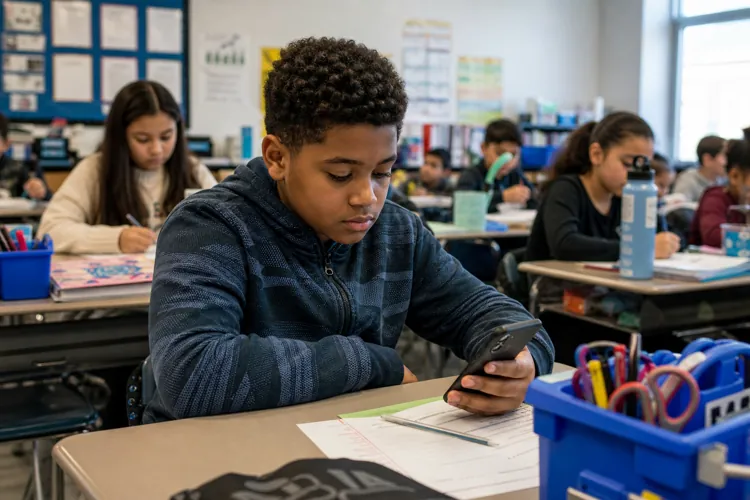

A new national survey finds that nine in 10 parents want their children to have access to a phone during the school day, even as more than 35 states have adopted or proposed restrictions on student cellphone use.
Parents overwhelmingly cite school safety and the ability to reach their children during emergencies as their top concern, creating tension with policies designed to reduce classroom distractions.
The findings highlight a growing divide between educators seeking phone-free classrooms and parents who view smartphones as an essential safety tool.
As states across the country continue to tighten restrictions on student cellphone use, a new survey suggests most parents are reluctant to give up one feature they value most: the ability to reach their children during the school day.
According to a national survey released by family technology company Cosmo, 90% of parents believe children should have access to a phone while at school, even though more than 35 states have enacted or are considering policies that limit or ban cellphone use during school hours.
The survey illustrates the challenge facing school districts as they attempt to balance improved classroom focus with parents' growing concerns about school safety.
Safety outweighs convenience
Parents' concerns appear to be driven less by a desire for constant communication than by fears of emergencies. School shootings, lockdowns, and other safety incidents have heightened anxiety, making many parents uncomfortable with policies that prevent students from contacting family members directly.
The survey found that parents whose children attend schools with cellphone bans report significantly higher levels of anxiety about being unable to communicate with their children during the school day.
The findings come as lawmakers across the country have embraced cellphone restrictions as a way to reduce distractions, improve academic performance, and curb cyberbullying. Many schools now require students to store phones in lockers, sealed pouches, or designated storage areas until the end of the school day.
A growing national movement
The push for phone-free schools has accelerated over the past two years. Supporters argue that smartphones interfere with learning, contribute to mental health issues, and reduce face-to-face interaction among students. More than 35 states have adopted some form of statewide cellphone restriction or guidance for schools.
Research has shown that strict school phone policies substantially reduce classroom phone use, though evidence that they immediately improve academic achievement or student behavior has been mixed.
The survey suggests many parents are not necessarily opposed to limiting phone use during instruction but want children to retain access when needed, particularly during emergencies.
That may leave school districts searching for compromise solutions, such as allowing students to keep phones secured in locked pouches that can be opened after school or during an emergency, rather than requiring devices to be left at home altogether.