


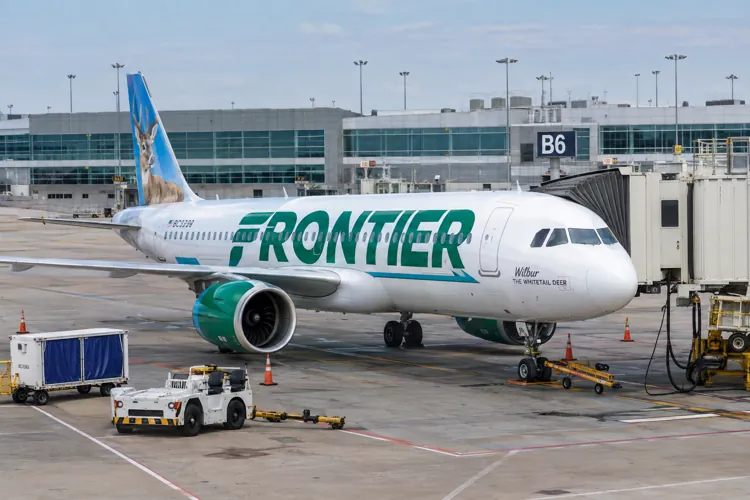

Frontier’s average fare revenue per passenger rose 71% in the third quarter compared with a year earlier.
The increase reflects higher fuel costs, changes in pricing strategy, and reduced competition following Spirit Airlines’ shutdown.
The figure represents a quarterly average; it does not mean every Frontier ticket has received a 71% price increase.
Travelers counting on Frontier Airlines for inexpensive flights are facing sharply higher prices. The airline reported that average fare revenue per passenger reached $67.82 during July through September, up from $39.74 in the same period last year — an increase of 71%.
The figures, released during the company’s quarterly earnings call, measure the airline’s average fare revenue across its passengers. They describe an increase that has already occurred, rather than a newly announced, across-the-board fare hike. Individual ticket prices vary by route, travel date, and demand.
Fuel is a major source of pressure. Frontier paid an average of $3.96 per gallon during the quarter, 56% more than a year earlier. Its quarterly fuel expense totaled $425 million.
But higher energy costs do not explain the entire increase. According to The Points Guy’s coverage of Frontier’s earnings call, CEO Jimmy Dempsey attributed the airline’s revenue improvement roughly equally to fuel-related pricing, better revenue management, and the disappearance of competitor Spirit Airlines.
No more competition from Spirit
Spirit stopped flying in May, removing a major discount competitor. Before its shutdown, the two airlines overlapped on about 30% of routes, The Points Guy reported. Frontier has since added service on some former Spirit routes.
For consumers, that combination can mean fewer competing discount offers and less opportunity to escape higher prices simply by choosing a budget carrier.
The 71% figure also tells only part of the cost story. Frontier’s total revenue per passenger, including ancillary and other revenue, increased 30% to $138.22. That is a broader company revenue measure, rather than the average advertised ticket price or an individual traveler’s final bill.
Higher prices have not stopped Frontier from attracting travelers. Reuters reported that management remained comfortable with the balance between fares and passenger demand, even as other airlines emphasized higher prices over filling every seat.
There is continuing pressure ahead: Frontier expects its average fuel cost to rise to $4.75 per gallon in the fourth quarter.
Travelers comparing flights should calculate the full checkout price, including any baggage, seating, or other options they need. Comparing that total across airlines — along with departure times and airport transportation costs — provides a clearer picture of whether a discount fare delivers savings.