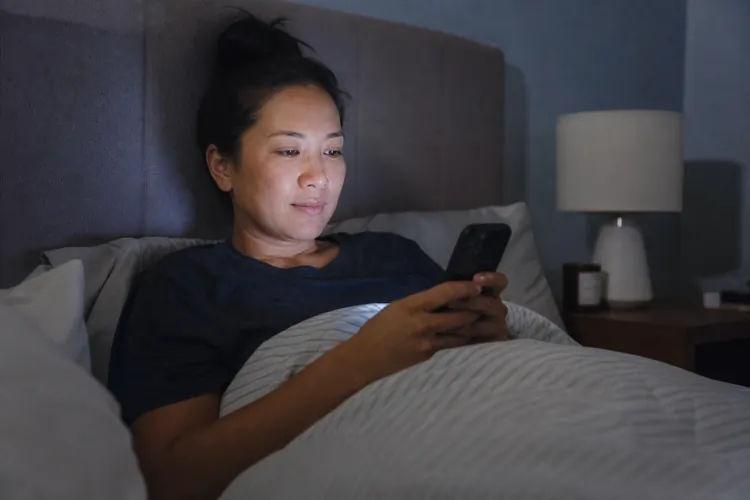

A new Amerisleep survey found that 1 in 8 Americans regularly use AI chatbots in the hour before bed, with millennials leading the trend.
People who used AI before bedtime took significantly longer to fall asleep — about 34 minutes on average, compared to 22 minutes for those who limit screen time before bed.
Sleep experts say AI may keep the brain more mentally and emotionally engaged than social media, making it harder for users to fully unwind at night.
For years, sleep experts have warned about the effects of late-night screen time, especially endless social media scrolling before bed.
But now, a new bedtime habit is entering the conversation: AI chatbots.
Whether people are using tools like ChatGPT to ask questions, vent about their day, get advice, or simply unwind, more Americans are making AI part of their nightly routine. According to a new survey from Amerisleep, that growing habit may come with a downside.
ConsumerAffairs spoke with Jordan Burns, Sleep Expert at Amerisleep, to learn more about how AI use is affecting consumers’ sleep habits.
Key findings from the study
The survey explored how Americans are using screens — including AI chatbots — in the hour before sleep.
Researchers surveyed 1,003 Americans in March 2026, including 127 people who said they regularly use AI chatbots before bed.
The survey examined screen habits, how long it takes people to fall asleep, sleep duration, and participants’ emotional state at bedtime. Respondents also shared whether AI use had changed their nighttime routines, including replacing social media scrolling or even late-night conversations with other people.
Some key findings from the study include:
1 in 8 Americans (13%) regularly use AI chatbots in the hour before bedtime
Millennials do so most often (17%)
1 in 3 AI users are deliberately trading social media scrolling for bedtime chatbot sessions.
Regular AI bedtime users took 55% longer to fall asleep (34 minutes) than those who forgo screen time before bed
AI is keeping us awake
With AI prolonging bedtime by over 50%, Burns explained that the tech is keeping consumers’ minds active.
“AI chats tend to keep the brain more engaged than scrolling or streaming,” Burns said. “Specifically, respondents who regularly engage with AI reported taking 34 minutes to fall asleep, compared to 27 minutes among social media users, and 22 minutes among those who reduce screen time before bed.
“This suggests that blue light, coupled with interaction, might be preventing the brain from unwinding.”
AI is different than social media
The survey found that many Americans are choosing to use AI over scrolling social media – both habits that can impact sleep and overall restfulness. However, experts say that AI has a different impact on the brain than social media use before bed.
“AI interaction is more cognitively and emotionally engaging than scrolling,” Burns said. “In addition to the fact that users who spend more time talking to AI take more time to fall asleep, conversations with AI can be hard to end because certain systems are engineered to increase user engagement.”
Reduce screen time before bed
If you find yourself stuck in an endless chatbot loop before bed, Burns recommends limiting screen time as part of your nighttime routine.
“The biggest recommendation here is to replace constant stimulus with predictability,” Burns said. “Do things to reduce screen time an hour before going to sleep and transition to low-stimulus activities such as reading or even stretching.
“If you're really committed, it'd be useful to establish a screen curfew and create a tech-free bedroom.”