


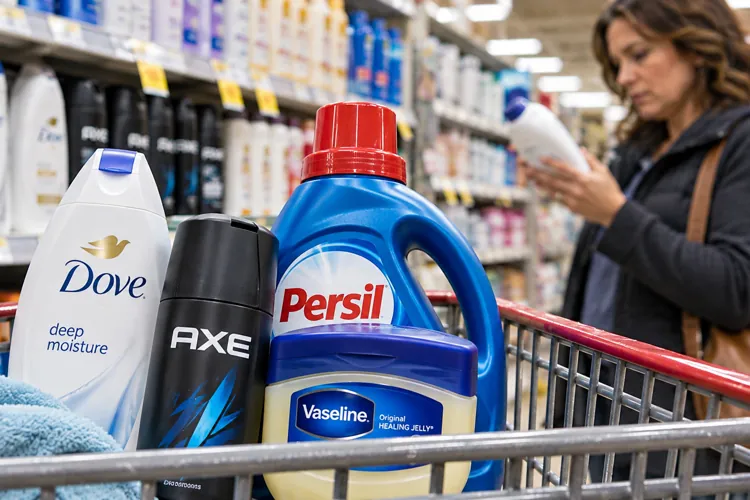

More price hikes could be coming: Unilever, the company behind Dove, Axe, and Vaseline, has warned that rising costs could lead to additional price increases.
Your bathroom cabinet could feel the pinch: Shampoo, deodorant, body wash, and cleaning supplies are among the everyday products exposed to higher manufacturing and packaging costs.
There are ways to get ahead: Watching for sales, comparing store brands, and checking unit prices can help shoppers avoid overpaying.
Consumers are already dealing with expensive groceries and household bills, and they could soon face even higher prices on products they use every day.
Unilever, the consumer goods giant behind brands like Dove, Axe, and Vaseline, has warned that rising costs tied to the war in Iran could put additional pressure on prices.
The concern isn't limited to gasoline. Higher energy, transportation, and packaging costs can work their way into everything from shampoo and deodorant to laundry detergent and household cleaners.
And while that doesn't mean every product will suddenly jump in price, it does give shoppers another reason to pay attention to what they're spending.
Why your household staples could cost more
Many personal care and cleaning products depend on petroleum-derived ingredients, plastic packaging, and transportation networks that are sensitive to energy prices.
When those costs rise, manufacturers can either absorb the added expense, cut costs elsewhere, or pass some of it along to consumers.
Unilever has signaled that pricing pressures could intensify, although the size and timing of any increases will vary by product and market. Other major consumer goods companies face similar pressures, meaning shoppers shouldn't assume the issue is limited to one manufacturer.
Five ways to protect your household budget
The good news is that shoppers don't have to wait for prices to rise before taking action.
Stock up when a genuine sale comes along. If you regularly use the same deodorant, shampoo, or cleaning product, consider buying an extra one or two when the price is unusually good. Focus on products you know you'll use before they expire. There's no reason to fill a closet with items just because prices might increase.
Give store brands a second look. Walmart's Equate, Target's up&up, and Costco's Kirkland Signature products can offer alternatives to national brands. Compare ingredients, package sizes, and prices. You may discover that switching just a few frequently purchased items saves money throughout the year.
Watch for shrinking packages. A bottle of body wash that drops from 20 ounces to 18 ounces without a price reduction has effectively become 11.1% more expensive per ounce. Always check the unit price rather than assuming the familiar-looking bottle is the same size you bought last month.
Use your purchase history to spot price increases. Retailer apps and online accounts can help you track what you previously paid for household staples. Check your previous Walmart, Target, or grocery-store orders to see whether a product has actually increased in price. This also helps you recognize a genuine sale instead of trusting the advertised discount.
Don't overlook coupons and subscription discounts. Before paying full price, check manufacturer coupons, store loyalty offers, and subscription discounts for products you purchase regularly. Just make sure the discount doesn't require buying more than you need or signing up for deliveries you might forget to cancel.
Should you start buying ahead?
A little planning makes sense, but panic-buying doesn't. If your favorite household product goes on sale and you have room to store an extra bottle or two, buying ahead could protect you from a future increase.
But there's no guarantee that every Unilever product will get more expensive, or that today's price will be better than next month's sale.
The smartest approach is to keep an eye on the products you buy most often, know what a good price looks like, and be prepared to take advantage of legitimate discounts when they appear.