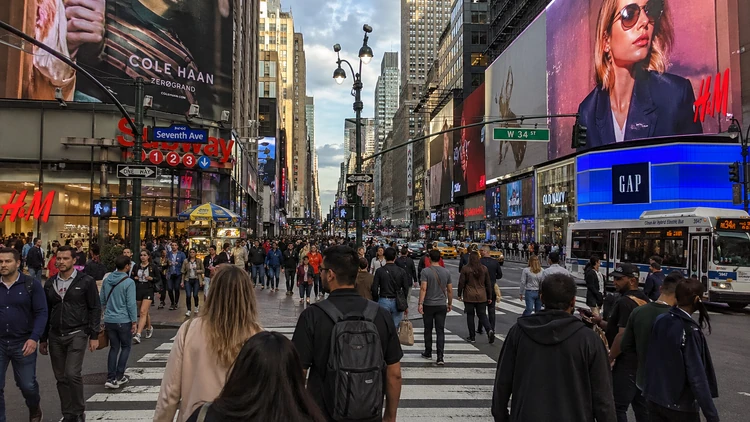

Findings from a recent study found that living in more developed areas was linked to a slightly lower risk of a first-time stroke.
Researchers tracked over 25,000 adults in the U.S. for more than a decade.
The built environment — not just personal health — may play a role in stroke risk.
City life doesn’t exactly have a reputation for being relaxing. Noise, traffic, and pollution tend to dominate the conversation.
But new research from the University of Michigan suggests there may be a surprising upside: living in more developed, urban-style neighborhoods could be linked to a lower risk of stroke.
The idea flips a common assumption on its head. Instead of focusing only on individual habits like diet or exercise, the study highlights something broader — your surroundings. Specifically, researchers looked at how “development intensity” (think buildings, sidewalks, and infrastructure) might shape long-term health outcomes.
“High-intensity development typically includes greater housing density and more commercial/retail outlets,” researcher Cathy Antonakos said in a news release.
“These areas are more likely to feature compact land uses with access to health care, food stores, public transport and physical activity infrastructure like sidewalks, bike facilities and parks.”
How the study worked
To explore this, the researchers analyzed data from more than 25,000 adults across the U.S., following them for over a decade. The data came from a large, ongoing project known as REGARDS (Reasons for Geographic and Racial Differences in Stroke), which focuses on stroke patterns and disparities, particularly in the southeastern “stroke belt.”
Instead of labeling areas simply as “urban” or “rural,” the researchers took a more detailed approach. They used satellite data to measure how developed each participant’s neighborhood was over time, looking at areas within about a five-mile radius of their homes.
Importantly, they also accounted for factors that could influence stroke risk — including age, race, sex, and existing conditions like diabetes or high blood pressure — to better isolate the role of the environment itself.
What the researchers found
The results showed a modest but meaningful pattern: people living in more highly-developed neighborhoods had about a 2.5% lower risk of experiencing a first-time stroke compared to those in less developed areas.
While the study didn’t pinpoint exactly why this link exists, researchers point to several features commonly found in denser areas. These include easier access to healthcare, grocery stores, public transportation, and spaces that encourage physical activity like sidewalks, parks, and bike paths.
At the same time, the study stops short of making sweeping claims. It didn’t directly measure specific neighborhood features or factors like stress or pollution, and researchers say more work is needed to understand what’s driving the connection.
“For physicians, the study suggests that neighborhood-level factors may influence first-time stroke risk, in addition to individual-level factors,” Antonakos said. “For planners, the findings suggest that enhancing environments with features that support cardiovascular health and physical activity may help lower the risk of first-time stroke.”