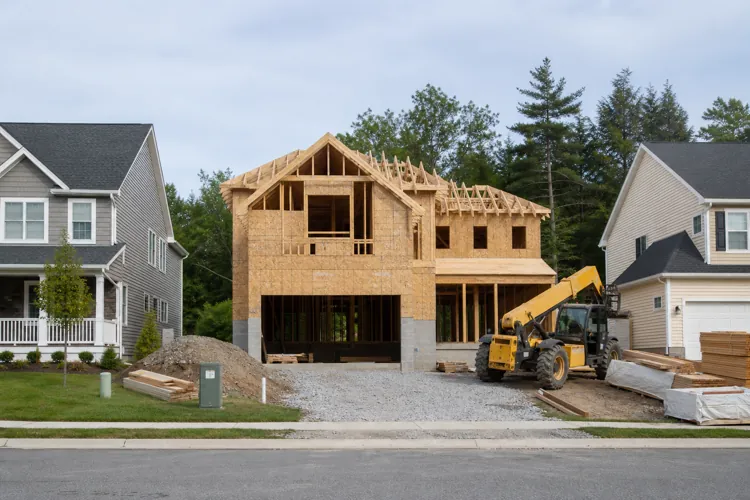

The U.S. housing shortage remained at approximately 4.7 million homes in 2024, growing by just 43,000 units.
A surge in apartment construction helped housing supply nearly keep pace with the formation of new households.
The shortage continues to drive high prices, particularly in New York, Los Angeles, Boston, and San Francisco.
America’s housing shortage is one reason home prices remain stubbornly high. Since the 2009-10 housing market crash, residential construction has been about half of what it was before the crash.
But in good news for buyers, builders are starting to close the gap. In fact, a Zillow analysis shows the housing shortage has stopped growing significantly for the first time in years.
The housing deficit — the gap between buyers and available homes — totaled approximately 4.74 million units in 2024, an increase of just 43,438 homes from the previous year, according to the analysis.
That was a substantial improvement from 2022, when the shortage grew by nearly 257,000 homes, and 2023, when it increased by more than 159,000.
“The country is not yet building its way out of the hole, but we stopped digging,” Zillow senior economist Orphe Divounguy said.
The deficit is Zillow’s estimate of the difference between the number of families that may want their own homes and the number of housing units available to buy or rent. In 2024, an estimated 8.17 million families were “doubling up,” or sharing homes with people outside their families, while only about 3.43 million homes were available.
Construction boom helped stabilize supply
The total number of U.S. housing units increased by about 1.4 million in 2024. Zillow said the increase was fueled by the completion of more multifamily housing units than in any year in the previous half-century.
That new supply was almost enough to accommodate the year’s increase in households seeking housing. It marked an important change after nearly two decades of underbuilding that began following the 2008 financial crisis.
The additional supply also appears to be helping affordability, although buying a home remains difficult for many consumers.
Zillow estimated that 35.2% of homes listed for sale in May 2026 were affordable to a household earning the median income, up from 30.8% a year earlier. A home was considered affordable if its monthly mortgage payment consumed no more than 30% of household income, assuming a 20% down payment.
That is an improvement from 2023, but still far below 2021, when an average of approximately 54% of listings met Zillow’s affordability standard.
Shortage varies widely by market
The housing deficit remains concentrated in some of the nation’s largest and most expensive metropolitan areas.
New York had the largest estimated shortage at nearly 406,000 homes, followed by Los Angeles at about 345,000. Boston, San Francisco, and Washington, D.C., also had some of the largest deficits.
Affordability was particularly limited in those markets. Only 5.1% of Los Angeles listings in May were considered affordable to a median-income household. The shares were 13.8% in New York, 14.8% in Boston, and 15.9% in San Francisco.
Conditions were better in some markets where construction has been stronger. Zillow said cities with fewer building restrictions generally responded more quickly to increased housing demand, helping rents and prices moderate sooner.
Zillow said closing the national deficit will require communities to allow more housing density, simplify permitting, and expand financing for manufactured homes. Even with construction improving, eliminating a shortage of nearly five million homes is likely to take years.