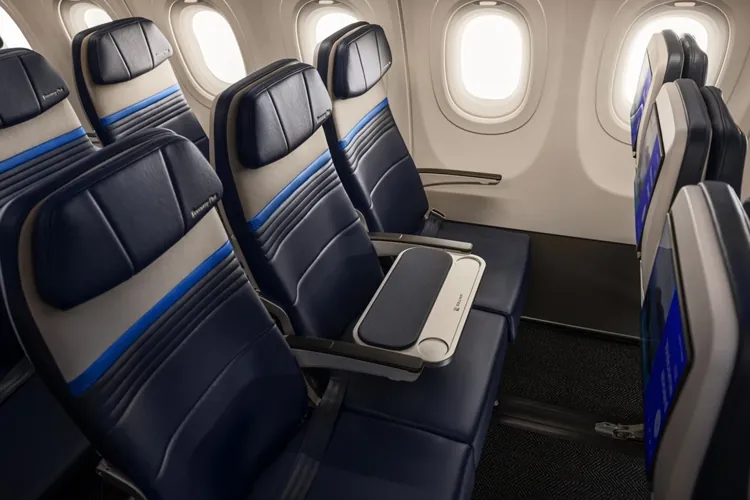

Airlines are now charging extra for one of the most coveted perks in coach: an empty middle seat.
The upgrade is most worthwhile on longer flights, but compare the price with Premium Economy or First Class before paying.
If your travel dates are flexible, choosing off-peak flights may score you an empty middle seat without paying anything extra.
Flying has become a master class in optional fees. Want to check a bag? That'll cost extra. Prefer an aisle seat? Another fee. Need early boarding or more legroom? Those upgrades can quickly add to the price of your ticket.
Now, airlines are finding another way to monetize your comfort by charging passengers for an empty middle seat.
United Airlines recently unveiled a new premium economy-style option on its upcoming Airbus A321XLR aircraft that gives travelers extra space by leaving the middle seat open between two passengers. The new seating also includes a larger shared cocktail table and additional personal space, offering another tier between standard economy and more expensive premium cabins.
For travelers, the announcement raises an important question: Is paying for an empty seat actually worth it?
Here are a few ways to decide.
1. Think about how long you'll actually be in the seat
Flight length should be your biggest consideration.
On a 90-minute or two-hour flight, you're unlikely to spend enough time in your seat to justify paying a significant premium simply to avoid a middle-seat neighbor.
But on flights lasting five hours or more, extra personal space can make a noticeable difference. Having room to spread out, work on a laptop, eat comfortably, or simply avoid shoulder-to-shoulder contact may be worth paying for.
Rule of thumb: The longer the flight, the more valuable comfort becomes.
2. Compare the upgrade — not just the ticket price
Many travelers make the mistake of looking only at the upgrade fee.
Instead, compare the total trip cost.
For example, if an empty-middle-seat upgrade costs $80, but Premium Economy is available for $110 more than your original ticket, spending the extra $30 could buy you additional legroom, better reclining, priority boarding, or other perks. Likewise, if First Class is discounted on your travel date, it may provide much better value than purchasing several smaller upgrades individually.
Always compare all available cabin options before clicking "Upgrade."
3. Consider who you're traveling with
Not everyone values extra space equally.
An empty middle seat may be especially appealing if you:
Need room to work during the flight.
Have broad shoulders or simply dislike cramped seating.
Plan to sleep on a long flight.
If you're flying solo on a short trip, however, the extra space may not justify the additional cost.
4. Don't pay for comfort you won't use
Airlines increasingly offer travelers dozens of optional extras. These include priority boarding, seat selection, snacks, and now Starlink Wi-Fi.
Before adding them to your reservation, ask yourself one simple question: Will this noticeably improve my trip?
If the answer is no, keep your money. Skipping just a few unnecessary upgrades over the course of several trips each year can save hundreds of dollars.
Sometimes luck is still free
Many flights still have empty middle seats simply because they don't sell out.
If your schedule is flexible, flying during off-peak days or less popular departure times may improve your odds of enjoying more space without paying anything extra.
It's never guaranteed obviously, but sometimes the best upgrade is simply choosing a less crowded flight.