

Steps to get a free medical alert system
You can explore a few different avenues to get a free or discounted medical alert system, but eligibility varies. To improve your chances of getting coverage for a medical alert system, take the following steps:
1. Assess your best options
There are several options for medical alert system coverage. The best options, which are more likely to provide total coverage, include your Medicaid plan, a Program of All-Inclusive Care for the Elderly (PACE) plan, if it’s available in your state, or benefits through the Department of Veterans Affairs (VA), if you qualify.
2. Consider partial coverage
If you don’t have access to options like Medicaid or PACE, and you’re not a veteran, you may be able to get partial coverage for a medical alert system through a Medicare Advantage (Part C) plan. Unfortunately, getting approved for a free system is unlikely.
Many private insurers also offer discounts on medical alert systems, making them more affordable.
3. Contact the right agencies
Once you determine which of the above options apply to your situation, contact the appropriate agencies to see what coverage, if any, is provided for medical alert systems.
4. Gather necessary documentation
Obtain a letter of medical necessity from a doctor confirming that you need a medical alert system. This key document can help with approval from Medicaid, the VA and PACE programs.
You may also need to provide proof of income for Medicaid coverage, as well as any other health insurance information. Gather these documents in advance of needing them.
5. Submit applications for coverage
For medical alert system coverage through Medicaid, the VA or a PACE program, speak with your care team about eligibility before submitting applications. Your care team will help decide whether you qualify for coverage.
For coverage through a Medicare Advantage plan, call your provider directly and ask about the process, as it varies widely among providers. In some cases, your provider may partner with a specific medical alert company, in which case you might get pre-approved for coverage.
»MORE: Questions to ask a medical alert company
6. Follow up on your applications
Once you’ve submitted the required documentation, follow up on the status of your applications. Approval timelines vary based on where you apply, your physical location and, for Medicare Advantage plans, your provider.
It can help to note on your calendar who you talked to and when, especially if you need to follow up multiple times with one agency or with multiple agencies.
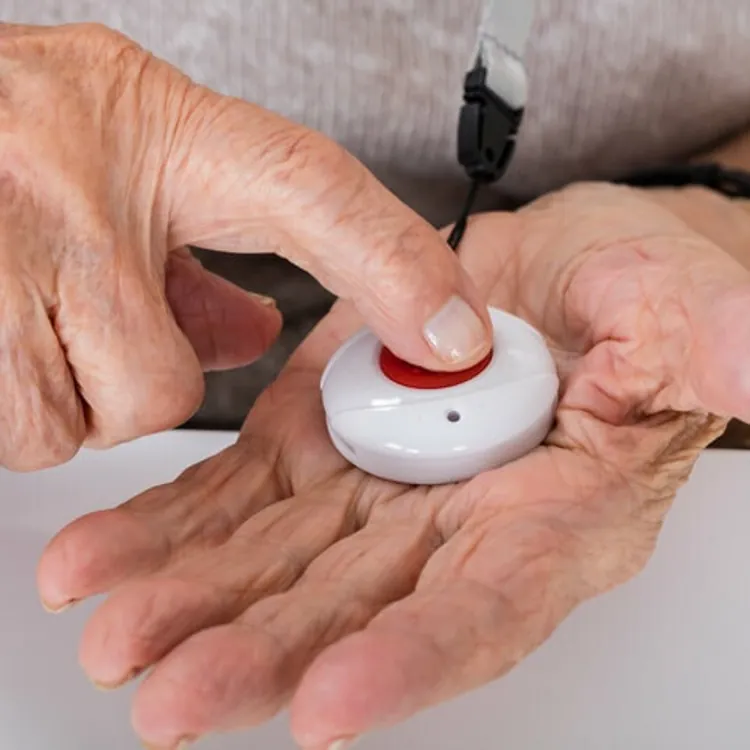
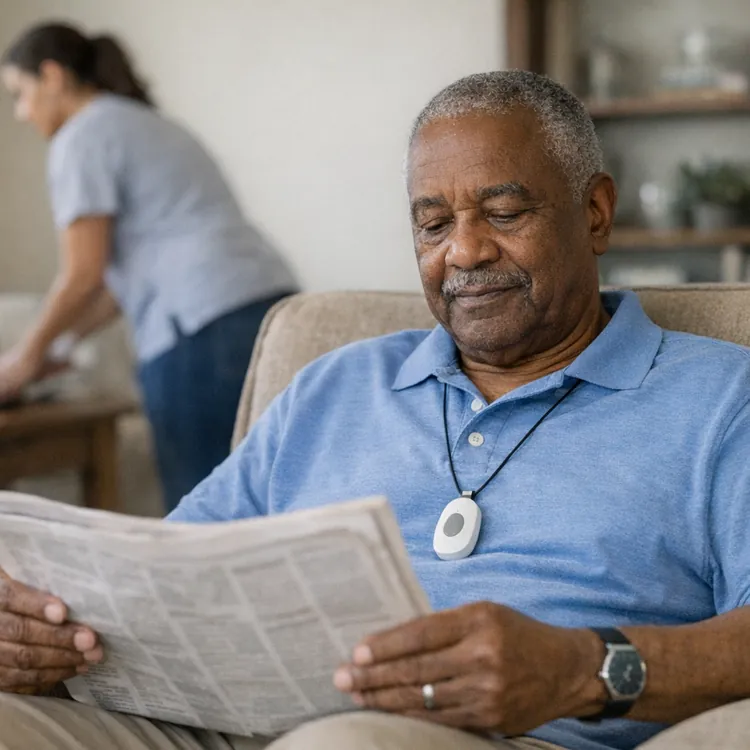
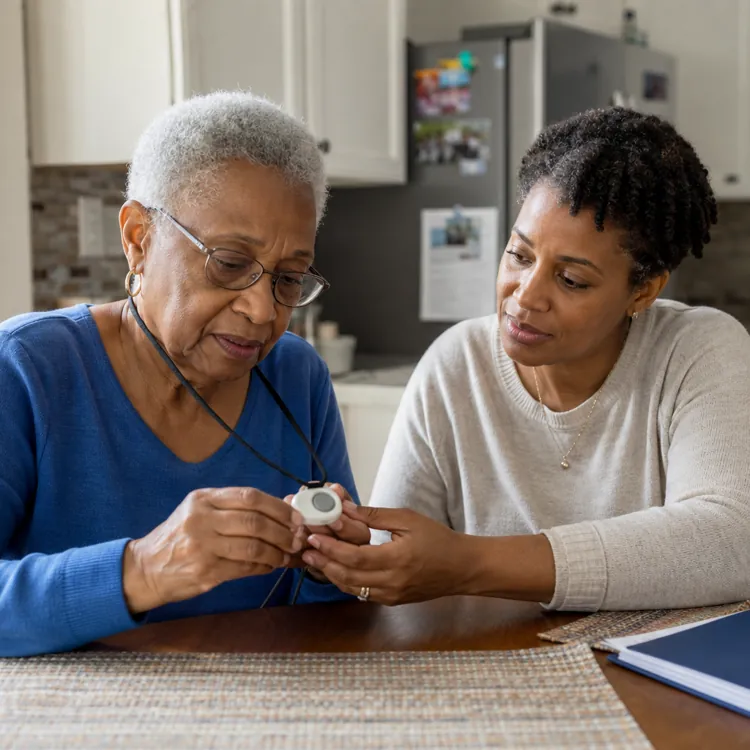
Medical alert systems are devices that link seniors to assistance during emergencies.
7. Compare approved options and costs
Once you hear back from all parties, compare coverage options and choose one that provides the best coverage for the most reasonable cost. Remember to consider coverage for upfront and ongoing costs, as medical alert systems require a monthly subscription to keep protection active.
Free medical alert coverage through Medicaid
You may be able to get a free medical alert system through Medicaid benefits, if you qualify.
To qualify for a free medical alert system, you usually need a letter of medical necessity from a doctor. Once you have the letter, speak with a caseworker or a member of your care team to see whether coverage is available. Coverage through Medicaid depends on your location, your overall health and other individual factors, like your fall risk.
Medicaid is available in all 50 states and Washington, D.C., but because it’s a joint federal-state program, coverage varies.
PACE programs are available through Medicare to Medicaid recipients in certain states, and PACE enrollment may improve your chance of getting a free medical alert system. Again, your care team can assess your condition and needs to help with approval.
PACE programs are available in the following states, but coverage varies among them. Starred states are known to have robust coverage programs:
- Alabama
- Arkansas
- California*
- Colorado
- Delaware
- Florida*
- Illinois*
- Indiana
- Iowa
- Kansas
- Kentucky
- Louisiana
- Maryland
- Massachusetts
- Michigan
- Missouri
- Nebraska
- New Jersey
- New Mexico
- New York*
- North Carolina
- North Dakota
- Ohio
- Oklahoma
- Oregon
- Pennsylvania
- South Carolina
- Tennessee
- Texas*
- Virginia
- Washington
- Washington, D.C.
- Wisconsin
Medicaid and PACE programs may provide options for medical alert systems through optional coverages, while in some states, programs use Home and Community-Based Service waivers to waive federal program limitations on coverage.
How to get coverage started with Medicaid or PACE
If you believe you might be eligible for a free medical alert system through Medicaid or a local PACE program, reach out to a member of your care team, the state Medicaid office or your PACE program administrator. Have your Medicaid number ready. Sometimes, a letter of medical necessity from a doctor can help speed up the process.
Some programs may provide full coverage, while others may offer only partial coverage or reimbursement for upfront costs, not monthly expenses.
»RELATED: Best medical alert systems with GPS
Free medical alert systems for veterans
If you’re a veteran, you might be able to get a free or discounted medical alert system through your VA benefits. No specific program guarantees coverage, but you may get assistance from the following VA programs:
- VA Medical Benefits Package: This core benefits package can provide coverage for medical alert systems through individual programs, such as VA Aid and Attendance and Veteran-Directed Care.
- VA Aid and Attendance: This is a VA pension benefit, not direct coverage, but you may be eligible for pension increases if your care team determines that a medical alert system is medically necessary.
- Veteran-Directed Care: This fund helps pay for daily medical and living assistance needs, including medical alert systems.
In all cases, your VA care team will need to assess your unique situation and determine if a system is medically necessary. Contact a member of your care team to see whether you can get access to a free or discounted medical alert system.
» COMPARE: Best medical alert apps
Low-income programs, nonprofit sponsorships and other options
You might have access to other coverage options or discounts through local low-income programs, nonprofit companies, private insurers and more. Consider these options if you don’t qualify for Medicaid or VA benefits, or if those programs won’t cover a medical alert system.
- Medicare coverage: If you don’t qualify for Medicaid but have a Medicare Advantage (Part C) plan, your insurance may include benefits related to medical alert systems. For example, in certain areas, some Humana plans cover these systems.
- Insurance company partnerships: Some medical alert system companies partner with insurance providers to offer benefits to members. For example, LifeStation has partnerships with Aetna and WellCare Health, and provides discounts on monthly subscription fees to covered individuals.
- Department of Aging programs: Some states have programs through the state Department of Aging that can help reduce or even eliminate the upfront or ongoing cost of a medical alert system. Contact your state’s Unit on Aging for more information.
- Local programs and benefits: You may also have benefits programs through your town or county. Your state’s Unit on Aging should be able to provide you with contact information for more localized programs.
»RELATED: Find the best medical alert bracelets
FAQ
Is there a personal alarm for the elderly without a monthly fee?
There are personal alarms for the elderly that don’t have monthly fees, but most don’t offer the same functionality as a medical alert system with a dedicated call center.
The LogicMark Guardian 911 is a one-time fee product that connects you directly to 911 operators. You can also use smartwatches and products like the Silent Beacon 2.0, which serve as alert devices but rely on your smartphone for service.
What medical alert systems are covered by Medicaid?
Medicaid may cover any type and brand of medical alert system, but actual coverage depends on your needs. You’ll need your care team to approve coverage, which usually requires a letter of medical necessity from your doctor. However, there’s no guarantee you’ll get coverage.
Are there income limits to qualify for free medical alert systems?
Income limits for a free medical alert system depend on the coverage channel you use. For example, Medicaid, some VA benefits and certain state and local programs may have income limits, while a Part C Medicare plan does not.
Do free life alert systems for seniors include fall detection?
Fall detection in a wearable medical alert device usually costs extra each month. Whether you can get full coverage, including fall detection, depends on the route you choose to get coverage.
For example, Medicare plans usually don’t cover total alert system costs, so Medicare is unlikely to include added fall detection expenses. However, you might get fall detection included in Medicaid or VA coverage if your care team deems it medically necessary.
Article sources
ConsumerAffairs writers primarily rely on government data, industry experts and original research from other reputable publications to inform their work. Specific sources for this article include:
- U.S. Centers for Medicare and Medicaid Services, "PACE." Accessed April 23, 2026.
- Centers for Medicare & Medicaid Services, "Program of All-Inclusive Care for the Elderly." Accessed April 23, 2026.
- National PACE Association, "Find a PACE Program Near You." Accessed April 23, 2026.
- Centers for Medicare & Medicaid Services, U.S. Department of Health and Human Services, "1915(c) Home and Community-Based Services Waivers." Accessed April 23, 2026.
- U.S. Department of Veterans Affairs, Minneapolis VA Health Care System, "VA Benefits and Community Resources for Aging Veterans and Caregivers." Accessed April 23, 2026.
- U.S. Department of Veterans Affairs, "About Veteran Health Benefits." Accessed April 23, 2026.
- U.S. Department of Veterans Affairs, "Aid and Attendance Benefits and Housebound Allowance." Accessed April 23, 2026.
- U.S. Department of Veterans Affairs, "Veteran-Directed Care." Accessed April 23, 2026.
- Humana Inc., "Take Advantage of Valuable Extras." Accessed April 21, 2026.
- LifeStation, "Special Offer for Aetna Members." Accessed April 21, 2026.
- LifeStation, "Special Offer for WellCare Health Plans Members." Accessed April 21, 2026.
- Administration for Community Living, "State Units on Aging." Accessed April 23, 2026.
- LogicMark, "Guardian Alert 911 Plus." Accessed April 23, 2026.
- Silent Beacon, LLC, "Silent Beacon 2.0." Accessed April 23, 2026.