


Key Insights
Medical alert systems typically cost around $25 to $47 per month for monitoring.
Jump to insightSome costs to factor in include equipment fees, monitoring fees and hidden fees.
Jump to insightSome long-term care insurance plans may cover medical alert systems.
Jump to insightTypical costs of medical alert systems
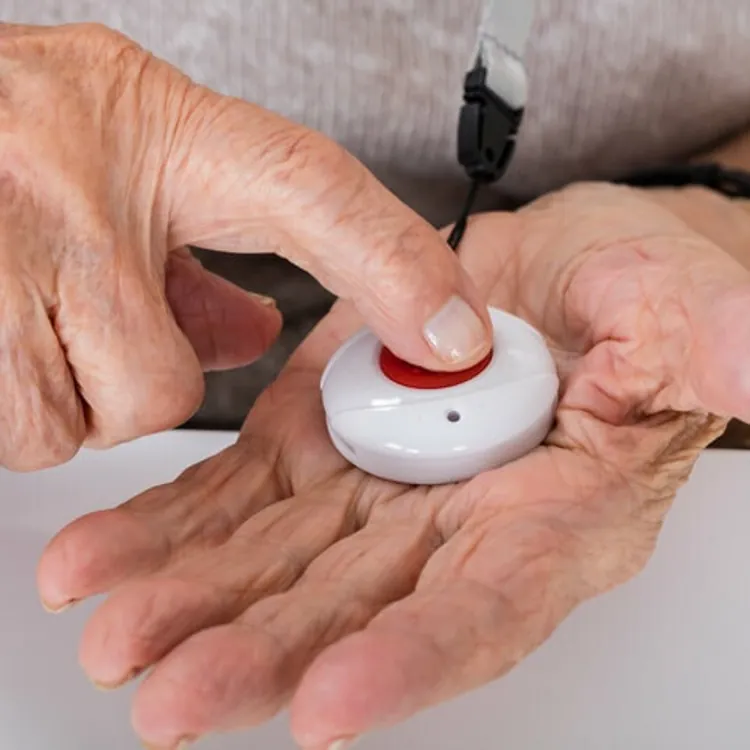
We looked at a range of medical alert packages from different companies to determine typical monthly, equipment and activation costs for in-home and mobile medical alert systems. For mobile systems, we looked at pendants, buttons and smartwatches.
| Monthly monitoring cost | Equipment cost | Activation cost | |
|---|---|---|---|
| In-home medical alert systems | $25 to $40 | $0 to $150 | $0 to $99 |
| Mobile medical alert systems | $30 to $47 | $0 to $200 | $0 to $159 |
Medical alert system cost factors
To get a clear idea of how much a medical alert system costs overall, think about the fees you need to pay for equipment, monitoring, activation, installation and other miscellaneous charges. Considering all these factors can help you make an informed decision about the financial impact of your selected system.
Equipment purchase vs. lease
Equipment fees are what you pay for the physical products that make up your medical alert system. Basic equipment fees often cover a base unit and a wearable medical alert device, such as a pendant or bracelet. These fees are often a one-time payment that typically ranges from around $30 to $200, depending on how advanced the system is.
Companies that don’t charge for equipment lease it to you. You don’t own the devices, and you must return them when your contract ends. When you lease equipment, there’s no upfront charge for it.
Monitoring fees
If you want 24/7 professional monitoring, expect to pay a monthly fee. Monitoring typically costs around $25 to $47 per month, though in-home systems tend to be a little cheaper than mobile systems.
A few other factors can also determine how much you pay for monitoring, including:
- How many devices you have connected
- The type of medical alert devices you use
- Whether the system is landline- or cellular-based
- If there’s fall detection, GPS or other features included
What about medical alert systems without monthly fees?
While some medical alert systems don’t have monthly fees, these don’t include professional monitoring. Instead, they connect directly to 911 or someone on your contact list. They are cheaper, but the downsides are that there’s no fall detection and they aren’t considered as reliable.
Add-on features
Whether you lease or purchase, it usually costs extra for optional add-on products, like fall detection, wall buttons and lock boxes. Fall detection typically costs around $10 to $15 per month, while features like lock boxes typically cost around $2 to $5 per month.
Hidden fees and other considerations
Some of the other fees a medical alert system company may charge include:
- Activation fee: An activation fee is a one-time charge that covers the cost of getting started with a medical alert company. Not all companies charge an activation fee.
- Shipping fees: This one-time fee covers the cost of shipping equipment to your home. This is sometimes included in other upfront fees.
- Caregiver app access fees: Some companies may charge a fee to let caregivers connect with an app to view activity history or real-time device tracking. This service is sometimes included as part of a monitoring package, but not all companies include this in standard services.
- Replacement equipment fee: This fee may be charged when you’re done with your system if you don't return your rental equipment or if it's returned damaged.
- Cancellation fee: This fee could apply if you choose to cancel before your contract has ended.
Does insurance cover medical alert systems?
Some long-term care insurance plans cover some or all of the cost of a medical alert system. However, coverage may come with certain requirements, like the system being deemed medically necessary or bought from a specific company.
If you’re concerned about cost, there are a number of financial programs that may be able to help. Some senior centers, cities and states offer programs and grants that can help cover the cost of a medical alert system, though eligibility requirements vary. Some programs have income requirements, and others have special criteria, such as being a veteran or an established resident of a given area.
How do medical alert system costs compare?
Each medical alert company has its own pricing model. Some companies charge for equipment, while other companies lease it to you. You’ll generally need to pay extra for monitoring services and any add-on services.
| Company | Monthly monitoring cost | Equipment cost | Activation fee | Fall detection | |
|---|---|---|---|---|---|
 Medical Guardian | Get Pricing | $31.95 to $49.95 | $149.95 to $199.95 | $0 | $10 per month |
 ADT Medical Alert | Get Pricing | $31.99 to $41.99 | $0 (excludes add-ons) | $99 | $11 per month |
 Medical Alert | Learn More | $37.95 to $47.95 | $99.95 | $159 (Smartwatch only) | $10 per month |
 MobileHelp | Get Pricing | $29.95 to $41.95 | $0 | $0 | $10 per month |
What reviewers say about medical alert costs
Many reviewers on our site feel the cost of a medical alert device is a fair value for the security it provides, and some people noted that several companies will give you a discount if you pay quarterly or annually.
“It brings peace of mind to us all,” said Bill, a reviewer from New Mexico. “We don't mind paying $150 every three months [because] the security on it is worth it.”
However, it can be worth trying to negotiate pricing as some companies may lower the price for you or offer discounts.
“When I talked to the guy, he wanted $20 a month and I said that was not possible for me. He lowered it to $10,” said T, a reviewer from Colorado.
Jim, a reviewer from Vermont, was surprised by some of the fees that showed up on their bill, particularly the fee for check processing.
“I paid [by] check the first time they billed me,” Jim said. “Then, the next bill, there was that charge, and then $3.50 for check processing. I called them up and said, ‘What's up with that? Who does this thing? Everybody takes a check to the bank and doesn't charge $3.50 for every single one of them they're carrying.’ They said, ‘That's our policy.’ So, I signed up for automatic. But, that didn't do any good. When they take the money out, they don't seem to charge me. But they don't take the money out every month. They take it out sometimes and not other times, and then I get a regular bill in the mail saying, ‘You owe 60 bucks.’”
FAQ
Do medical alert systems have to be professionally installed?
Most medical alert systems don’t need to be professionally installed. You’ll typically just remove the equipment from the box, plug it in or turn it on, and then it's ready to use. Some companies that offer complex medical alert systems may require professional installation, but this is rare. For example, Lifeline offers professional installation as an optional service.
» RELATED: How do medical alert systems work?
Does Medicare cover medical alert systems?
Original Medicare (Parts A and B) does not provide any coverage for medical alert systems. If Medicare is your primary insurance, you are likely responsible for the full cost of your medical alert system and any accessories. Some medical alert system providers may offer a discount to individuals who are on Medicare, but it's up to the individual company.
However, some Medicare Advantage Plans may cover the cost of a medical alert system. Your primary care provider or specialist must determine that the medical alert system is medically necessary to be covered by these plans. Your choice of company, plan and device may also be limited because Medicare Part C plans often have preferred providers.
Does Medicaid cover medical alert systems?
Medicaid may cover some or all of the cost of a medical alert system, depending on the state. In many cases, Medicaid provides coverage for a medical alert system if a health care professional has determined it's medically necessary. However, many states’ Medicaid programs only cover the cost of a basic medical alert system and plan, though. If you want access to enhanced features, you may need to pay an additional fee. There may also be limits on what systems you can use.
» MORE: Medicare vs. Medicaid
Are there any free medical alert systems?
It may be possible to get a medical alert system for free. Helpful financial resources, such as grants, discounts and aid programs, may be available to individuals who need medical alert systems but can't afford them, though. These resources often vary by location, so check to see what’s available in your area if you’re unable to afford a medical alert system.
Bottom line
Many different factors can go into medical alert system costs, such as upfront equipment fees, ongoing monitoring fees, add-on features and any hidden service fees. The most affordable type of medical alert system is usually a basic in-home unit that connects to 911, friends or family members instead of a monitoring center. However, cellular-based mobile medical alert systems generally offer more freedom since they connect to a cellular network, so you can access help whenever you need it.
» LEARN: Do medical alert systems require internet?
Article sources
ConsumerAffairs writers primarily rely on government data, industry experts and original research from other reputable publications to inform their work. Specific sources for this article include:
- Medicare, “Parts of Medicare.” Accessed June 17, 2026.