


Whole-house generator sizing basics
Choosing the right size generator requires a few careful calculations and some information about how your home functions, how your family uses electricity and which appliances you’re willing to go without during a power outage.
Here’s some basic information you should plan to gather before sizing your generator:
You’ll usually need at least 200-amp service for a whole-home generator.
- Your appliances’ starting and running wattage: The most important thing to consider is how much electricity the items you want backup power for require during their startup phases and their running phases. Pay extra careful attention to refrigerators and AC units, which have high electricity requirements during startup due to their compressors, as well as electric-heavy items, like EV chargers and electric pool heaters.
- Your heating and cooling systems: According to the U.S. Energy Information Administration, about 70% of a home’s energy consumption goes toward heating and cooling. Make sure you understand the type of heating and cooling equipment you have. Be prepared for a significantly larger generator if you have a whole-home AC unit to back up or if you have electric baseboards, an electric furnace or an electric water heater.
- Your home’s size: You can use your home’s square footage to roughly estimate your ideal generator size and the cost of your whole-home generator. Generally, larger homes require bigger units to provide the same level of backup power.
- Your home’s energy efficiency: While you shouldn’t base your estimate on home size alone, your home’s energy efficiency can help you adjust a square-footage-based generator size estimate up or down.
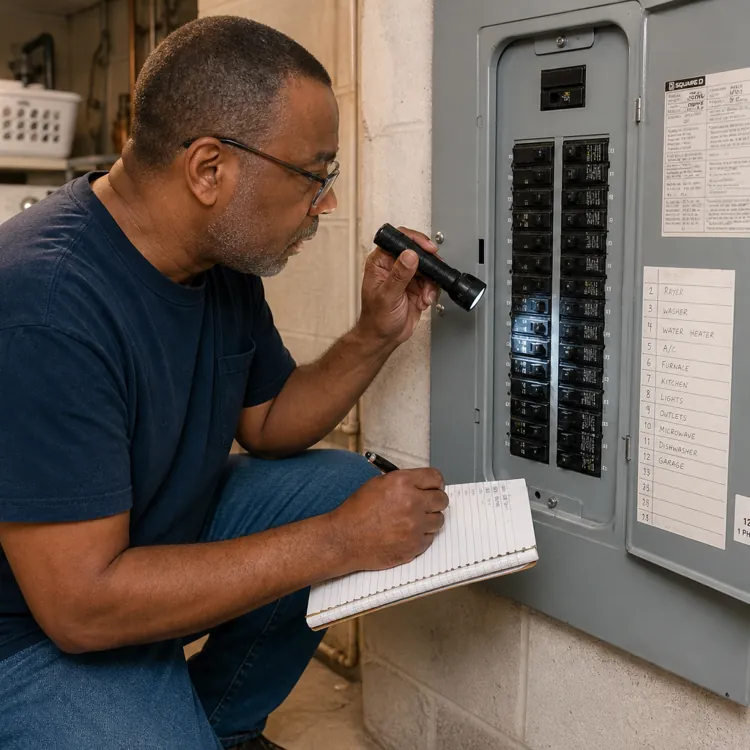
- Your existing electrical system: Make sure you know if you have outdated 100-amp service or if your home has more modern 200-amp service. You’ll usually need 200-amp service to support a whole-home generator, and upgrading can add between $1,000 and $2,200 to your total.
- Your backup power needs: Finally, know what you want to back up with your generator. You’ll need a much smaller unit if you just want emergency power for your refrigerator and lights, but you’ll need to size up significantly if you want backup for your entire home, including heating, cooling, pool heaters and more.
» MORE: Best whole-house generators
Whole-house generator load calculation
When you hire a professional to install your generator, they’ll conduct a load calculation to ensure your unit has sufficient output to support your home through a power outage. You can take similar steps to get a better idea of the size of the standby generator you need, and then base your estimated costs on that figure.
You can follow the steps below to get started:
- Figure out what you want backup power for. First, decide what you want your generator to power. Some homeowners want backup for their entire home so that they have no interruption to their routine. Others just want their standby generator to power lights and keep the refrigerator running to prevent food spoilage. Figure out where in this spectrum you fall, and make a list of everything you want or need to run during a blackout.
- Consider simultaneous running needs. Consider which items you’ll run at the same time. Their combined power draw matters more than the draw of each item individually. Even a small, modern generator can power a refrigerator, but if you need to run your fridge, AC, lights, gaming computers and a pool pump at the same time, you’ll need a much larger generator. Figure out what you’d need to run simultaneously, and make a detailed list.
- Determine the starting load for each appliance or device. Next, take everything on that list and find the starting watts, which can be two to six times higher than running watts. You can check the device or appliance manual, or look for the locked rotor amps (LRA) on the nameplate attached to the side or rear of the appliance. LRA tells you the maximum draw of the unit at startup, which can help avoid undersizing your generator.
- Determine the running load. Next, check the running loads of all of the appliances and devices you plan to use simultaneously, which you can also find in the device manuals or on the nameplates.
- Add the concurrent loads to get a baseline generator size. Your minimum generator size should have an output that’s higher than the highest startup draw and higher than all of the concurrent loads added up.
- Add a 20% safety buffer. To avoid unexpected power issues, add 20% to 30% to that total when sizing your whole-home generator.
Add a safety buffer
Add 20% to 30% to your total wattage when sizing your whole-home generator.
Generator sizing for HVAC and pumps
Most homeowners installing a whole-house generator want backup for convenience and comfort in addition to safety, which usually means they want to be able to run their heating and cooling systems, plus some emergency equipment, like well pumps and sump pumps.
Not only is it useful to understand the average draw of these items and what size generator can support them, but it’s also crucial to include them in your calculation because many have higher starting wattages. Compressors kicking on from a standstill draw a surge of power and then ramp down once they’re running, so it’s important to consider the startup draw of these items.
Here’s a breakdown of average starting and running wattages for different types of heating systems, cooling equipment and water pumps:
| Device or appliance | Typical starting watts | Typical running watts |
|---|---|---|
| Central AC | 9,000 to 15,000 | 3,000 to 5,000 |
| Ductless mini-split | 6,000 to 12,000 | 2,000 to 4,000 |
| Electric baseboards | 500 to 2,000 | 500 to 2,000 |
| Electric furnace | 5,000 to 20,000 | 5,000 to 20,000 |
| Electric water heater (tank-style) | 4,000 to 6,100 | 4,000 to 6,100 |
| Electric water heater (tankless) | 3,000 to 36,000 | 3,000 to 36,000 |
| Heat pump | 6,000 to 12,000 | 2,000 to 4,000 |
| Other heating systems (propane, natural gas and oil) | Under 500 | Under 500 |
| Pool pump | 1,200 to 2,500 | 350 to 2,250 |
| Sump pump | 1,300 to 4,100 | 800 to 1,000 |
| Well pump | About 3,000 | About 1,000 |
You can use these estimates to get an idea of your generator size, but things like the number of HVAC zones you have, the energy efficiency of your home and the tonnage of your heating and cooling equipment can all affect power draw. It’s always best to have a professional size your generator for you, since they’ll take all of these factors into consideration.
Whole-home vs. essential load sizing
With all of this in mind, one of the most important things you’ll need to consider is whether you want backup power for your entire home or just for the essentials, like lighting, refrigeration and well-pump equipment.
The average homeowner would need just a 7- to 10-kilowatt (kW) generator for emergency backup, which costs $4,500 to $10,600. Whole-home coverage for an average-size property would push the installation cost to between $5,000 and $19,700, nearly doubling the price for a 12 kW to 20 kW generator.
Of course, you get value equivalent to what you pay for. An emergency-backup-only unit would only provide power for the essentials, whereas a larger unit could prevent interruptions to your daily routine by keeping your heating and cooling system running and providing more comfort and convenience.
Here’s how generator output, backup coverage and average cost compare:
| Output (kW) | Backup provided for | Average cost |
|---|---|---|
| 7 to 10 | Emergency power only (lights, fridge, well pump and medical equipment) | $4,500 to $10,600 |
| 12 to 20 | Whole-home coverage for an average-size house (1,800 to 2,000 square feet) | $5,000 to $19,700 |
| 22 to 30 | Whole-home essentials and comfort coverage for a 3,000-square-foot home | $7,600 to $25,400 |
| 30 to 80 or more | Whole-home coverage for a luxury estate, including all peripherals | $15,800 to $56,900 |
Note that you can sometimes move down a pricing tier without sacrificing convenience and comfort by installing an automatic transfer switch with load management, which helps prioritize power when multiple appliances need it at once.



FAQ
What size generator do I need for a 2,000-square-foot house?
When sizing a generator for a 2,000-square-foot house, plan on 12 to 20 kW for whole-home coverage in most cases. Sizing can vary widely based on what appliances and equipment you have and want to run during outages, how energy-efficient your home is, your electricity habits and more. Have a professional size your system for the best results.
What size generator do I need for a 3,000-square-foot house?
On average, you’ll need a generator with an output of between 22 kW and 30 kW to provide power for a 3,000-square-foot house.
You may need a smaller or larger unit depending on what appliances and equipment you want to run, how efficient your home is and what type of heating and cooling equipment you have. For example, electric heating units may require larger generators.
Is a 24 kW generator enough for a whole house?
A 24 kW generator is big enough to run most typical and slightly oversized homes. If your living space is 3,000 square feet or below, a 24 kW generator should be plenty, even if you want backup for your appliances, heating and cooling systems, lighting and other devices.
You may need a unit with an output above 30 kW if you have electric furnaces, electric baseboards, electric water heaters, electric pool heaters or pool pumps that you also want to run during blackouts.
What size generator do I need to run central air?
The best way to figure out what size generator you need to run your central AC system is to find the starting watts and running watts that your unit will call for. You can usually find the wattage in the manual or on the unit’s nameplate.
Size your generator up 20% from the starting watts to avoid issues. You should also consider any other appliances or equipment you want to run during an outage and account for their power draw.
Article sources
ConsumerAffairs writers primarily rely on government data, industry experts and original research from other reputable publications to inform their work. Specific sources for this article include:
- Ace Power Parts Store, "Standby Generator Sizing Calculator: 5-Step Method, Formulas & Real-World Examples." Accessed July 21, 2026.
- A1 SolarStore, "How much electricity does your house use? Breaking down electric bill." Accessed July 21, 2026.
- RHCC Heating & Air Conditioning, "How Much Electricity Does Baseboard Heating Use?" Accessed July 21, 2026.
- North NJ HVAC, "How Many Watts Does Furnace Use? Energy And Cost Guide." Accessed July 21, 2026.
- Ruud Water Heating, "Light-Duty Commercial Electric Water Heaters." Accessed July 21, 2026.
- HVAC Base, "Water Heater Wattage: How Many Watts Does a Water Heater Use? (2026)." Accessed July 21, 2026.
- Swimming Pool Steve, "How Much Power Does A Pool Pump Use?" Accessed July 21, 2026.
- EcoFlow Technology, "How Many Watts Does a Sump Pump Use?" Accessed July 21, 2026.