
Are stair lifts safe overall?
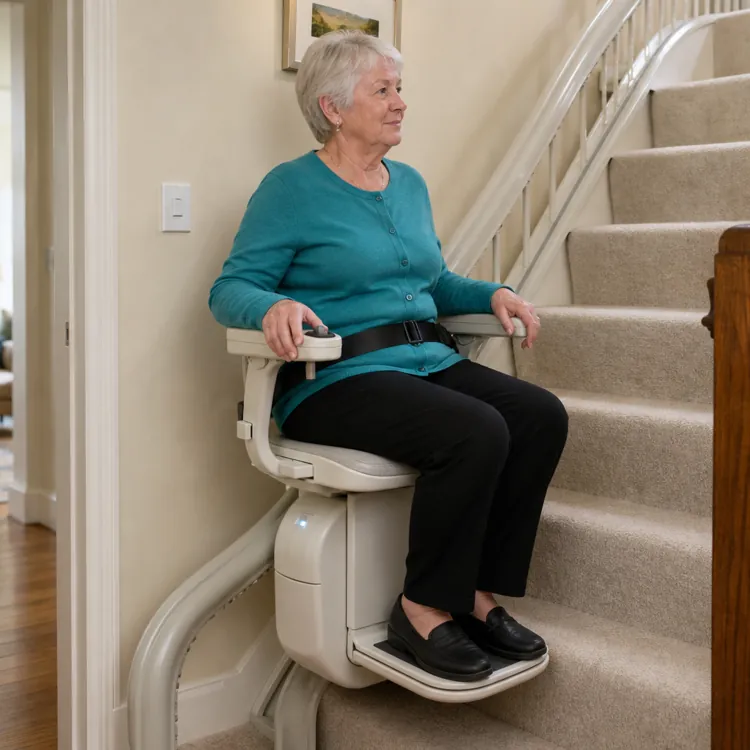
If you no longer feel secure on stairs, a stair lift can take a lot of strain out of moving between floors. Most models have seat belts, swivel-seat locks, obstruction sensors and braking systems that help make each trip safer.
Who stair lifts help most
If you struggle with balance or if leg strength and mobility issues make climbing stairs difficult, a stair lift can help you get into your house or move between floors with ease. You’ll still need to get on and off the seat safely, use the controls and stay seated during the ride.
When stair lifts may be unsafe
If transferring onto the seat is difficult or you have trouble remembering how to use the controls, the potential disadvantages of a stair lift may outweigh its benefits. Pets, children and clutter can also get in the way of safe operation, although many lifts stop automatically when sensors detect an obstruction.
Realistic risks and likelihood
A stair lift needs to be used correctly 100% of the time. Before you use one on your own, your installer should show you how to fasten the seat belt, swivel the seat safely, respond to an obstruction and recognize warning lights or alerts.
» FIND OUT: What stair lift data reveals
Stair lift safety features to check
Understanding how stair lifts work can help you identify which safeguards to look for when comparing models. Most stair lifts come with several built-in safeguards, though this varies by model.
Some features that come standard in certain models are optional in others. At minimum, look for a lift that keeps you secure in your seat, stops if something blocks the stairs and lets you get on and off from a stable position.
Important safety features to look for include:
- Seat belt: Helps keep you in place while the lift is moving
- Obstruction sensors: Stop the lift if the footrest or carriage touches an object on the stairs
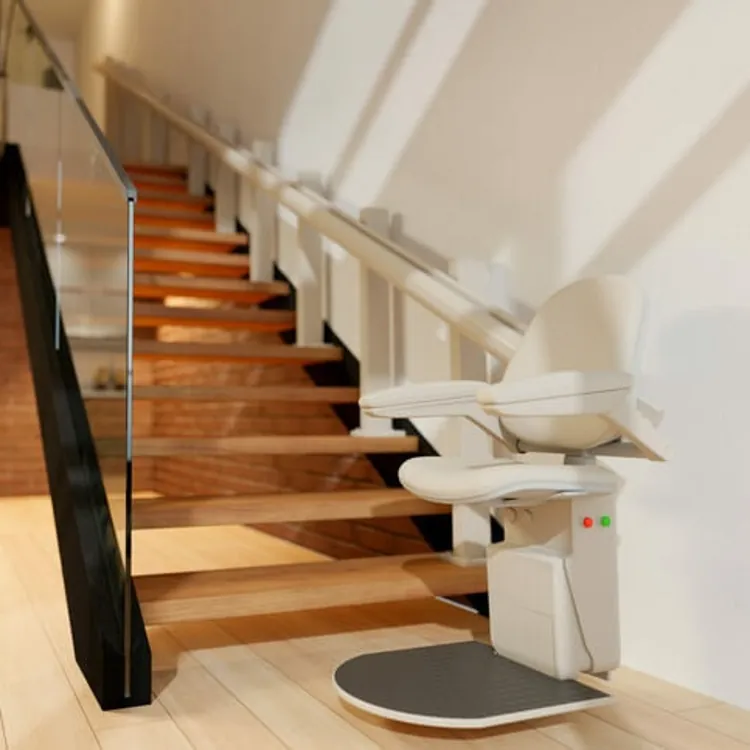
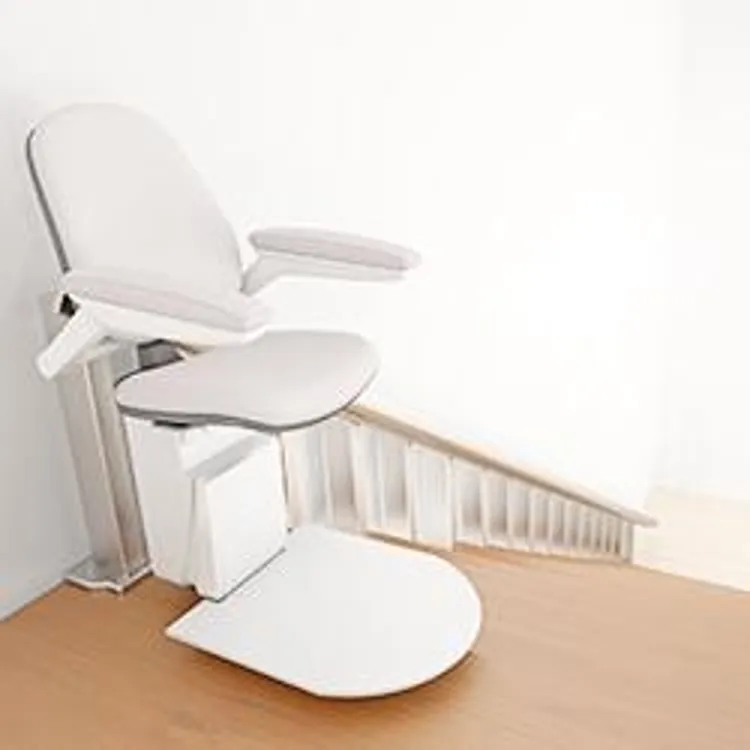
- Locking swivel seat: Lets you turn toward the landing before getting off and prevents travel unless the seat is locked into position
- Overspeed and motor brakes: Help control the lift if it begins moving faster than intended
- Rechargeable batteries: Can keep the lift working during a household power outage
- Key lock: Prevents children, visitors or unauthorized users from operating the lift
- Armrests and footrest: Give you a more secure seated position during travel
- Smooth start and stop: Reduces sudden movement when the lift begins or ends a trip
Stair lift installation safety requirements
A stair lift needs to fit both you and your staircase. Before installing anything, the technician should measure the stairs, check clearances around doors and railings, and make sure you have enough room at each end to get on and off safely.
Professional installation versus DIY
Professional installation involves far more than attaching a rail to the stairs. The installer measures your staircase, mounts the brackets to the stair treads, sets up the chair and charging system, then runs the lift through the full track to check for rubbing, stalling or tight clearances.
Your installer should also walk you through all the controls and safety features before they leave.
Rail overruns and safe landings
The rail usually mounts to the stairs, not the wall, so you don’t usually need to worry about plaster or drywall. At the top, a swivel seat lets you turn toward the landing before standing, which means you’re not trying to step off while facing the staircase.
Some installations extend the rail slightly beyond the top step so the chair stops closer to the landing, giving the rider a safer place to get on and off.
Weight limits and fit assessment
An installer will measure the width of your staircase, the depth and height of each step, the required rail length and the space around nearby doors or railings. The lift’s weight capacity must also safely accommodate you.
» COMPARE: Best stair lift brands
Stair lift safety in power outages
Most stair lifts run on rechargeable batteries, so a power outage won’t usually stop you halfway up the stairs. The batteries recharge using household power during normal use and can also keep the lift moving for several more trips if electricity goes off.
Battery power and charging points
Many models use two 12-volt rechargeable batteries. Some lifts charge continuously while parked on the rail, while others use charging contacts at the top or bottom of the staircase. Keeping the lift parked in its charging position is important because a battery that’s already low might not have much reserve if the power ever goes out.
What to do during outages
A fully charged lift can usually make several trips before the batteries run down. For example, some straight indoor models from Bruno Independent Living Aids can complete about 10 to 15 round trips, though stair length, the weight of the rider and the condition of the battery can change that. During a longer outage, use the lift only when needed so you don’t drain the batteries unnecessarily.
Preventing mid-ride issues
An easy way to avoid a dead battery mid-ride is to always park the chair at its charging point. It’s also a good idea to make battery checks part of your regular stair lift maintenance routine. If the lift runs out of battery power during an outage, you won’t be able to use it again until power returns and the battery recharges.
FAQ
Who shouldn’t use a stair lift?
You shouldn’t use a stair lift if you can’t transfer to the seat safely, stay seated during the ride or operate the controls. All stair lifts also have a weight capacity, with heavy-duty ones topping out at 600 pounds.
Are stair lifts dangerous?
Stair lifts are safe when they’re installed correctly and used as directed. These usually come with safeguards like seat belts, obstruction sensors, swivel-seat locks and braking systems.
Do stair lifts fold away when not in use?
Yes, many stair lifts have folding seats, armrests and footrests to leave more room on the staircase. Some models also have rails that fold up when the lift isn’t in use, preventing the track from blocking a nearby doorway or walkway.
Can pets or children get hurt by a stair lift?
Yes, pets and children can be at risk around a moving stair lift, but obstruction sensors can stop the chair when they detect something in its path, like fingers or tails. Some models may also include a key-operated switch that can help prevent children from operating the lift without permission.
Article sources
ConsumerAffairs writers primarily rely on government data, industry experts and original research from other reputable publications to inform their work. Specific sources for this article include:
- Centers for Disease Control and Prevention, "Older Adult Falls Data." Accessed Aug. 28, 2026.
- Bruno Independent Living Aids, "Stairlift Guide (2026)." Accessed Aug. 27, 2026.