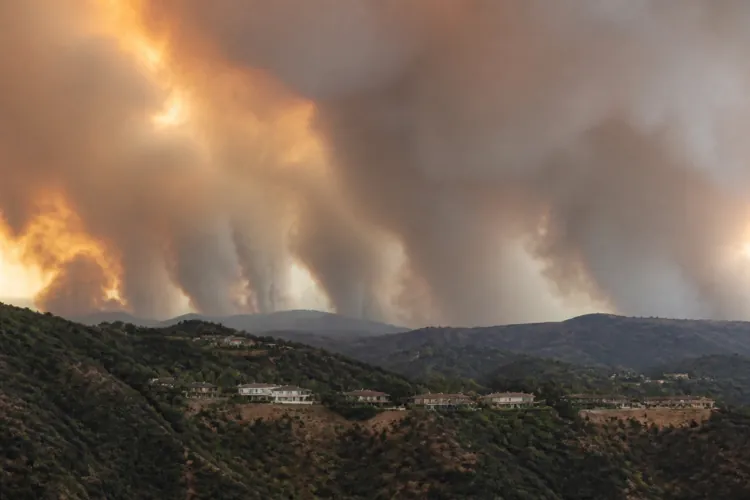

Wildfire smoke is undoing some of the progress the U.S. has made in cleaning up its air.
Poor air quality can affect spending, workplace productivity, and healthcare costs.
Researchers found wildfire smoke has erased about one-quarter of previous air-quality improvements in many states.
When wildfire smoke rolls into a community, the most obvious concern is usually the air itself. But smoky skies can affect more than how easily people breathe. They can also change how people work, spend money and use health care.
That’s the takeaway highlighted by Georgia Tech economist Casey Wichman, who says increasingly frequent wildfire smoke events can create economic costs through air pollution.
When the Air Quality Index, or AQI, climbs, people may stay home rather than shop, eat at restaurants, or attend outdoor events. Businesses that depend on customers coming through the door can feel that slowdown, too.
“Environmental regulations like the Clean Air Act dramatically improved our air quality over the past 40 years, but as wildfire season becomes the new normal, wildfire smoke is eroding those gains,” Wichman said in a news release.
How researchers tracked the smoke
The findings on the changing air-quality picture come from research published in Nature. Researchers examined ground-based and satellite-based air pollution data covering the contiguous United States from 2000 through 2022.
They focused specifically on PM2.5, tiny particles in the air that are less than 2.5 micrometers in diameter. The researchers used the data to determine how much wildfire smoke contributed to changes in PM2.5 levels over time and where those effects were most noticeable.
The study also looked at trends in extreme PM2.5 days and considered how climate-related factors have influenced year-to-year differences in smoke exposure.
What it could mean for consumers
The researchers found that, since at least 2016, wildfire smoke has influenced average annual PM2.5 trends in nearly three-quarters of states in the contiguous U.S.
On average in those states, smoke erased about 25% of previous progress in reducing PM2.5 — equivalent to roughly four years of improvement. The effect was even larger in many Western states.
For consumers, the economic effects can show up in less obvious ways. High pollution days may mean fewer trips to stores and restaurants, canceled outdoor activities, and disruptions for people who work outside.
“On days with peak air pollution events, people tend to stay inside more, so they're not going out and spending money that supports the local economy,” Wichman said.
Even indoor workers can experience reduced productivity when polluted air affects concentration and decision-making, according to Wichman.
“So even if you're working from home to avoid the air pollution or have a desk job, you're still exposed because there’s not a perfect filter between your home and the outdoors, and that reduces the level of productivity you have at work,” he explained.
And there can be health-related costs, too. Georgia Tech cites estimates that short-term wildfire-smoke exposure costs Americans billions of dollars annually in health-related damages, while long-term exposure carries substantially larger costs.
As smoky days become more common, the economic impact may become harder for communities — and the people who live and work in them — to ignore.