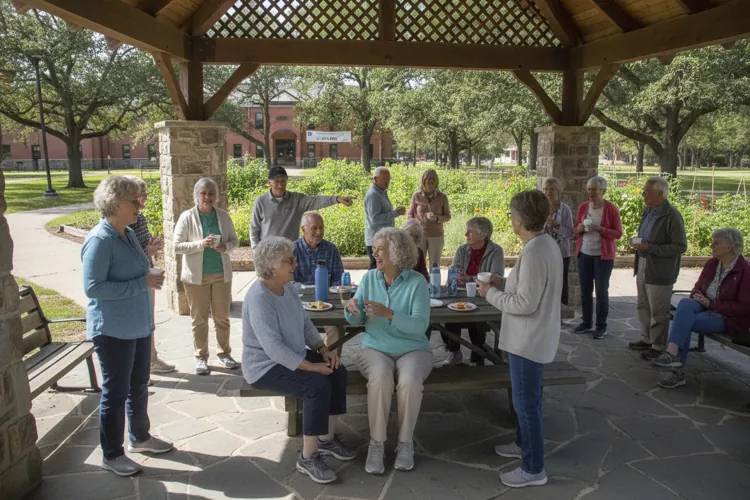

Older adults who joined community gathering places had a lower risk of cognitive disability if they did not already exercise regularly.
Researchers followed more than 2,700 older adults in Japan for nearly four years.
The findings suggest accessible community programs may offer another way for less-active older adults to stay engaged.
Staying connected to other people can mean more than simply having someone to chat with. New research suggests that community gathering places may also be associated with cognitive health among some older adults.
In Japan, community gathering places are designed to give residents opportunities to participate in group activities, including exercise and social interaction. These programs are part of efforts to help older adults maintain their health and independence.
Researchers from Osaka Metropolitan University wanted to find out whether taking part in these gatherings was associated with a lower risk of cognitive disability — and whether a person's existing exercise habits made a difference.
How the study worked
The researchers analyzed data from 3,511 adults ages 65 and older living in Habikino City, Osaka Prefecture, who had not been certified as needing long-term care when the study began. Participants completed a self-administered questionnaire in early 2020, and their information was linked with long-term care insurance records.
After exclusions, 2,758 people were included in the primary analysis. Researchers tracked participants through January 2024, looking for new cases of cognitive disability. They also looked at whether participants regularly attended community gathering places and whether they had an established exercise habit.
For the study, regular exercise meant exercising enough to cause sweating for at least 30 minutes twice a week for more than a year. Community-gathering participants were people who attended at least once a week.
The researchers adjusted their analysis for factors including age, sex, health conditions, living arrangements, economic status, smoking and drinking, functional health, and depressive symptoms.
What the results mean
During a median follow-up of 3.9 years, 345 people developed cognitive disability. Among older adults who did not have regular exercise habits, those who participated in community gathering places had about half the risk of developing cognitive disability compared with those who did not participate.
The adjusted hazard ratio was 0.51, meaning the estimated risk was roughly 49% lower for participants in this group. However, researchers did not find a significant association among people who already exercised regularly.
That doesn't mean community gatherings prevent cognitive disability, since this was an observational study and cannot establish cause and effect. The researchers also noted that the study took place in one Japanese municipality, so the findings may not apply everywhere.
Still, the results point to a potentially useful role for accessible community programs — particularly for older adults who aren't already physically active.
“These findings support a growing direction in long-term care prevention policy, which creates opportunities for participation that are accessible to older adults who may find regular exercise difficult,” researcher Kazuki Uemura said in a news release.
“We hope this evidence will help inform community-based initiatives that support a wide range of older adults and contribute to policies aimed at reducing health inequalities.”