

2025 Travel Safety and Security

Article Image

TSA ending shoes-off rule for air travel

  • Nearly two decades after the “shoe bomber,” passengers may soon keep footwear on at security checkpoints

  • TSA quietly tests changes amid ongoing complaints about travel hassles

  • Move could ease long lines and boost traveler satisfaction at U.S. airports


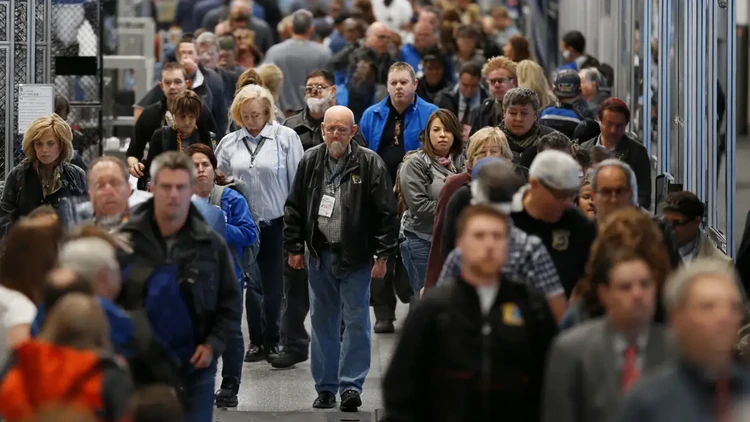
Travelers weary of peeling off their shoes at airport security may finally get some relief. The Transportation Security Administration is preparing to roll out new procedures that would allow passengers to keep their shoes on while passing through standard screening checkpoints, according to people familiar with the plans.

The shift, first reported by Gate Access, a travel newsletter, hasn’t been formally announced, but signals a significant change for an agency that has kept the footwear rule in place for nearly 20 years. The TSA confirmed in a statement that it is “always exploring new and innovative ways to enhance the passenger experience and our strong security posture,” but added that any official updates would come through established channels.

A rule rooted in terror threats

The practice of removing shoes at airport security took hold after Richard Reid, infamously dubbed the “shoe bomber,” tried to ignite explosives hidden in his footwear during a 2001 flight from Paris to Miami. The attempt, though unsuccessful, sparked fears of similar plots in the tense aftermath of the September 11 terrorist attacks.

Initially, shoe-screening policies varied from airport to airport. It wasn’t until 2006 that the TSA formally mandated shoe removal for all passengers, citing intelligence about “a continuing threat.” The rule became one of the most unpopular travel measures, blamed for slowing down lines and subjecting millions of passengers to the indignity of walking barefoot or in socks through security checkpoints.

Complaints and exemptions

Frustration over the shoe rule has fueled interest in TSA PreCheck, the trusted-traveler program that lets members keep their shoes on during screening. Children 12 and under and passengers 75 and older have also been exempt from the requirement.

In April, Transportation Secretary Sean Duffy took to social media to crowdsource ideas on improving family travel. He later posted that “it’s very clear that TSA is the #1 travel complaint.”

If the planned change takes effect, it could dramatically improve the security experience for millions of travelers—ending one of the most visible legacies of post-9/11 aviation security.


Article Image

CDC warns travelers about dengue fever

With the warmer months coming, and many travelers planning tropical getaways, the Centers for Disease Control and Prevention (CDC) are warning consumers about the heightened risk of dengue fever. 

Based on recent reports, cases of dengue fever – which is transmitted through mosquito bites – are on the rise around the world. 

“Globally, dengue cases have increased substantially in the last five years, with the most pronounced increases occurring in the Americas,” the CDC wrote. 

“As of March 6, more than 760,000 dengue cases have been reported in 2025, which is a 15% increase compared to the previous five-year average. Epidemics in the Americas region are expected to increase both travel-associated cases and the possibility of local transmission in the continental United States in areas with competent mosquito vectors. Spring and summer travel in the United States overlaps with the months of increased seasonal dengue activity in many countries.”

Which areas are most affected?

The CDC has identified five states across the U.S. where dengue cases have popped up from local mosquitoes – California, Texas, Florida, Hawaii, and Arizona. 

Additionally, six territories of the U.S. have reported higher numbers of dengue recently, including Puerto Rico, the U.S. Virgin Islands, American Samoa, the Federated States of Micronesia, the Republic of Marshall Islands, and the Republic of Palau. 

Globally, these countries present a high risk of dengue for travelers: 

  • Brazil

  • Burkina Faso

  • Colombia

  • Cuba

  • Ecuador

  • Fiji

  • French Polynesia

  • Guadeloupe

  • Guatemala

  • Iran

  • Mexico

  • Pakistan

  • Panama

  • Philippines 

  • Saint Lucia

  • Sudan

What travelers should know

The CDC’s Travel Notice indicates that the dengue fever outbreak is classified as a Level 1 issue, which means travelers should practice the usual precautions. 

At this stage, it isn’t recommended to cancel travel. However, experts are encouraging travelers to use an EPA-registered insect repellent to prevent mosquito bites when traveling or spending extended periods of time outdoors. 

Additionally, it is recommended to sleep in an air-conditioned room or a room with window screens and to cover arms and legs when outdoors. 

Article Image

Study names bridges most likely to collapse from boat collisions

Fears of boat collisions with bridges have run high since a container ship hit the Francis Scott Key Bridge in Baltimore last year, collapsing the bridge and killing six people.

Now, a study from John Hopkins University shows just how risky these collisions are among the nation's biggest bridges.

“With this investigation we wanted to know if what happened to the Key Bridge was a rare occurrence. Was it an aberration? We found it’s really not,” said Michael Shields, a Johns Hopkins engineer specializing in risk assessment and lead investigator of the National Science Foundation, said in comments with the study.

Some of the nation's busiest bridges will likely suffer a boat collision, at least once, that can cause catastrophic damage or collapse within 20 to 50 years, despite being designed to keep collapses to a less than 1 in 10,000 chance, according to the study, which reviewed 16 years of U.S. Coast Guard data and ship aberrancy rates from the American Association of State Highway and Transportation Officials.

A large ship colliding with a bridge won't necessarily cause collapse, but Shields said it would almost certaintly cause irreperarable damage.

The frequency of ship traffic and how close to the piers they sail were strong predictors of collisions, the study said.

Lousiana's Huey P. Long Bridge, California's San Francisco-Oakland Bay Brdige and Louisiana's Crescent City Connection, Texas's Beltway 8 Bridge and Louisiana's Hale Boggs Memorial Bridge are likely to be hit with ships within less than 40 years, the study said.

"We want that number to be thousands of years," Shields said. “If one of these massive ships hits a bridge, it’s catastrophic."

The Huey P. Long Bridge had the highest risk, with one collision expected every 17 years.

On the other hand, the study said the John A. Blatnik Bridge in Minnesota and Wisconsin should expect a collision within 634 years.

John Hopkins said some bridges with considerable traffic from large ships didn't make the list because their piers are safely on land, away from the passing ships, including Minnesota’s Deluth Lift Bridge and California's Vincent Thomas Bridge.

To prevent collisions, ship traffic should be kept away from piers and piers shoould be equipped with protections including dolphins and other structures.

Still, Shields said there are limits to the predictions.

“There’s still a lot of uncertainty in predicting the frequency of ship collisions, even with the best data we have,” he said. “But the important point is not whether it will occur every 17 years or every 75 years. It’s that it’s happening way too often.”