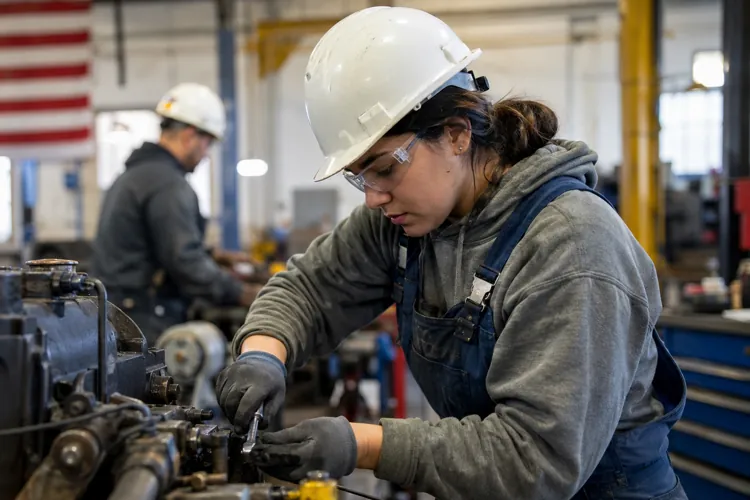

Trade jobs are booming. Electricians, welders, HVAC technicians, and other trades often pay $65,000 a year or more, yet employers still can't fill openings.
The biggest hurdle isn't pay—it's awareness. Many workers enter the trades through family, friends, or on-the-job training, so many job seekers don't know where to start.
The shortage creates opportunity. Many employers are willing to train motivated beginners, making apprenticeships a strong alternative to a four-year college degree.
If you've heard there's a shortage of electricians, welders, HVAC technicians, and other skilled tradespeople, you're not imagining it.
A new ZipRecruiter survey finds that while trade careers offer solid pay, job security, and high job satisfaction, employers are still struggling to fill open positions. The problem isn't a lack of good jobs, but rather that people don't know how to get started.
That's creating opportunities for anyone looking to switch careers or skip the traditional four-year college path.
Why the hiring shortage continues
Trade workers earn a median salary of about $65,000 a year, with many specialized fields paying much more. More than three-quarters say they'd choose the trades again, and 82% would recommend them to young workers.
Yet hiring hasn't kept pace with demand. Construction and manufacturing job openings have jumped by more than 30% over the past year, leaving many employers short-staffed.
Nearly half of trade workers say they regularly perform the work of multiple people because there simply aren't enough qualified workers to go around.
The reason? There isn't a clear path into many trade jobs
According to the survey, half of trade workers learned primarily on the job, while nearly one-third were self-taught or learned through friends and family.
More than half first heard about trade careers through personal connections—not schools, job boards, or career counselors.
That means many qualified job seekers simply never discover the opportunities available.
The good news for career changers
The shortage also means employers are often more willing to train motivated workers than many people realize.
Formal apprenticeships remain one of the best ways to enter the trades, but surprisingly few workers have completed one. Those who do tend to earn substantially more over their careers than workers who learned entirely on the job.
At the same time, artificial intelligence isn't replacing most trade jobs. Instead, workers say technology is making jobs safer and more efficient rather than eliminating the need for skilled labor.
Smart tips for breaking into the trades
Don't assume you need years of experience. Many employers hire entry-level workers who demonstrate reliability and a willingness to learn.
Search for registered apprenticeships. Apprenticeships let you earn a paycheck while learning a trade and often lead to higher long-term earnings than informal training.
Look beyond online job boards. Many opportunities are posted through unions, trade associations, community colleges, workforce development offices, and local employers.
Ask employers about paid training. Some companies will cover certification costs or provide on-the-job instruction for qualified applicants.
Think about future demand. Electricians, HVAC technicians, welders, industrial maintenance workers, and jobs tied to energy and infrastructure projects are expected to remain in high demand for years.