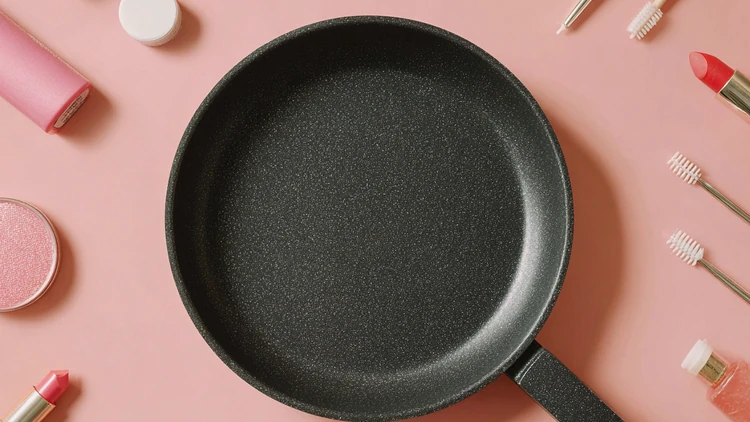
- PFAS, or “forever chemicals,” are linked to cancer, fertility issues, and weakened immune systems.
- These chemicals are hiding in cookware, fabrics, cosmetics, and cleaning products.
- Experts say small changes in what you buy and use can significantly reduce your risk.
What is it — and does it matter?
You’ve probably heard of PFAS — short for per- and polyfluoroalkyl substances — nicknamed “forever chemicals” because they barely degrade in the environment. Once introduced, they persist in soil, water, and even human blood for decades.
Research shows that about 97% of Americans already carry PFAS in their bloodstream, according to national health surveys. These chemicals are linked to cancers, hormone disruption, developmental delays, and reduced fertility.
The bad news: PFAS are intentionally added to common consumer products — everything from nonstick pans to waterproof mascara — to make them resistant to water, oil, and heat.
The good news: You can reduce your exposure dramatically by changing a few purchasing habits. The non-profit PIRG, has some suggestions"
Step 1: Stop bringing PFAS into your home
You don’t have to toss everything you own. The first step is simply avoiding new products treated with PFAS.
When shopping, watch for words like nonstick, stain-proof, grease-resistant, or waterproof. And check ingredient lists for terms such as PTFE, perfluoro, or polyfluoro — all chemical cousins of PFAS.
Step 2: Go old-school with your cookware
That slick, easy-slide frying pan may use PFAS-based coatings like Teflon (PTFE). When scratched or overheated, they can release PFAS particles or fumes.
Safer options include stainless steel, carbon steel, or cast iron cookware. If you’re still using nonstick pans, keep them at medium heat, use non-metal utensils, and replace them once the coating peels or flakes.
Step 3: Watch your baking paper
Many baking papers and fast-food wrappers are treated with PFAS to resist grease. Choose uncoated parchment labeled PFAS-free, or reusable silicone baking mats instead — they last for years and eliminate waste.
Step 4: Skip stain-resistant tablecloths
“Easy-clean” or “spill-proof” tablecloths often have PFAS coatings. Washable cotton or linen tablecloths — or cork placemats — are safer and more sustainable.
Step 5: Be wary of cleaning sprays
Some household cleaners use fluorinated ingredients. Look for Green Seal or Safer Choice labels, which exclude PFAS.
For most messes, soap, water, and a little vinegar or baking soda work just as well. (Never mix vinegar and hydrogen peroxide — the combo can release harmful fumes.)
Step 6: Check your raincoat
Outdoor jackets and rain gear often use PFAS-based “durable water repellents.” Many brands now offer PFAS-free shells — look for labels that say so when you shop or re-treat your coat.
Step 7: Look at your dental floss and makeup
PFAS are sometimes used to make dental floss slick or mascara waterproof. Researchers found PFAS in nearly three-quarters of waterproof mascaras tested.
Check labels for PTFE or “fluoro-” ingredients, and opt for PFAS-free floss and cosmetics. Plant-based or silk floss, refillable glass containers, and natural mascaras are safer choices.
Step 8: Lipstick can be a hidden source
Some lipsticks use PFAS for shine and staying power — but that means you could be ingesting them throughout the day. Avoid products with “perfluoro” or “polyfluoro” ingredients, and choose PFAS-free cosmetics instead.
Why cutting PFAS matters
PFAS is found in food, air, dust, and drinking water. Even small daily exposures can add up over time. Reducing PFAS in your home means less of these chemicals in landfills, waterways, and ultimately, human bodies.
The Environmental Protection Agency (EPA) estimates at least 158 million Americans currently have PFAS in their tap water. While individual steps help, larger regulatory action is critical.
Environmental groups are urging Congress to support the PFAS National Drinking Water Standard Act, which would make EPA’s limits on six common PFAS legally binding.
How to protect your family from PFAS
Small switches, big difference
Cookware: Replace nonstick pans with stainless, carbon steel, or cast iron.
Food contact: Use PFAS-free parchment or silicone mats.
Cleaning: Choose “Safer Choice” or “Green Seal” certified products.
Clothing: Opt for PFAS-free outdoor gear.
Cosmetics: Avoid waterproof or “longwear” formulas with PTFE or “fluoro-” ingredients.
Quick checklist: What to do right now
✅ Audit your kitchen and bathroom.
Check cookware, floss, cosmetics, and cleaning products for PFAS-related terms.
✅ Buy PFAS-free when you replace items.
You don’t need to purge — just make safer choices going forward.
✅ Filter your drinking water.
Activated carbon and reverse osmosis systems can reduce PFAS.
✅ Support regulation.
Urge your representatives to back the PFAS National Drinking Water Standard Act.