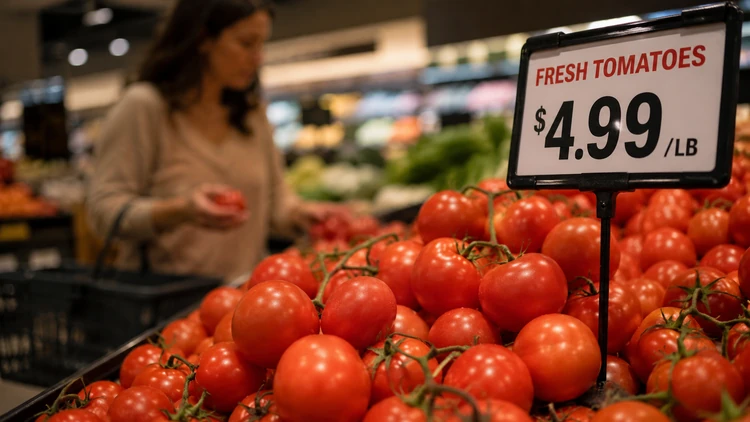

Tomato prices are up about 40% over the past year, making them one of the fastest-rising grocery items in America.
Experts point to higher shipping costs, weather-related crop issues, and a 17% tariff on many imported tomatoes from Mexico.
Smart ways to save include shopping local, comparing tomato varieties, using canned for cooking, and stocking up when prices drop.
If your summer BLT is suddenly costing more than you remember, you're not imagining it.
According to a recent report from the Associated Press, tomato prices have surged about 40% over the past year, making them one of the fastest-rising grocery items in America right now.
That increase is outpacing many other foods consumers have been complaining about, including coffee, beef, and seafood. And because tomatoes show up in so many meals, the impact is being felt by both shoppers and restaurants.
Why are tomatoes getting so expensive?
The AP reports that higher transportation costs, weather-related crop challenges, and new tariffs on imported tomatoes have all contributed to the spike.
A major factor is America's reliance on tomatoes imported from Mexico. After the U.S. withdrew from a trade agreement that had allowed duty-free tomato imports, many imported tomatoes became subject to a 17% tariff.
Economists interviewed by the AP described the situation as a "perfect storm" of trade policy, weather issues, and higher shipping costs. The result is higher prices at the grocery store.
Shoppers are definitely noticing
Unlike some inflation increases that happen gradually, tomato prices have become highly visible.
Many consumers and restaurants have taken to social media to post photos and videos showing prices that they say are dramatically higher than last year. Some shoppers even reported seeing prices approach $8 per pound for certain varieties.
Tomatoes have become one of those products that consumers buy frequently enough to notice when prices jump. And because they're often viewed as a basic staple rather than a luxury item, the sticker shock can feel particularly frustrating.
Restaurants are feeling the squeeze too
The pain isn't limited to consumers. Restaurants that rely heavily on tomatoes are seeing major cost increases.
According to the AP, sandwich chain Snarf's reported that the cost of a case of tomatoes rose from $27 to $93 in about a year. Company executives estimate the increase will add roughly $1.7 million in annual expenses.
For restaurants already dealing with higher labor costs and rising prices for ingredients like bread and beef, tomatoes have become another challenge. That could eventually translate into higher menu prices for consumers as businesses try to protect their margins.
Will prices come back down?
There is some good news. Supply-chain experts told the AP that tomato prices could ease later this year as more domestically grown tomatoes reach the market.
Higher prices also tend to encourage farmers to plant more crops, which can eventually increase supply and help stabilize prices.
Still, that process takes time, meaning consumers may continue seeing elevated prices throughout much of the summer.
Smart ways to save on tomatoes
If tomato prices are stretching your grocery budget, a few simple strategies can help:
- Buy seasonal and local. Farmers markets and roadside stands often become good deals once local harvests ramp up this summer.
- Compare varieties. Roma, vine-ripened, grape, and heirloom tomatoes can have widely different prices on the same day.
- Consider cheaper canned tomatoes. Settle for canned versions for sauces, soups, and recipes where fresh tomatoes aren't a requirement.
- Freeze extras. If you find a great sale, stock up and buy extra and freeze them for cooking later.
- Start a container garden. Even apartment dwellers can grow tomatoes in pots on a patio or balcony, helping offset grocery costs.