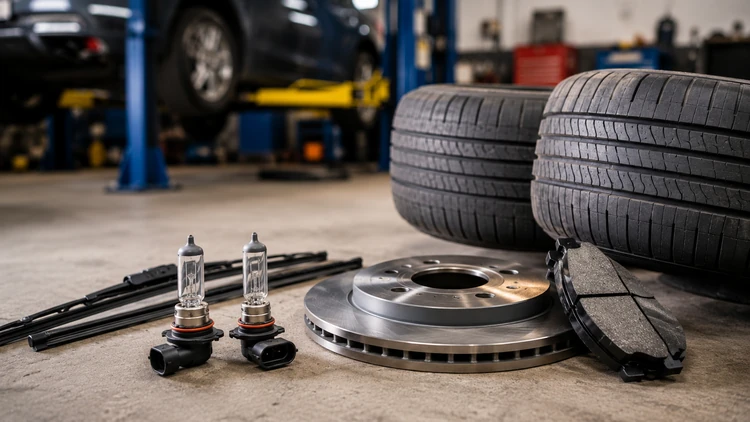

Some parts wear out together: Headlight bulbs, tires, wiper blades, and brake pads often have similar lifespans, so replacing both sides can save you another trip to the shop.
It's often a safety issue: Uneven wear can affect visibility, braking, handling, and overall vehicle performance.
Preventive maintenance saves money: Rotate tires, replace wipers before they fail, and address brake wear early to avoid costlier repairs later.
When a mechanic tells you to replace two parts even though only one seems bad, it's easy to assume you're being upsold.
But according to a recent report from SlashGear, there are several car parts that are best replaced in pairs because they wear out at roughly the same rate. Replacing only one side can lead to uneven performance, additional repairs, and another trip to the shop sooner than you'd like.
Here are four common examples of how replacing them together can actually save you money.
Headlight bulbs
It’s safe to assume that most headlight bulbs are installed at the same time and have similar lifespans.
That means when one burns out, the other is often nearing the end of its life as well. Replacing only one bulb can leave you driving with mismatched brightness and increases the chances that you'll be replacing the second bulb a few weeks later.
Money-saving tip: Buy headlight bulbs in a two-pack when they're on sale. You'll often pay less per bulb and avoid another emergency trip to the auto parts store.
Tires
Tires are one of the most important safety components on your vehicle, especially when driving in the rain or snow.
When you only replace one tire, the difference in tread depth can affect handling, braking performance, traction, and the vehicle’s overall ride quality.
This is especially true for vehicles with all-wheel drive, where uneven tire wear can affect braking and put additional stress on the parts that send power to all four wheels.
Money-saving tip: Try to rotate your tires every 5,000 to 7,500 miles. Regular rotations will keep tread depth similar across all four tires and significantly extend tire life.
Windshield wiper blades
Most vehicles use two different-sized wiper blades (driver side and passenger side), so they're often sold individually, not as a matched set.
Ignore the temptation to replace just one when it starts streaking across your windshield. The problem is that both blades are exposed to the same sun, weather, and wear. If one blade is failing, the other is usually close behind.
Replacing both blades at the same time will give you better visibility during storms and prevents uneven wiping patterns that can leave dangerous blind spots on your windshield.
Money-saving tip: Many auto parts stores regularly run promotions on wiper blades, especially before the rainy season. Wiper blades are one of the most frequently discounted car maintenance items.
Brake pads
Brake pads aren't on most drivers' radar until they hear the dreaded squeal.
Because brake pads on the same axle wear at similar rates, replacing only one side can create uneven braking performance. Most mechanics recommend replacing brake pads in pairs to maintain balanced stopping power and consistent wear.
Ignoring worn brake pads can also damage rotors, leading to a much larger repair bill.
Money-saving tip: Don't wait until you hear your brakes grinding. Catching brake pad wear early can help you avoid replacing rotors, which can easily double the repair cost.
Smart tips for lowering repair costs
- Bundle maintenance visits. If your vehicle is already in the shop, ask whether any other wear items are nearing replacement and avoid additional labor charges later.
- Compare repair quotes. Independent repair shops often charge significantly less than dealerships for the same work.
- Follow your maintenance schedule. The owner's manual remains one of the best money-saving tools most drivers never use.
- Keep records. A maintenance log can help you spot wear patterns and avoid replacing parts before you need to.