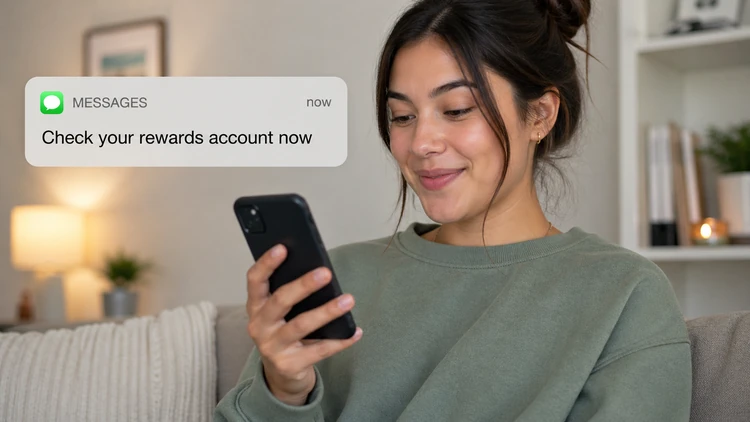

Scammers are using AI to send convincing “expiring rewards points” texts that impersonate major brands like telecom companies and retailers
These messages create urgency and often link to fake websites designed to steal personal or financial information
Experts say the safest move is to ignore unexpected texts and check your accounts directly through official websites or apps
If you’ve recently gotten a text warning that your reward points are about to expire, you’re not alone — and you may want to think twice before clicking anything.
A new wave of scams is targeting consumers across the U.S. by posing as trusted brands and creating a false sense of urgency around loyalty rewards. These messages often look convincing, mimicking companies like major telecom providers or retailers, and push you to “redeem now” before it’s too late.
According to TrendLife, scammers are increasingly using artificial intelligence to generate highly personalized, brand-specific messages at scale. The result? Fraud attempts that are not only more frequent, but also much harder to spot.
ConsumerAffairs spoke with Marike Kuyper, Manager of Content Marketing and Education at TrendLife, and she explained how these scams are evolving, why rewards programs have become such a prime target, and what simple steps consumers can take to protect themselves.
What signs to look for
These scams operate in the same way. First, you’ll receive a text message claiming that your ’ rewards points from a well-known brand are about to expire. The message will urge you to take immediate action, usually with a link to “redeem” points before they’re lost.
Kuyper explained that many scammers are pretending to be popular phone carriers in the U.S., like AT&T, Verizon, and T-Mobile. It’s common to see messages that look like this: “Your AT&T reward points expire today. Redeem now,” or “Final notice: your Verizon points are about to expire.”
“What makes these scams particularly effective is how familiar they feel,” she said. “Loyalty programs are part of everyday life, so these messages blend in easily.
“Our researchers have observed campaigns timed to coincide with genuine loyalty program news cycles, so that when a consumer has vaguely heard something about points expiring, the scam text feels like confirmation rather than a red flag, creating manufactured credibility. Increasingly, these scams are also part of broader, multi-step campaigns where a simple text can lead to a fake website, additional messages, or even a follow-up call as attackers try to build trust and extract more information.”
Other red flags to keep in mind
Like many scams, urgency is a key tactic. However, Kuyper highlighted several other warning signs to watch for:
Messages citing an exact point balance such as “11,430 rewards points remaining.” Legitimate loyalty programs don’t typically text you your precise point balance with a redemption link out of the blue.
Messages are about rewards programs that you don’t actively use or track.
Links don’t match the official domain of the brand (e.g. verizon.com, t-mobile.com, etc.).
There are requests for personal, login, or payment information to “redeem” points.
There are subtle inconsistencies in sender details or branding.
Being asked to continue the interaction on another platform, such as moving from SMS to a messaging app, website, or phone call
“That last tactic, known as “platform hopping,” is increasingly common,” Kuyper said. “Scammers use platform hopping to extend the interaction across channels, making the experience feel more legitimate and reducing the chance a victim will recognize the fraud occurring.”
How to protect yourself
To protect yourself against these scams, Kuyper recommends that consumers slow down and verify before acting. Here are some of her other tips for staying safe online:
Never click links in unsolicited messages
Go directly to the company’s official website or app to check your account
Verify communications through trusted customer service channels
Never share personal or financial information via text
Use security tools, like Trend Micro ScamCheck, to identify and flag suspicious activity in real time