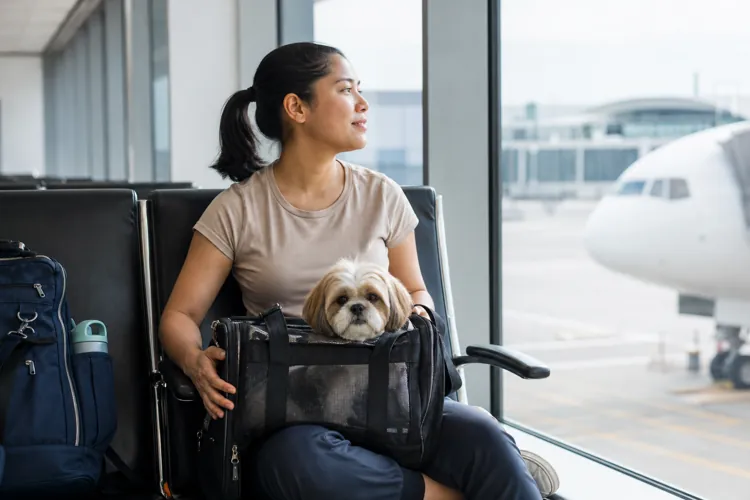

Not every pet is suited for travel, so experts recommend considering your animal's health, temperament, and comfort level before bringing them along.
Watch for signs of stress such as trembling, excessive panting, hiding, or refusing food, especially when introducing pets to new environments.
Before you leave, schedule a veterinary checkup, update vaccines and identification information, and locate emergency veterinary care near your destination.
For many pet owners, summer vacations aren't complete without a furry companion tagging along. And they're not alone.
Interest in traveling with pets has surged over the past year, with more people searching for information on everything from pet-friendly road trips to flying with dogs and cats.
But while bringing a pet on vacation can be rewarding, it also requires extra planning. Just because a destination is pet-friendly doesn't necessarily mean every pet is ready for the journey. Factors like health, temperament, travel anxiety, and safety all play a role in determining whether a pet should come along.
To break it all down, ConsumerAffairs spoke with Dr. Callie Harris, DVM, Purina veterinary communications manager and Dr. Annie Valuska, a certified applied animal behaviorist at Purina.
Should your pet come tag along?
This is probably the top question pet owners want the answer to. Dr. Valuska’s best advice: think about the entire trip from your pet’s point of view.
She has a list of questions pet owners should consider before packing for their pet:
Has your veterinarian cleared your pet for this trip?
Has your pet been socialized to enjoy all elements of this experience (car ride, flight, large groups of people, vacation environment, time with kids, etc.)? If not, do you have the flexibility and willingness to remove your pet from the situation if they are stressed?
Are you able to bring all needed supplies with you (some of the more challenging things to travel with include a crate, litter box, food supply, food/water bowls, bed, and toys)?
Will your pet be able to spend time with you once you reach your destination, or will they be excluded from most activities (like dining out or trips to a theme park)?
Are your accommodations pet-friendly?
And more than just permitting pets, do the accommodations represent a safe and enjoyable environment for your pet?
“A great rule of thumb is that if your pet has shown signs of not doing well with quick changes in their environment, it may be best to keep them in their homes with a pet sitter that they know and love,” Dr. Harris added.
Mistakes to avoid
Dr. Valuska explained that many pet owners forget that a new experience for a human isn’t necessarily as fun and exciting for their pet.
“While some of these activities may be fun for people, it’s common for pets to have a fearful, uncertain, or stressed reaction to something they’re experiencing for the very first time,” Dr. Valuska said.
“Taking the time before the trip to give the pet some controlled exposure to things they will encounter during the vacation and ensure they have a positive experience by reinforcing their calm behavior with treats. This can go a long way towards increasing their comfort and enjoyment during your trip!”
On top of that, Dr. Harris said to remember that your pet’s needs are just as important as our own.
“Many of our pets thrive in routine and structure. Breaking those routines may cause stress in our pets,” she said. “I think it’s wonderful to travel with pets when the itinerary is supportive of being in pet-friendly spaces but bringing them along just because we think they will be sad at home without us may not be a good enough reason to have them tag along.”
Signs of anxiety or discomfort during the trip
Some signs and symptoms for pet owners to look out for during their trips include:
Trembling
Lip- or nose-licking
Yawning
Holding up their paw
Trying to hide
Pinning their ears back
Panting excessively
Barking excessively
Drooling excessively
Inability to “settle”
Lack of interest in play
Refusal of food and treats that they normally like.
“If you have any concerns about your pet’s behavior or change in behavior, please consult your veterinarian!” Dr. Valuska said.
Before taking your pet along for the ride, Dr. Harris recommends that pet owners ensure their pets are healthy and ready for the trip.
“I always start by recommending that pets have been examined by a veterinarian to ensure a clean bill of health for the year,” Dr. Harris said. “Making sure vaccines and preventative care like flea/tick/heartworm are all updated. It is always a good idea to have access to vaccine records, and wherever you are traveling to, you have charted out a local emergency or urgent care veterinary clinic just in case.”
She also explained that traveling with pets can be both fun and beneficial when the animal has a temperament that tolerates or enjoys new environments and routine changes.
“In these cases, travel can provide mental enrichment through new sights, smells, and experiences, which supports overall behavioral health and reduces boredom when managed appropriately,” Dr. Harris said. “It also promotes physical activity and strengthens the human–animal bond through shared experiences and increased one-on-one time. Additionally, having the owner present during travel can help maintain a sense of security and reduce stress compared to being left behind in unfamiliar care settings.”
However, she also emphasized that these benefits are highly dependent on the individual pet’s personality.