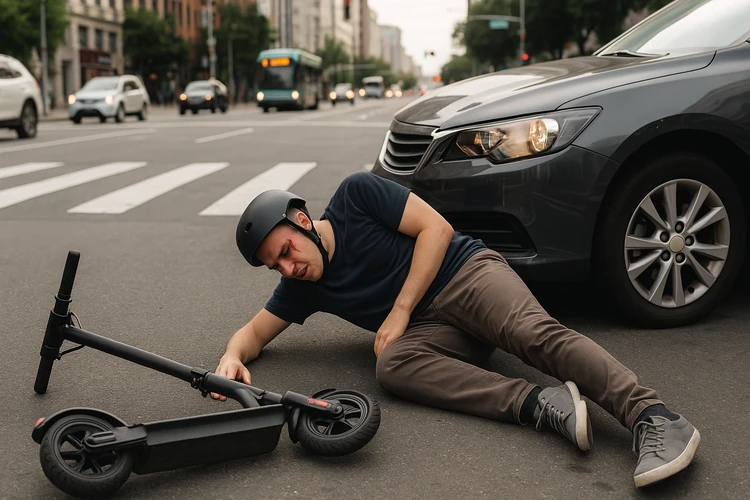
Driving Distractions and Dangers

This living topic delves into the significant hazards teen drivers face, especially focusing on the dangers of distracted driving such as texting. The articles collectively highlight the alarming statistics on traffic accidents involving teens, the role of distractions (like cell phones, eating, and loud music), and the effectiveness of various laws and parental strategies to mitigate these risks. They stress the importance of safe driving habits, the impact of state regulations, and the necessity for both teens and parents to foster a culture of safety behind the wheel. The content also covers seasonal challenges, like winter driving, and offers practical advice on preparing vehicles and handling hazardous conditions.

Latest

New data shows how work distractions follow drivers behind the wheel

A Travelers Insurance survey reveals many drivers still feel pressure to stay connected for work — even while navigating busy holiday traffic

Featured Automotive News photo

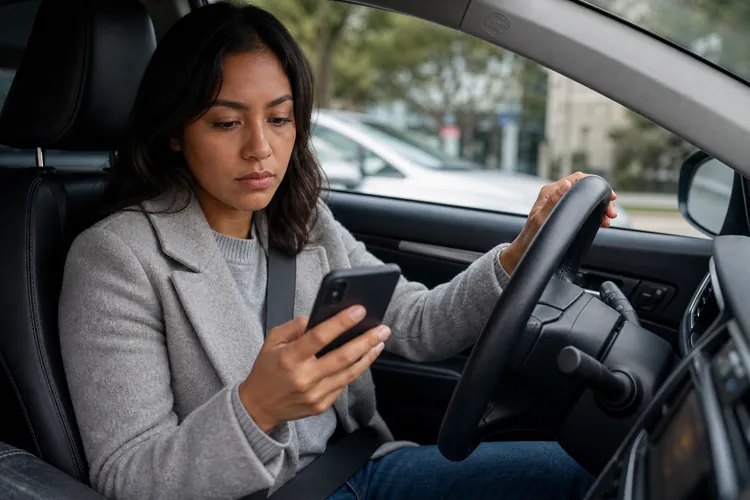
Work-related distractions are common behind the wheel: A Travelers survey found many drivers are still checking emails, answering calls, and using phones for work while driving, even during busy holiday travel periods.

Pressure to stay “always on” is a major risk factor: Nearly 6 in 10 employed drivers feel compelled to respond to work calls immediately, and many say workplace culture and constant notifications contribute to unsafe driving behaviors.

Experts say prevention...

Read Article
Featured Automotive News photo
2025
Article Image

Transportation Department backs off effort to require speed limiters on big trucks

  • The U.S. Department of Transportation has withdrawn a decades-old rulemaking to require speed limiters on heavy vehicles.

  • The National Safety Council warns the move will lead to more fatalities on U.S. roads.

  • In 2023 alone, speeding killed nearly 12,000 people — and over 5,000 large trucks were involved in fatal crashes.


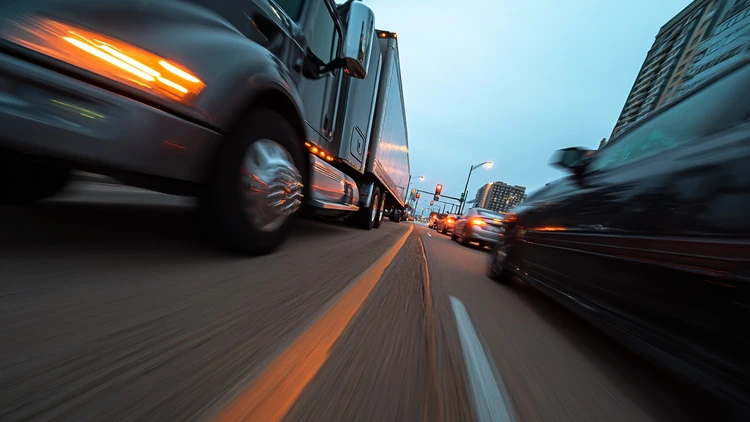
The U.S. Department of Transportation (USDOT) has officially withdrawn its long-standing effort to require speed-limiting technology on large commercial vehicles, ending more than 20 years of regulatory work aimed at curbing speed-related traffic fatalities.

The decision, announced by the Federal Motor Carrier Safety Administration (FMCSA), halts proposed rulemaking that would have mandated the use of speed limiters on multipurpose passenger vehicles, trucks, buses, and school buses weighing more than 26,000 pounds. The aim of the rule was to reduce deadly crashes involving speeding heavy vehicles by leveraging existing technology to cap maximum speeds.

Lorraine Martin, president and CEO of the National Safety Council (NSC), strongly criticized the move. “USDOT’s research has proven speed-limiting devices save lives, ensuring truckers can perform their jobs and return home safely,” Martin said in a statement. “This is a disappointing rollback of a decades-long effort to reduce speed-related fatalities involving large commercial vehicles. The National Safety Council urges USDOT to reconsider its decision, which will cost lives.”

Fatal numbers on the rise

Speeding remains a persistent and deadly problem on U.S. roads, the NSC said. In 2023, it was a factor in 29% of all traffic deaths, claiming the lives of 11,775 people — an average of more than 32 fatalities every day. The stakes are even higher when excess speed is combined with the massive weight of heavy trucks. That year, 5,375 large trucks were involved in fatal crashes, reflecting an 8.4% decrease from 2022 but still a staggering 43% increase compared to a decade ago.

The withdrawal comes despite government studies showing that speed limiters work. A 2012 FMCSA study of fleet data found that trucks equipped with such devices had significantly lower crash rates. USDOT estimates that capping truck speeds at 65 mph could prevent nearly 5,000 injuries and save over 200 lives each year.

The National Safety Council, a 110-year-old nonprofit dedicated to eliminating preventable deaths and injuries, emphasized that the science is clear and the technology is already available.

A step backward?

Critics argue that USDOT’s reversal undermines public safety, particularly for highway users who share the road with heavy trucks. “This isn’t just about regulation — it’s about protecting families and professional drivers alike,” Martin said.

As fatalities involving large commercial vehicles trend upward, safety advocates warn that abandoning speed limiter rules now could have deadly consequences in the years to come.

2023
Article Image

Sixteen vehicle brands have technology bugs, making for a hacker holiday

Most new vehicles have advanced technology features. While that's convenient, there is a downside.

A new report suggests that security bugs were found in 16 vehicle brands including Acura, BMW, Ferrari, Ford, Honda, Hyundai, Infiniti, Jaguar, Kia, Land Rover, Nissan, Porsche, Rolls Royce, and Toyota. The vulnerabilities, researchers said, could allow a hacker to start, unlock, and track those cars from point to point.

The vulnerabilities can run even deeper, Sam Curry, a web application security researcher, writes. This includes giving a hacker the ability to dig into a vehicle’s API (Application Programming Interface), and create all sorts of havoc. With the right amount of technical savvy, a hacker could completely take over a vehicle owner’s account, allowing them to modify or delete all sorts of personal information. 

Consumers who own those cars and also have SiriusXM installed run an additional risk of having their personal information accessed.

What vehicles are affected and to what extent

The vehicles impacted and some of the problems that Curry said were possible include:

Acura, Honda, Genesis, Hyundai, Infiniti, Kia, Honda, Nissan, 

  • Remotely lock and unlock the vehicle, start and stop the engine, precisely locate the vehicle, flash the headlights, honk the horn, and open the trunk.

  • Fully take over the owner’s account and access personally identifiable information (PII) including name, phone number, email address, physical address.

  • Locks users out of remotely managing their vehicle and changing the ownership of the vehicle.

For Kias specifically, Curry said his team could remotely access the 360-view camera and view live images from the car.

As for Acuras and Hondas, any associated problems have been fixed according to the company.

“Honda is aware of a reported vulnerability involving SiriusXM connected vehicle services provided to multiple automotive brands, which, according to SiriusXM, was resolved quickly after they learned of it," a spokesperson for the company told ConsumerAffairs.

"Honda has seen no indications of any malicious use of this now-resolved vulnerability to access connected vehicle services in Honda or Acura vehicles.”

Ferrari

  • Fully take over a Ferrari customer’s account, including access to all customer records

Ford

  • Allows access to a customer’s PII as well as the potential to track and execute commands on vehicles

Porsche

  • Ability to send and retrieve the geo-location of the vehicle, send vehicle commands, and retrieve customer information via vulnerabilities affecting the vehicle Telematics service

Toyota

  • Access to Toyota Financial data that could contain the name, phone number, email address, and loan status of any Toyota financial customer

Jaguar, Land Rover

  • Possible access to user account information including name, phone number, physical address, and geo-location of the vehicle. 

All vulnerabilities appear to have been fixed

Curry told SecurityWeek that all of the automakers whose vehicles were affected had patched the vulnerabilities. However, owners of those vehicles should double-check with their dealer to make sure their systems have been updated to prevent threats like these.

“Software updates for your car are typically free. This applies if they correct an issue covered by warranty, fix problems with emissions systems or safety recalls,” CarVoice’s Christopher said.

“If your vehicle lacks [automatic “over-the-air”] update capabilities, you will need to take it to your local dealership. The process of installing software updates on your car is simple and straightforward. It’s included in the warranty, so you shouldn’t have to pay anything extra for it.”
2022
Article Image

Teen hacker finds way to remotely take control of 25 Teslas vehicles worldwide

We have further proof that nearly anything can be hacked. A teenager boasted this week that he had hacked 25 Tesla cars around the world and gained remote access without their owners ever knowing.

David Columbo, the 19-year-old self-proclaimed IT security specialist and hacker, announced his gambit via a Twitter thread Monday and Tuesday. He said he’s keeping mum on how he pulled off his coup until he reports the vulnerability to the non-profit Mitre, a federally funded research and development non-profit that tackles safety and stability challenges. However, Columbo did say it was due to errors on the owners’ part, not a security flaw in Tesla’s software.

Tesla’s security team told Columbo they’re looking into the situation.

The ripple effect

With his newfound power, Columbo said he could do everything from identifying the exact location of each car to disabling the vehicle’s security system, opening its doors and windows, and even playing music and YouTube videos. The only thing Columbo couldn’t apparently do was remotely drive the cars, but by knowing where the cars were located, he could theoretically steal them if he wanted to. 

Columbo’s escapade may have only directly affected 25 Tesla vehicles, but the ripple effect was actually much larger – especially for those vehicles' owners. “So, I now have full remote control of over 20 Teslas in 10 countries and there seems to be no way to find the owners and report it to them,” Columbo said.

The next ripple came from TezLab, an app that gives Tesla owners “quick controls, stats and everything charging.” The app maker reported that as the hack’s effect spread, it saw the simultaneous expiration of up to a million Tesla authentication tokens. TezLab members were told that they would need to sign in again to re-establish the connection to their vehicles. 

“We apologize for any inconvenience,” the company tweeted – a comment that Columbo mimicked in his own response.

2020
Article Image

Fifteen percent of drunk driving fatalities involve drivers under the legal alcohol limit

A new study explored the trends behind fatal drunk driving accidents across the U.S, specifically when it comes to blood alcohol concentration (BAC). 

According to the team of researchers, the drivers in 15 percent of all fatal crashes tested for a BAC under the legal limit, which is 0.08. In more than half of these cases, the passengers were at a greater risk of death than the drivers. 

“Our study challenges the popular misconception that alcohol-involved crashes primarily affect drinking drivers, or that BACs below the legal limit don’t matter,” said researcher Dr. Timothy S. Naimi. 

Staying off the road

The researchers evaluated data from the Fatality Analysis Reporting System, spanning 16 years worth of alcohol-induced crashes. In that time, there were over 600,000 drunk driving fatalities. 

The researchers learned that drivers in nearly 40 percent of those crashes had alcohol in their systems, though 15 percent were technically under the legal alcohol limit. 

These findings highlight the danger associated with driving with any alcohol in a consumer’s system, particularly for young people. The study found that in cases where drivers were still under the legal limit, fatalities were most common among young passengers. The researchers explained that a BAC as low as 0.03 can make it risky for consumers to get behind the wheel. 

Moving forward, the team is looking to policymakers to tighten up restrictions around alcohol in the hopes of reducing the number of crashes and fatalities. While some states have lowered the legal limit from 0.08 to 0.05, they also suggested raising alcohol taxes and making alcohol harder to come by in convenience stores. 

“Lower alcohol crashes have been underestimated as a public health problem,” said Dr. Naimi. “Our research suggests that stringent alcohol policies reduce the likelihood of fatal accidents involving drivers with all levels of alcohol blood concentration.”