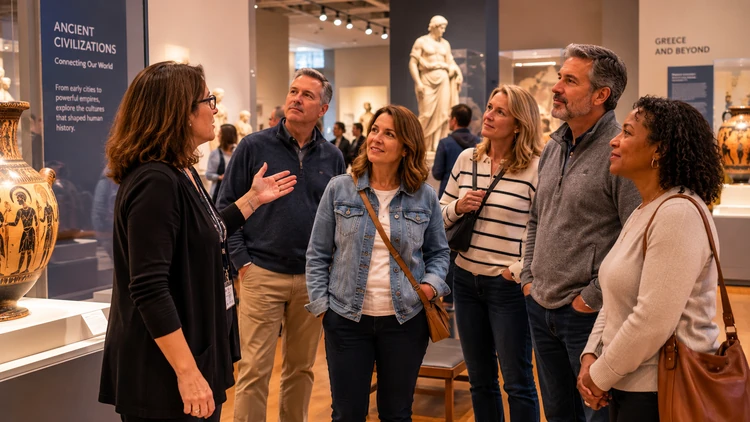

A new UCL study found that people who engaged in arts and cultural activities more often appeared to age more slowly at a biological level.
Weekly participation was associated with a slower pace of aging and a younger biological age compared with rare participation.
The strongest links were seen among adults ages 40 and older, and benefits appeared greater for those who participated in a wider variety of activities.
For years, researchers have explored how lifestyle habits such as exercise, sleep, and diet affect the aging process. Now, a new study suggests that spending time on arts and cultural activities may also play a role.
Researchers at University College London (UCL) found that people who regularly engaged in activities such as reading, listening to music, attending cultural events, or visiting museums and galleries appeared to age more slowly at a biological level than those who rarely took part in these activities.
The findings add to a growing body of research examining how everyday activities may influence long-term health and well-being. While the study does not prove that arts engagement directly slows aging, it found a meaningful association between cultural participation and markers of biological age.
“These results demonstrate the health impact of the arts at a biological level,” Professor Daisy Fancourt said in a news release. “They provide evidence for arts and cultural engagement to be recognized as a health-promoting behavior in a similar way to exercise.
“Our study also suggests that engaging in a variety of arts activities may be helpful. This may be because each activity has different ‘ingredients’ that help health, such as physical, cognitive, emotional or social stimulation.”
The study
The research, published in the journal Innovation in Aging, analyzed survey responses and blood test data from 3,556 adults in the United Kingdom.
Researchers compared participants’ arts and cultural engagement with biological aging measures based on DNA changes known as epigenetic markers. The study included a wide range of arts and cultural experiences, from reading and listening to music to visiting museums, heritage sites, libraries, and cultural events.
The results
The study found that both the frequency and variety of arts engagement were linked to a slower pace of biological aging.
People who participated in arts or cultural activities at least three times a year appeared to age about 2% more slowly than those who rarely participated. Monthly engagement was associated with a 3% slower pace of aging, while weekly participation was linked to a 4% slower pace.
Researchers also found that people who engaged in arts activities weekly appeared, on average, to have a biological age about one year younger than those who rarely participated. The associations remained even after accounting for factors such as income, education, smoking status, and body mass index.
For consumers, the findings offer another reason to make time for activities they enjoy. Researchers also found that participating in a greater variety of activities was associated with more favorable aging measures.
While more research is needed to understand exactly why these links exist, the results suggest that arts and cultural engagement may be one of several lifestyle factors associated with healthier aging, particularly for adults over age 40.
“Our study provides the first evidence that arts and cultural engagement is linked to a slower pace of biological aging,” senior author Dr Feifei Bu said in the news release. “This builds on a growing body of evidence about the health impact of the arts, with arts activities being shown to reduce stress, lower inflammation, and improve cardiovascular disease risk, just as exercise is known to do.”