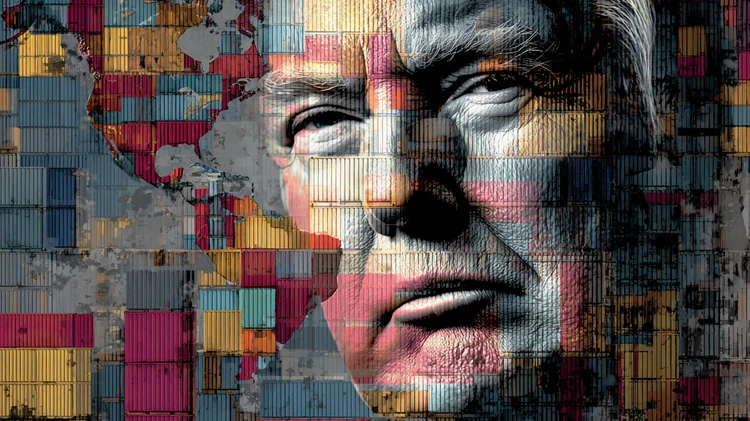

Months of clamor and consternation later, President Trump's global tariffs kicked in today, reshaping world commerce by slapping levies on imports from friend and foe alike. Although some US allies have secured lower rates than were initially threatened, and Washington’s three biggest trading partners — Canada, China, and Mexico — are still negotiating theirs, friendly nations such as India and Switzerland have been hammered.
Switzerland, hit with the highest levies among developed countries, may hit back by cancelling a big order for fighter jets. Trump also announced plans to impose a 100% tariff on semiconductor imports, though he would exempt companies moving production into the country, something that experts say isn't as easy as it sounds.
Consumer impact
The big question for consumers is what impact all this globe-girdling commotion will have at the gas pump, supermarket and retail outlets.
Nearly all economists say the tariffs—ranging from 10% to as much as 100%—will translate into higher costs for U.S. consumers, potentially shaving off 1 percentage point from 2025 GDP growth. Early signs include decreased consumer confidence and stalled hiring.
Low-income Americans are already adjusting by buying smaller product sizes or opting for low-cost meal options. Companies like Procter & Gamble, Coca-Cola, and McDonald’s are responding with value-focused strategies amid shrinking margins.
Despite the critics, the Trump White House is confident businesses will ramp up new investments and jump-start hiring in ways that can rebalance the U.S. economy as a manufacturing power. But there are also signs of self-inflicted wounds as companies and consumers alike brace for the impact of the tariffs.
Customs revenue rises
There's at least one bright spot, although not everyone agrees it's a positive development: the government is making more money.
The U.S. has seen a dramatic increase in customs revenue—up 132% year-over-year even before the tariffs became fully effective. That means more money flowing into the U.S. Treasury even as consumers and American workers may be on the short end of the changes. Economists say the boost in cash flow could drive inflation and hurt long-term growth of the economy.
As for what happens next, no one really knows. The protectionist moves have pushed the effective US tariff rate to its highest level since World War II, with the prospect of even more increases looming. Trump on Wednesday said he would impose 100% tariffs on imported semiconductors, after earlier threatening levies on pharmaceutical products that could eventually reach 250%.
“Tariff uncertainty hasn’t gone away,” HSBC said in a note to clients.