
$100K may not be enough: Redfin estimates buyers now need to earn about $109,800 a year to afford the typical U.S. home.
Upfront costs add up: A 15% down payment on a $434,100 home is about $65,000, and that doesn't include closing costs.
Location changes everything: A six-figure salary can provide solid buying power in some areas but fall far short in expensive markets.
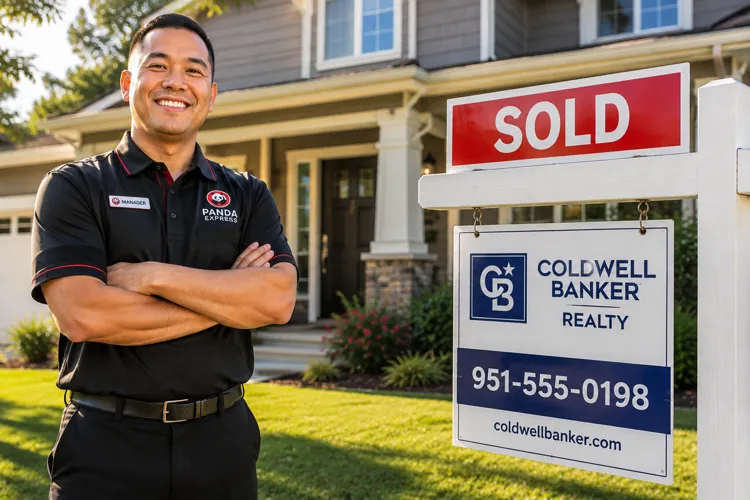
Panda Express has an admirable way of measuring whether some of its employees are succeeding.
The company's co-founder and co-CEO Andrew Cherng told NBC News that he keeps track of how many Panda Express managers earn at least $100,000 a year, and whether they're able to buy a home.
It's definitely a worthy goal, especially as he uses it as a gauge for his own success. There's just one problem: In 2026, even a $100,000 salary may not be enough to afford the typical American home.
Here's what the numbers actually look like.
$100,000 isn't quite the homebuying salary it used to be
Redfin recently calculated that an American needs to earn about $109,800 a year to afford the typical U.S. home for sale. That's roughly $10,000 more than Panda's six-figure benchmark.
Redfin defines "affordable" as spending no more than 30% of income on the monthly housing payment and assumes a 15% down payment.
Meanwhile, the median existing home sold for $434,100 in July, according to the National Association of Realtors.
Mortgage rates, of course, aren't helping. The average rate on a 30-year fixed mortgage was 6.66% as of Aug. 27, according to Freddie Mac. A year earlier, it was 6.56%.
That means earning $100,000 certainly doesn't make homeownership impossible. But it no longer automatically puts a typical home comfortably within reach.
Then there's the cash you need before getting the keys
The monthly mortgage payment is only half the story.
Consider a $434,100 home. A 15% down payment would be about $65,000. Put down 10%, and you're still looking at more than $43,000.
And then come closing costs. The Consumer Financial Protection Bureau (CFPB) says they typically run another 2% to 5% of the purchase price, separate from your down payment.
On a $434,100 home, that's roughly $8,700 to $21,700.
Suddenly, a buyer earning $100,000 could need tens of thousands of dollars in cash before making their first mortgage payment.
Pro tip: Don't make your savings goal simply "the down payment." Estimate the down payment, closing costs, and moving expenses. Then leave yourself an emergency fund for the inevitable expense that shows up after you get the keys.
Your $100K salary isn't the only number lenders see
Two people earning exactly $100,000 can have dramatically different homebuying power.
Why? Because of debt.
Mortgage lenders look at your debt-to-income ratio, or DTI, which compares your monthly debt obligations with your gross monthly income.
Fannie Mae guidelines generally cap DTI at 36% for manually underwritten loans, although borrowers who meet certain requirements can go as high as 45%. Loans run through Fannie Mae's automated underwriting system can allow up to 50%.
So a $600 car payment, $400 in student loans, and $300 in minimum credit-card payments can eat into the mortgage payment you can qualify for.
Pro tip: Ask a lender to run the numbers before you're ready to buy. Find out whether putting another $10,000 toward your down payment or eliminating a monthly debt would improve your buying power more.
Where you live changes everything
There's another huge flaw in treating $100,000 as a universal homeownership benchmark: your ZIP code.
In some parts of the country, six figures can still provide plenty of buying power. In the San Francisco Bay Area, $100,000 obviously doesn’t come close to affording the typical home, which requires a salary close to $445,000.
But consider Phoenix, which is a much more typical example. Redfin's latest analysis found that a household needs to earn about $118,500 a year to afford the typical Phoenix-area home.
That's nearly $20,000 more than Panda's $100,000 benchmark.
And Phoenix isn't alone. In Dallas, Redfin puts the required income at about $118,900, while Austin buyers need roughly $132,600, and Denver buyers need about $157,100.
Meanwhile, $100,000 can still be enough in markets like Cincinnati, Cleveland, and Pittsburgh.
The lesson isn't that someone earning $100,000 shouldn't try to buy a home. It's that "I make six figures" and "I can afford a house" are often no longer the same statement.
How does $100K compare with other fast-food managers?
Panda Express isn't the only fast-food chain where managing a restaurant can turn into a six-figure career.
In-N-Out Burger has long had a reputation for paying its store managers well. Current Indeed estimates put the average In-N-Out store manager salary in California at about $116,800 a year. That's considerably more than managers typically make at some other major chains.
Chipotle says its general managers have the potential to earn about $93,100 in base pay and bonuses, while employees who advance to its "Restaurateur" position can reach about $116,100 in base pay, bonuses, and equity benefits.
At Taco Bell, meanwhile, Indeed currently estimates average general manager pay at about $58,200 a year, although compensation can vary considerably because many restaurants are operated by franchisees.
The comparison puts Panda's $100,000 milestone into perspective.
A six-figure salary is still exceptional for a fast-food restaurant manager. But even workers who climb into that relatively elite income bracket can discover that today's housing market has moved the goalposts.
And for many of the managers who make closer to $60,000, buying a typical U.S. home can be considerably harder.
The bottom line: When deciding whether you can afford a home, don't use salary alone as the determining factor. Instead, it’s smart to start with the home prices where you actually live, then plug in today's mortgage rate, add taxes and insurance, and work backwards to determine the income and savings you'll really need to make it happen.