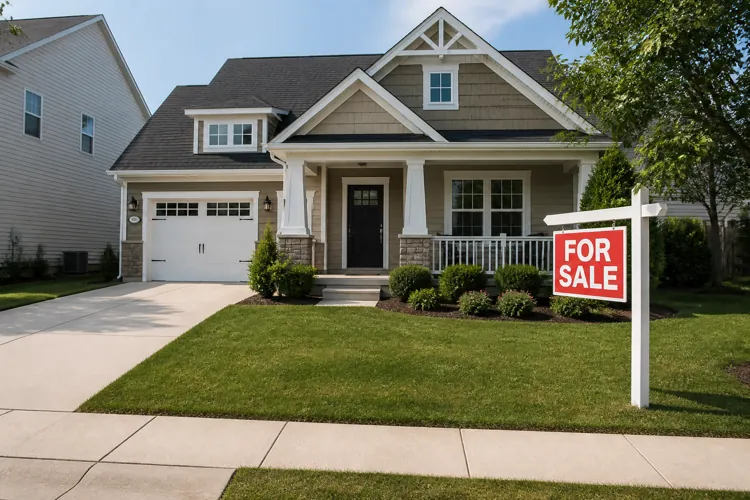

The average 30-year fixed mortgage rate was 6.66%, nearly unchanged from the previous week.
Buyers are benefiting from more listings and slower price growth, but borrowing costs remain a major affordability hurdle.
Mortgage applicants should compare several lenders because even a small rate reduction can produce significant long-term savings.
Mortgage rates barely moved this week, giving potential home buyers a measure of stability but no meaningful improvement in affordability.
The average rate on a 30-year fixed-rate mortgage was 6.66% as of Aug. 27, according to Freddie Mac’s latest Primary Mortgage Market Survey. That was up slightly from 6.65% the previous week and 6.56% one year ago.
The average 15-year fixed mortgage rate rose to 5.98%, from 5.95% a week earlier. A year ago, it averaged 5.69%.
“Mortgage rates changed little this week,” Freddie Mac Chief Economist Sam Khater said. He noted that consumer spending and household incomes remain resilient, while an increase in homes for sale and slower price growth in many markets are giving buyers more choices.
For potential buyers, the latest report presents a mixed picture. Rates remain high enough to keep monthly payments elevated, but a more balanced housing market may give buyers greater negotiating power.
What the rate means for payments
At a 6.66% interest rate, the monthly principal-and-interest payment on a $300,000, 30-year mortgage would be approximately $1,927. That does not include property taxes, homeowners insurance, mortgage insurance, or homeowners association fees.
On a $400,000 mortgage, the principal-and-interest payment would be about $2,570 a month.
The weekly increase from 6.65% to 6.66% would make little difference to an individual borrower. The larger problem is that rates have remained around the mid-6% range, keeping payments substantially higher than they were when mortgage rates were closer to 3% or 4%.
A $300,000 mortgage at 4%, for example, carries a principal-and-interest payment of approximately $1,432. At 6.66%, the payment is nearly $500 higher.
Buyers may have more leverage
While borrowing costs remain challenging, market conditions are showing signs of becoming more favorable to buyers. More listings mean shoppers may face less competition, while slower price growth could reduce the pressure to make an immediate offer.
In markets where homes are sitting longer, buyers may also be able to negotiate a lower price, ask the seller to pay closing costs, or request a mortgage-rate buydown. A seller-funded buydown can reduce the borrower’s interest rate temporarily or permanently, depending on how it is structured.
However, buyers should avoid assuming that mortgage rates will fall sharply in the near future. Rates can move quickly in response to inflation reports, employment data, Federal Reserve policy expectations, and changes in Treasury yields.
Shopping around matters
Freddie Mac’s survey reflects conventional, conforming purchase loans offered to borrowers with excellent credit who make a 20% down payment. Individual borrowers may receive higher or lower quotes based on their credit score, debt, down payment, location, and loan type.
Potential buyers should obtain estimates from at least three lenders and compare the annual percentage rate, fees, and discount points — not just the advertised interest rate. Even a quarter-point difference can save thousands of dollars over the life of a mortgage.
Buyers who find an affordable home and expect to remain there for several years may decide that waiting for lower rates is too uncertain. If rates decline later, refinancing could be an option, although it comes with closing costs and is not guaranteed to produce savings.