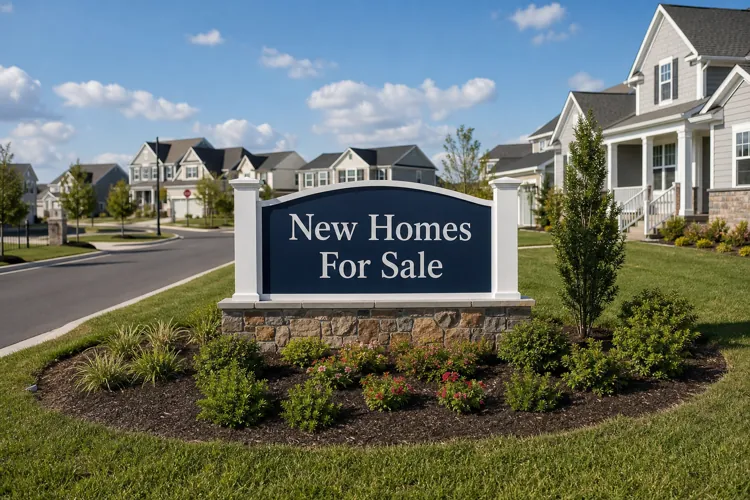

New single-family home sales fell 10.5% in July, even as the median price declined to $393,800.
A growing supply of unsold homes suggests builders may have to offer additional price cuts, mortgage-rate incentives, or other concessions.
For consumers, the report shows that affordability depends on monthly payments — not simply the advertised price of a house.
For years, home sales have drifted lower while prices have continued to steadily rise. But new data from the U.S. Census Bureau show a sharp reversal.
Sales of newly built single-family homes dropped 10.5% in July from the previous month, falling to a seasonally adjusted annual rate of 607,000. Sales were also 6.3% lower than in July 2025.
At the same time, the median price of a new home sold in July fell to $393,800. That was 2.3% below June’s median of $403,100 and 0.9% below the level recorded a year earlier.
Although the monthly price decline was relatively modest, the median has fallen substantially from some of the higher readings recorded earlier in the housing cycle. Yet buyers still appear reluctant — or unable — to enter the market.
That combination of falling sales and lower prices sends a clear signal: The housing market’s affordability problem has not been solved.
Lower price, but not necessarily an affordable home
The purchase price is only one part of what a consumer pays. Mortgage rates remained above 6.4% throughout July and reached 6.66% by the end of the month, according to Freddie Mac’s mortgage-rate archive.
At July’s median price, a buyer making a 20% down payment would need to borrow about $315,000. At a rate near 6.6%, principal and interest alone would be roughly $2,000 a month. Property taxes, homeowners insurance, and association fees could add hundreds more.
A smaller down payment would produce an even higher monthly cost and could require private mortgage insurance.
That helps explain why a lower sticker price did not generate more sales. For many households, the question is not whether the home costs $10,000 less. It is whether they can qualify for the loan and comfortably handle the payment every month.
Unsold inventory is building
The number of new homes for sale rose to an estimated 488,000 at the end of July, up 1.9% from June. Because sales slowed sharply, that inventory represented a 9.6-month supply at the current sales pace, up from 8.5 months in June.
A supply of that size generally gives buyers more leverage and puts pressure on builders to respond. They may reduce prices, pay some of a buyer’s closing costs, or offer temporary or permanent mortgage-rate buydowns.
Consumers shopping for new construction should therefore look beyond the list price. A builder’s financing incentive can sometimes reduce the monthly payment more than a modest price cut, although buyers should compare the builder’s offer with quotes from independent lenders.
The rising inventory could also lead builders to scale back future construction. That would protect them from carrying too many unsold homes, but it could limit the supply of new housing later and weigh on construction employment and spending on appliances, furniture, and building materials.
A warning about the data
The Census Bureau’s new-home sales estimates are volatile and frequently revised. The agency reported a margin of error of plus or minus 14 percentage points for July’s 10.5% monthly decline. That means the government cannot yet say with statistical certainty that sales actually fell by the full reported amount.
Price figures can also shift because of the types of homes sold during a given month. July’s average selling price rose to $508,800 even as the median declined, suggesting that the mix included some more expensive properties. The median price decline does not necessarily mean every builder cut the price of every model.
Still, the broader message is difficult to miss. Buyers remain constrained by high borrowing costs, large down-payment requirements, and uncertainty about household finances.
For would-be buyers, additional inventory and builder incentives are encouraging. But a sustained housing recovery will probably require more than lower prices. Mortgage rates, household incomes, and confidence in the economy will also have to move in buyers’ favor.