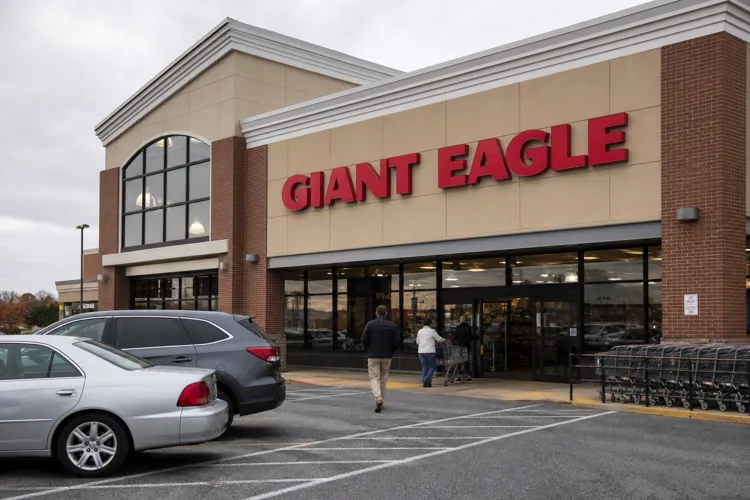

Kroger has agreed to acquire regional grocery chain Giant Eagle in a deal valued at $1.65 billion, marking its largest expansion since its failed merger with Albertsons.
The acquisition would give Kroger nearly 200 additional supermarkets and pharmacies across Pennsylvania, Ohio, West Virginia, Maryland, and Indiana.
The deal faces regulatory review but is expected to close in 2027, with the companies anticipating only limited store divestitures.
Kroger is one of the largest supermarket chains in the U.S., and it’s about to get bigger.
The company is expanding its footprint in the Midwest and Mid-Atlantic after reaching an agreement to acquire privately-held grocery chain Giant Eagle in a transaction valued at $1.65 billion.
The deal, announced this week, comes less than a year after Kroger's proposed merger with Albertsons collapsed amid legal challenges and regulatory opposition. Rather than pursuing another transformative national merger, Kroger is buying a regional chain that operates in markets adjacent to many of its existing stores.
Under the agreement, Kroger will pay approximately $1.25 billion in cash and assume about $400 million in Giant Eagle liabilities, bringing the total transaction value to $1.65 billion.
What Giant Eagle brings to the table
Giant Eagle operates 197 supermarkets and 11 standalone pharmacies across western Pennsylvania, northern Ohio, West Virginia, Maryland, and Indiana. The company generates roughly $9 billion in annual sales and employs more than 30,000 people, making it one of Pennsylvania's largest private employers.
Kroger CEO Greg Foran said Giant Eagle's strong reputation for fresh foods, pharmacy services, private-label products, and customer loyalty made it an attractive strategic fit.
"We evaluated the opportunity carefully, and the strategic fit is clear," Foran said in announcing the acquisition.
What Giant Eagle gets
For Giant Eagle, the transaction offers the opportunity to tap into Kroger's scale, technology, and supply chain while expanding opportunities for employees.
Giant Eagle CEO Bill Artman said the combined company will be better positioned to improve quality, value, and customer service while creating new growth opportunities for workers.
The acquisition also marks Kroger's return to the Pittsburgh market, which it exited in the 1980s. Giant Eagle has since become the dominant grocery chain in western Pennsylvania, although competition has been increasing with planned expansions by Wegmans and Meijer.
Unlike the proposed Albertsons merger, which would have combined two of the nation's largest supermarket operators, the Giant Eagle acquisition is considerably smaller and involves complementary geographic markets. However, Kroger and Giant Eagle said they expect to divest a limited number of stores to satisfy antitrust regulators.