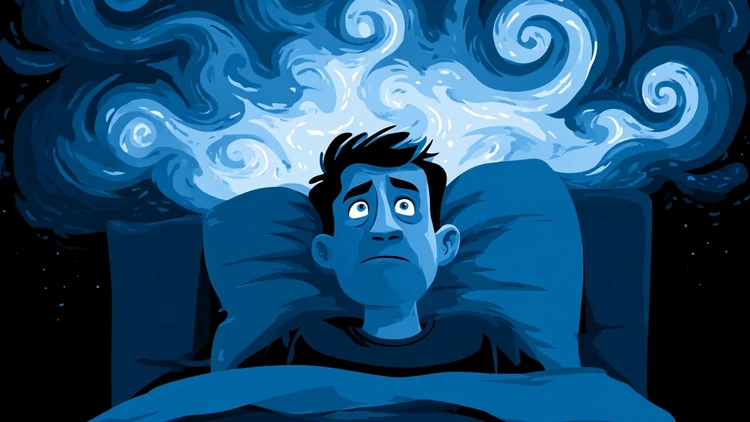

Researchers found that missing a single night of sleep can quickly affect key parts of the immune system.
The study found important immune cells became overactive after sleep loss.
Researchers say even occasional sleep disruption may have bigger health impacts than we think.
We’ve all had those nights — staying up too late to meet a deadline or tossing and turning until morning. But a new study reveals that even one night of sleep deprivation may be enough to disrupt how your immune system works.
According to the study, a single 24-hour period without sleep altered the behavior of several types of immune cells in healthy young adults. The findings suggest that short-term sleep loss could make the body more vulnerable to illness — even if you're generally healthy and well-rested otherwise.
“Our findings underscore a growing public health challenge,” researcher Dr. Fatema Al-Rashed said in a news release.
“Advancements in technology, prolonged screen time, and shifting societal norms are increasingly disruptive to regular sleeping hours. This disruption in sleep has profound implications for immune health and overall well-being.”
The study
To find out how sleep affects the immune system, the researchers conducted a two-part experiment.
In the first part, researchers recruited 237 healthy adults with varying body mass indices (BMIs). The participants all wore accelerometers that tracked their sleep patterns, physical activity, and diets.
In the second part, the researchers had five participants take part in a sleep study. Each participant went through two sessions: one where they slept normally and another where they stayed awake for a full 24 hours.
At both sessions, blood samples were taken in the morning to analyze immune activity. The researchers used a detailed genetic analysis technique called single-cell RNA sequencing to study how individual immune cells were behaving after the night of sleep deprivation compared to a normal night’s sleep.
The goal was to track whether missing sleep would alter the activity of immune cells — especially those responsible for inflammation and responding to infections.
The results
The results from both studies were clear: poor sleep was associated with greater inflammation.
In the first part of the study, participants with obesity had poorer sleep and higher chronic low-grade inflammation. The researchers explained that obesity was associated with higher levels of immune cells that are associated with both such outcomes.
The second part of the study confirmed that after just one night without sleep, participants showed big changes in their immune cell activity.
Researchers observed that two types of immune cells — monocytes and T cells — became more active. These cells play key roles in detecting and responding to infections. But in this case, the immune response looked “revved up,” even without any actual illness present.
The researchers explained that the immune system reacted to sleep loss like it was under threat, even though there was no infection. This kind of overactivation can be a problem over time. If immune cells are constantly in a heightened state, it may lead to chronic inflammation or make it harder for the body to respond appropriately to real threats.
The researchers noted that while more studies are needed to understand long-term effects, this experiment shows how sensitive the immune system is to sleep changes — even after just one sleepless night.
“In the long term, we aim for this research to drive policies and strategies that recognize the critical role of sleep in public health,” Dr. Al-Rashed said.
“We envision workplace reforms and educational campaigns promoting better sleep practices, particularly for populations at risk of sleep disruption due to technological and occupational demands. Ultimately, this could help mitigate the burden of inflammatory diseases like obesity, diabetes, and cardiovascular diseases.”