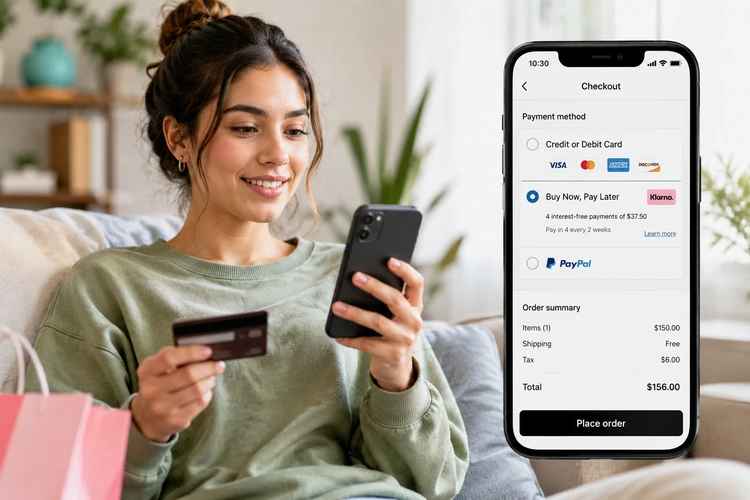

Fifteen percent of active cardholders used a buy now, pay later service during the second quarter of 2026.
Adoption is growing fastest among households earning less than $40,000 and families with children.
Renters and younger adults remain the most likely consumers to use installment-payment services.
Buy now, pay later services are attracting more consumers, but new transaction data suggest some of that growth may be driven by mounting financial pressure on lower-income households and families with children.
Consumer Edge reports that 15% of active cardholders used a buy now, pay later, or BNPL, service during the second quarter of 2026. That was an increase of 1.23 percentage points from a year earlier and kept adoption near a record high.
BNPL plans let shoppers divide a purchase into several payments. Many of the most common plans require four interest-free payments over six weeks, although terms vary by provider and some longer-term plans charge interest.
The latest numbers show that BNPL growth is increasingly concentrated among consumers who may have less room in their household budgets.
“The story this quarter isn’t that BNPL usage is broad — that’s been true for a while,” said Michael Gunther, senior vice president of research and market intelligence at Consumer Edge. “It’s that growth is increasingly concentrated among families and lower-income households facing the greatest financial pressure.”
Families are more likely to use installment plans
About 19% of shoppers with children used BNPL during the second quarter, compared with approximately 12.5% of consumers without children.
Adoption growth accelerated among households with children while slowing among those without children, although both groups registered year-over-year increases.
The division may reflect the additional costs that parents face, including food, clothing, housing, and childcare. Breaking purchases into smaller payments can make an immediate expense appear more manageable, even though the full amount must still be paid.
However, Marcus Sturdivant, founder of The ABC Squared, a registered investment advisory firm, said that the convenience becomes an illusion if you have multiple purchases that become overwhelming.
“The flipside of not paying those installments back on time, or maybe at all, is interest rates that rival credit card rates,” Sturdivant told ConsumerAffairs. “Think about that, we go from a purchase that costs nothing extra to adding a quarter on to every dollar we spend. If a consumer could not make the payments at 0%, chances of them making the payments now are not any higher.”
Income data revealed a similar pattern. Households earning less than $40,000 annually already had the highest BNPL adoption rate and were the only income group in which growth accelerated during the quarter. Adoption within that group increased by 1.3 percentage points from a year earlier.
By comparison, 13% of consumers earning more than $150,000 used BNPL. Adoption among that group increased by 0.9 percentage points, the slowest growth of any income category.
Renters use BNPL at a higher rate
Nearly 23% of renters used a BNPL service during the quarter, compared with about 13% of homeowners.
Consumer Edge said the 10-point difference may reflect renters’ generally lower savings and more limited access to traditional credit. However, BNPL growth among renters slowed from the first quarter.
Usage also continued to skew younger. Approximately 21.5% of consumers ages 25 to 34 used BNPL, compared with about 7% of consumers 65 and older.
Geography made a difference as well. Texas had the highest adoption among large states at approximately 18.5%, followed by Florida, Georgia, Maryland, and Tennessee. New Mexico and Nevada recorded the fastest growth, while Minnesota had adoption of just 8.5%.
Consumers are also spreading their purchases among more BNPL companies. About 56.5% of users dealt with only one provider in the second quarter, down from approximately 66% in 2021. Using several services at once can make it harder to track payment dates and the total amount owed.
Convenience can obscure the debt
BNPL can be less expensive than carrying a credit card balance when a plan charges no interest and payments are made on time. But the small installment shown at checkout can make a purchase appear cheaper than it is.
The Consumer Financial Protection Bureau (CFPB) has identified potential risks including mandatory automatic payments, collection and use of consumer data, and borrowers taking on more obligations than they can comfortably repay.
Before selecting BNPL, consumers should review the total purchase price, payment schedule, possible interest, and late fees. They should also check their existing installment plans and make sure scheduled withdrawals will not cause an overdraft.
Most importantly, an installment plan should not be treated as a discount. If the purchase would strain the budget at full price, dividing it into four smaller payments may simply postpone the financial pressure.