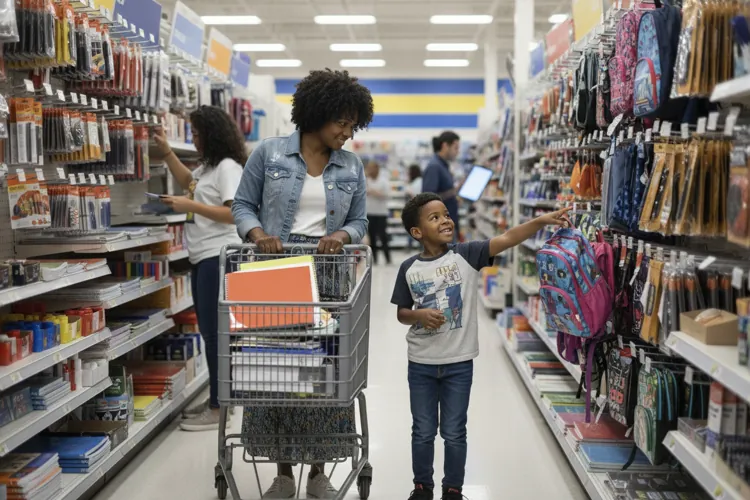

Nearly half of parents expect to spend more than $500 on back-to-school shopping this year.
More households plan to use Buy Now, Pay Later services to help cover school expenses.
Many parents say they're cutting back in other areas to make room in the budget.
For many families, back-to-school shopping is no longer just about checking supplies off a list.
A new survey from Omnisend suggests that rising costs are making the annual shopping trip more stressful, with parents looking for new ways to manage the expense.
According to the survey of 1,075 U.S. consumers, 40% of parents expect this year's back-to-school shopping to be more financially stressful than last year's. Nearly half (44%) anticipate spending more than $500, while 19% believe they'll spend over $1,000 on school-related purchases.
“Whether parents shop online or in-store, most are trying to keep things simple by buying everything from a single retailer or platform,” Marty Bauer, Ecommerce Expert at Omnisend said in a news release.
“That means fewer trips, less time spent comparing prices, and easier access to the discounts and rewards stores offer during the back-to-school season. For families with long shopping lists, buying everything in one place doesn’t just save time, it can also help stretch the household budget.”
Clothing, technology, and supplies are driving costs
Parents reported that apparel is among their biggest financial concerns this year. Shoes topped the list, with 43% saying they're worried about affording them, followed closely by clothing and uniforms (42%). Backpacks (31%), electronics such as laptops and calculators (34%), and everyday school supplies like notebooks and pens (32%) also ranked high on the list of expected expenses.
To help spread out those costs, many families plan to rely on financing. The survey found that 45% of households expect to use Buy Now, Pay Later (BNPL) services for back-to-school purchases, up from 39% last year. Nearly one-third of respondents said those payment plans will cover more than half of their back-to-school spending.
“Buy Now, Pay Later was once associated with splurges and impulse purchases,” Bauer said. “Today, it's increasingly being used for routine expenses. Parents know back-to-school shopping is coming every year, so the fact that so many still choose BNPL suggests the challenge isn't a lack of planning, but a lack of financial breathing room. Consumers are using flexible payment options to manage everyday cash flow, not just unexpected costs.”
Parents are also making tradeoffs elsewhere in their budgets. Thirty percent said they'll reduce spending on family activities and entertainment, while others plan to use credit cards (22%), dip into savings intended for other purposes (21%), or borrow money from friends or family (18%) to cover school costs.
What this means for consumers
The survey suggests that many families are approaching back-to-school shopping with careful budgeting rather than impulse buying.
Beyond the financial costs, parents are also thinking about the social side of the school year. Nearly 44% said they worry their child could feel left out because of what they can or cannot afford, and 28% plan to purchase items their child wants even if it means cutting back elsewhere.
While every household's budget is different, the findings show that this year's shopping season may require more planning than in years past. For many consumers, balancing essential school purchases with overall household expenses is becoming an increasingly important part of preparing for the new school year.