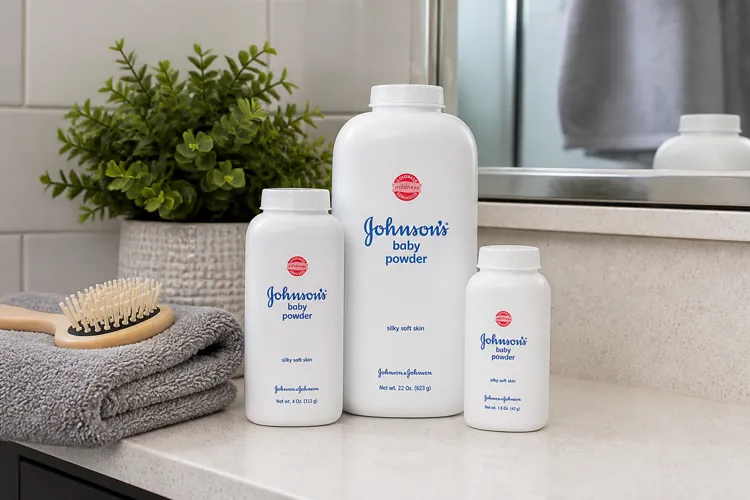

Johnson & Johnson has agreed to commit $5.5 billion to settle approximately 76,000 remaining ovarian cancer claims involving its talc products.
The agreement requires participation by law firms representing at least 95% of the remaining claims.
The company continues to deny that its talc products cause cancer and does not admit wrongdoing under the proposed settlement.
The lawsuits have dragged on for more than a decade but a resolution may be in sight. Johnson & Johnson has reached a proposed $5.5 billion settlement that could end 15 years of litigation over allegations that its talc-based products caused ovarian cancer.
The agreement covers approximately 76,000 claims pending in federal and state courts. Johnson & Johnson said it reached the deal with the law firms leading the federal multidistrict litigation and related state proceedings.
The settlement is not yet guaranteed. It is contingent on several conditions, including the participation of firms representing at least 95% of the outstanding ovarian talc claims, according to the company’s announcement.
Under the agreement, compensation would be calculated on a per-claim basis. Johnson & Johnson has committed $5.5 billion, with an initial payment of no more than $3 billion scheduled for 2027. Additional payments would not begin before 2028.
The company did not say how much individual claimants would receive. Those amounts will likely vary based on factors established under the settlement process.
Plaintiffs have waited years for compensation
Thousands of women and their families have accused Johnson & Johnson of failing to warn consumers about alleged cancer risks associated with products such as Johnson’s Baby Powder. Some plaintiffs have won substantial jury verdicts, while Johnson & Johnson has prevailed in many other cases.
Chris Seeger, one of the lead attorneys for the plaintiffs, said the settlement would provide “fair and meaningful compensation” following years of litigation and three unsuccessful attempts by Johnson & Johnson to resolve the claims through bankruptcy.
Johnson & Johnson had sought to move its talc liabilities into subsidiaries that would file for Chapter 11 protection, a strategy sometimes called the “Texas two-step.” Courts rejected those efforts, including a proposed settlement of roughly $9 billion that a bankruptcy judge turned down in 2025.
The company then said it would return to the civil court system and fight the claims individually.
Recent ruling altered the legal landscape
The new agreement follows a July 22 court order directing plaintiffs to explain why their remaining cases should not be dismissed over questions about evidence showing that the company’s products caused each claimant’s cancer.
Johnson & Johnson said plaintiffs’ attorneys withdrew causation experts in two cases selected as tests for the larger litigation. The company argues that those developments support its position that the claims lack reliable scientific evidence.
“While we are confident the company would have ultimately prevailed with further litigation, as it has in the vast majority of cases tried to date, this resolution allows the company to put this matter behind it,” Erik Haas, Johnson & Johnson’s worldwide vice president of litigation, said in the announcement.
Settlement does not mean the company has admitted that its products caused cancer. Johnson & Johnson continues to maintain that cosmetic talc is safe, does not contain asbestos, and does not cause ovarian cancer.
Talc-based powder is no longer sold
Johnson & Johnson stopped selling talc-based baby powder in the United States and Canada in 2020 and discontinued it worldwide in 2023, replacing talc with cornstarch.
The company has separately settled about 95% of the lawsuits alleging its talc products caused mesothelioma, a cancer associated with asbestos exposure. It has also resolved state consumer-protection claims and disputes with talc suppliers.
Johnson & Johnson retained responsibility for talc-related liabilities in the United States and Canada when it separated its consumer-products business, now known as Kenvue, in 2023.