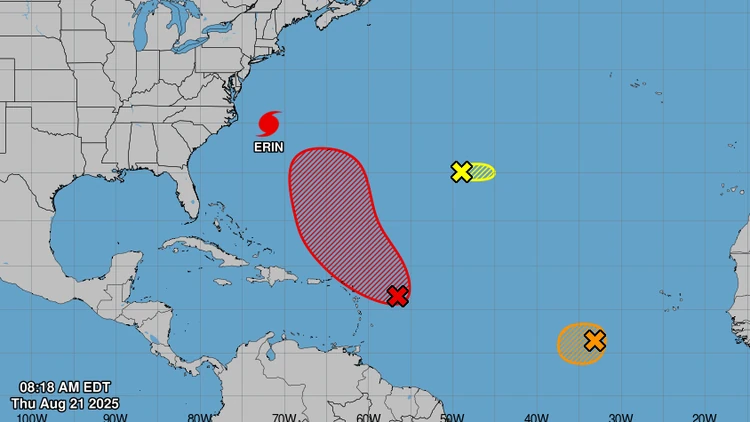

UPDATE: 9 a.m., 8/21: Erin is pounding the coast of North Carolina Thursday morning, and offshore measuring equipment shows it reaching wind speeds of 85 mph with wave heights of nearly 40 feet. Translation: It's a good thing it's 150 miles off shore. Even so, the storm has the potential to cause major damage to the Outer Banks and other coastal areas. Many areas are under evacuation orders.
Erin is expected to turn eastward, potentially sparing Virginia, New Jersey and other seaboard states from feeling its full wrath. The next update will be Thursday afternoon.
Hurricane Erin is bringing dangerous rip currents, rough surf and strong winds to the Mid-Atlantic region today and conditions are expected to intensify tomorrow. The storm was about 200 miles offshore at last word and is expected to curve to the northeast late tonight.
Although the storm isn't expected to make shore, it will bring damaging wind and life-threatening waves and rip currents along East Coast beaches.
“The worst of the rough surf and rip current impacts along the mid-Atlantic coast are expected Wednesday through Thursday as Erin makes its closest approach to the U.S. while curving out to sea,” AccuWeather Lead Hurricane Expert Alex DaSilva explained. “Hurricane Erin is churning up massive waves and very rough surf. Beach erosion along the mid-Atlantic coast is a big concern this week.”
Waves of 15 to 20 feet are expected to pound North Carolina beaches and produce a storm surge of up to six feet along the Outer Banks, possibly destroying coastal homes and washing out low-lying roadways.
“The center of Hurricane Erin will track around 200 miles east of the Outer Banks on Thursday as it recurves out to sea. The massive wind field will push extremely large waves towards the coast. The strongest winds from Erin are expected to remain well offshore,” DaSilva said. “The risk of hazardous beach conditions stretches roughly 2,000 miles along the East Coast from South Florida to New England. Looks can be deceiving. The rip currents below the surface can be incredibly powerful and difficult to escape. More than 60 people have lost their lives to rip currents. rough surf, and other beach hazards across the U.S. this year.”
Farther north, a storm surge of 1-3 feet is expected along portions of the Virginia, Maryland, Delaware, and southern New Jersey coasts.
AccuWeather® hurricane experts caution that a water rise of 1-3 feet is also possible along parts of the northern New Jersey shoreline and coastal areas near New York City through Thursday night, which may result in some coastal flooding.
1. Protect Yourself and Your Family
Stay informed – Monitor trusted sources like the National Hurricane Center, NOAA Weather Radio, or local emergency alerts for updates on the storm’s path and severity.
Know evacuation routes – Identify official evacuation zones in your area and the safest, quickest route out. Practice the route in advance if possible.
Pack a “go bag” – Include essentials such as:
Non-perishable food and water (at least 3 days’ supply per person)
Medications and prescriptions
Important documents (IDs, insurance policies, deeds) in a waterproof container
Flashlights, batteries, and a portable phone charger
First-aid kit and hygiene items
Plan for pets – Have carriers, leashes, food, and water ready, and identify pet-friendly shelters or boarding facilities.
2. Secure Your Home and Property
Inspect and repair – Fix loose roof shingles, siding, gutters, and downspouts. Seal gaps around windows and doors.
Install storm protection – Put up hurricane shutters or plywood over windows; brace garage doors.
Clear your yard – Bring in or secure outdoor furniture, grills, garden tools, and toys to prevent them from becoming projectiles.
Reinforce vulnerable areas – If in a flood-prone zone, use sandbags or temporary flood barriers around doors and low openings.
Check backup power – Test generators and ensure you have enough fuel stored safely.
3. Prepare Financially and for Recovery
Review insurance coverage – Check your homeowners, flood, and windstorm policies. Many standard homeowners policies don’t cover flooding, so you may need separate coverage.
Document your belongings – Take photos or videos of your home and possessions for insurance claims.
Have cash on hand – ATMs and card systems may be down after the storm.
Back up important data – Store digital copies of key records in the cloud or on an external drive kept in a safe place.
Extra Tip: After the Storm
Even after the hurricane passes, dangers remain — downed power lines, flooded roads, and unstable structures. Wait for official “all clear” notices before returning, and use caution when assessing damage.
Here’s a 48-Hour Hurricane Preparation Checklist that organizes tasks based on how close the storm is to landfall. It’s designed so you can act quickly and avoid last-minute stress.