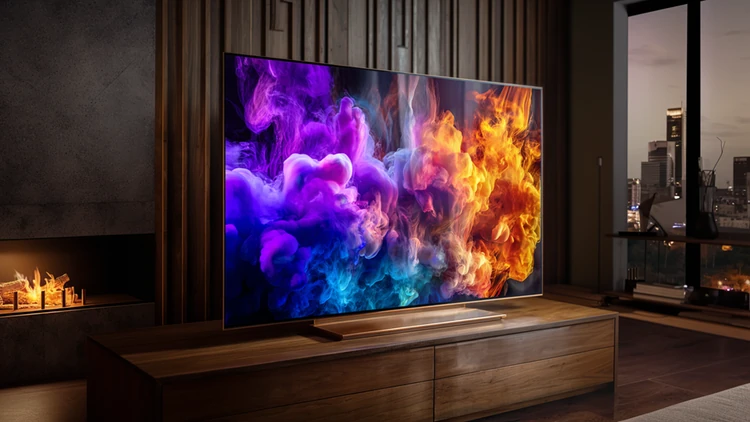

OLEDs now last longer than most people think — Manufacturers claim roughly 8–15+ years under normal use; independent testers suggest significantly less under certain conditions.
Burn-in isn’t gone, just situational — It mainly affects TVs showing static content for hours daily at high brightness.
Still a smart buy in 2026 — Best-in-class picture quality, but mini-LED makes more sense for bright rooms or tighter budgets.
While shopping for a new TV right now is really smart, the choices have never been more confusing. Between QLED, mini-LED, QD-OLED, QNED, and now Micro RGB displays, the TV aisle has turned into an alphabet soup of competing technologies.
Despite that clutter, OLED TVs remain the gold standard for picture quality, but many buyers worry about its longevity as something called picture “burn-in”.
That worry was recently explored in a deep dive by SlashGear, which examined how long modern OLED TVs actually last.
So how long can you realistically expect an OLED TV to last?
TV makers have long insisted OLED durability is no longer the problem it once was.
- Samsung estimates OLED panels last between 50,000 and 100,000 hours, which translates to roughly 10–20 years of normal viewing.
- LG has claimed its OLED panels can reach 100,000 hours, or about 30 years of typical home use.
- Sony says OLED TVs should last about as long as traditional LCD models.
- TCL pegs OLED lifespan closer to 8–10 years.
On paper, this all sounds fairly reassuring if you’re considering buying an OLED.
But these manufacturer estimates don’t tell the whole story. They assume things like “normal” usage, moderate brightness settings, and proper maintenance. All variables that are fairly subjective and likely to change from viewer to viewer.
That’s where some real-world testing comes in that gives us some interesting insights we can use in our TV buying decisions.
What actual long-term testing reveals
Independent testing paints a more nuanced picture.
The team at RTINGS ran one of the most aggressive longevity tests ever conducted on modern TVs, simulating up to 10 years of home use.
After about 18 months, RTINGS reported that every single OLED TV tested showed some signs of permanent burn-in on the screen.
Interestingly, Samsung’s OLED panels performed best after 18 months, while models from Hisense and Vizio showed the most noticeable burn-in.
By the end of the three-year test period, results became even more mixed. LG’s G2 OLED reportedly stopped functioning after about 24 months due to dead pixels, while Samsung and Sony OLED models failed earlier due to unrelated component issues like power supply and internet hardware failures.
In other words, burn-in wasn’t always the reason an OLED failed, but it did appear across the board under extreme conditions.
Why burn-in still matters — but why it matters less than before
Burn-in happens when static images like channel logos or news tickers, remain on the screen long enough to permanently wear down individual pixels.
Older OLEDs were far more vulnerable to this, but modern models include multiple safeguards:
- Pixel-refresh cycles
- Screen-shifting technology
- Automatic brightness limiting
- Panel-wide resets
Today, burn-in is far more likely to affect heavy users who watch the same channel for hours daily or leave static content on screen for long stretches.
Should you buy OLED in 2026? — A buyer checklist
Buy OLED if:
- Picture quality matters most. If you’re looking for true blacks, strong contrast, and a wide viewing angle for movies, sports, or gaming, your best bet is OLED.
- Your viewing is varied. If you tend to rotate your content between streaming, movies, and games, instead of leaving one channel on all day long.
- You don’t max brightness 24/7. If you’re not a “it needs to be really bright” viewer you’ll dramatically reduce the risk for burn-in making OLED a safe choice.
- You keep TVs 8–12 years. If you tend to buy quality products that you usually keep for a long time, a quality OLED (with normal use), should last a long time.
Think twice if:
- You tend to watch static content for hours daily (news tickers, sports channels, PC desktop use).
- The TV will run all day in a bright room at peak brightness (bars, waiting rooms).
- Budget is tight and mini-LED offers plenty of brightness and longevity for significantly less money.