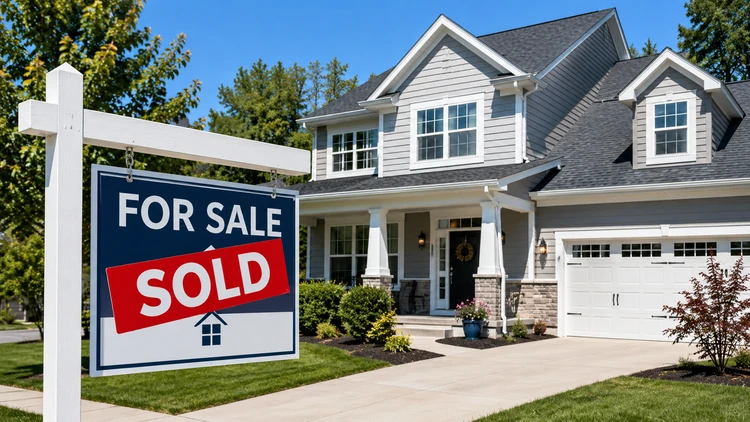

Existing-home sales rose 3.2% in May from both April and a year earlier, reaching the strongest pace since December.
The median existing-home price climbed to a record $429,300 for the month of May, marking 35 consecutive months of annual price gains.
Housing affordability improved nationwide as mortgage rates remained below year-ago levels and inventory edged higher.
Despite growing economic uncertainty and rising prices, the U.S. housing market gained significant momentum in May. Sales of existing homes jumped by 3.2% from the previous month and from a year earlier, reaching a seasonally adjusted annual rate of 4.17 million units, according to the National Association of Realtors.
The gain marked the fastest sales pace of 2026 and the highest level since December.
NAR Chief Economist Lawrence Yun said more Americans are entering the housing market as affordability conditions improve. While mortgage rates have risen modestly in recent months, they remain below levels seen a year ago and are close to long-term historical averages, helping support buyer demand.
The increase in sales was broad-based. Transactions rose in the Northeast, Midwest, and South on a month-over-month basis, while activity in the West was unchanged. Compared with May 2025, sales increased in the Midwest, South, and West but declined in the Northeast.
Inventory also expanded. The number of homes available for sale reached 1.55 million units in May, up 3.3% from April and slightly higher than a year ago. That represented a 4.5-month supply of homes at the current sales pace, unchanged from the previous month.
Home prices are still rising
Home prices continued to rise, though at a more moderate pace. The national median existing-home price for all housing types reached $429,300 in May, up 1.3% from a year earlier and the highest median price ever recorded for the month of May. The increase extended a streak of annual price gains to 35 consecutive months.
Single-family homes accounted for much of the market’s growth. Sales in that segment rose 3.5% from April to an annual rate of 3.8 million units, while condominium and co-op sales were unchanged month over month. Median prices increased in both categories.
Affordability measures improved across all four major regions of the country, aided by slower price growth, income gains, and mortgage rates that remained lower than a year ago. NAR’s Housing Affordability Index rose to 105.6, up from 97.5 a year earlier.
Despite the improvement, economists caution that the housing market remains below pre-pandemic activity levels and continues to face challenges from elevated mortgage rates and high home prices. However, May’s stronger-than-expected sales figures suggest buyers are becoming more active as inventory gradually improves and affordability pressures ease.