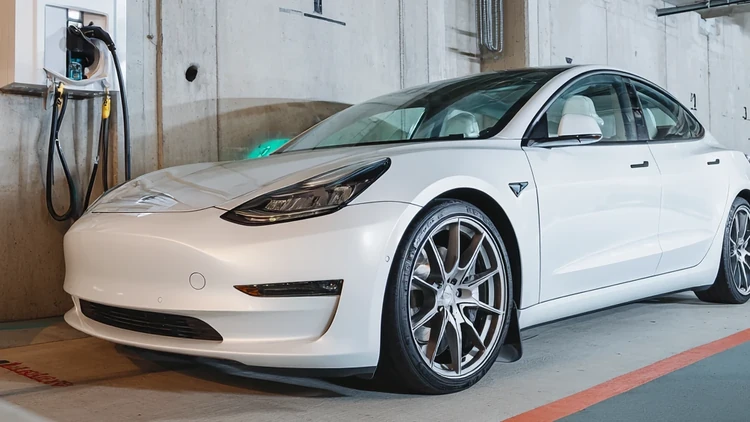
- Researchers say electric vehicles offset their higher manufacturing emissions within two years of driving.
Over their lifetimes, gas-powered cars cause at least twice as much environmental harm as EVs.
The study predicts EV benefits will grow as solar and wind power replace fossil fuels on the grid.
EVs quickly outpace gas cars in reducing emissions
A new study finds that while manufacturing electric vehicles and their batteries produces more pollution upfront than making gas-powered cars, EVs make up for it within two years of driving — and then continue to deliver major environmental benefits.
The research, published Wednesday in the journal PLOS Climate by scientists from Northern Arizona University and Duke University, concludes that gasoline vehicles cause at least twice as much environmental damage over their lifetimes as electric models.
“While there is a bigger carbon footprint in the very short term because of the manufacturing process in creating the batteries for electric vehicles, very quickly you come out ahead in CO₂ emissions by year three,” said Duke University earth scientist Drew Shindell, a co-author of the study.
Researchers modeled multiple adoption and energy scenarios
The team analyzed U.S. data on air pollutants and carbon emissions to compare how electric and gas vehicles affect air quality and climate change over time.
They found that EVs emit about 30% more CO₂ than gas cars in their first two years, due to energy-intensive battery production and lithium mining. But after that, the balance shifts: by 2030, each additional kilowatt hour of battery capacity is projected to cut emissions by an average of 485 pounds of CO₂, and by 2050, another 280 pounds.
The researchers modeled four possible EV adoption scenarios — from 31% to 75% of new vehicle sales by 2050 — and found consistent benefits in every case. Growth in clean electricity was a key driver of the results.
Lead author Pankaj Sadavarte, a postdoctoral researcher at Northern Arizona University, said the downward trend in CO₂ “is not only driven by the on-road vehicles, but also by reductions in electricity production emissions.”
Experts say cleaner grids will amplify EV benefits
As the U.S. energy mix continues to shift toward renewables, EVs’ environmental advantage is expected to expand.
“When you add a bunch of electric vehicles, nobody’s going to build new coal-fired power plants to run these things,” Shindell said. “The grid just overall becomes much cleaner.”
Independent experts agreed, with University of Michigan sustainable systems professor Greg Keoleian calling the paper a “valuable study” that reinforces the environmental and economic case for EVs.
Still, policy remains a critical variable. The study’s optimistic outlook assumes continued progress in renewable energy — something that has stalled under President Donald Trump, who has rolled back federal EV incentives, vehicle pollution rules, and charging infrastructure programs.
“The study is important to show how really misguided the current administration’s policies are,” Shindell said. “If we want to protect us from climate change and from poor air quality, incentivizing the switch to EVs is a really clear way to do it.”
Challenges remain for EV adoption
The findings arrive amid an uneven period for the U.S. electric vehicle market. EV sales growth has slowed after years of rapid expansion, as automakers temper production goals and federal policy shifts away from promoting the technology.
Analysts say continued state and local leadership, coupled with improvements in battery recycling and supply chain sustainability, will be key to maintaining progress.
“The great news is the rest of the world isn’t slowing down,” said Ellen Kennedy, a transportation specialist at clean-energy nonprofit RMI. “Even as federal policy shifts, there’s a lot happening at the state and local levels to keep EV adoption moving forward.”