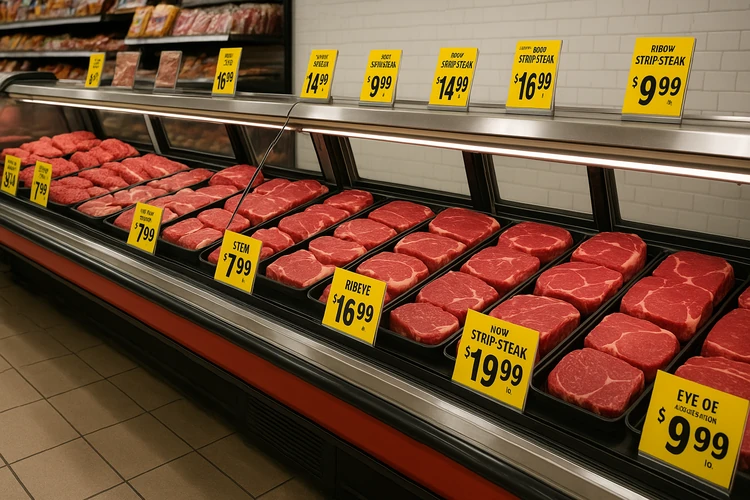

U.S. consumers are facing record-high beef prices, with ground beef and steak costs hitting historic levels.
A shrinking cattle herd, drought, high feed and input costs, and trade disruptions are driving the surge.
Shoppers can seek relief by choosing less expensive cuts, substituting other proteins, or exploring plant-based alternatives.
This past summer’s cookouts were a lot more expensive. Nationwide, beef prices have climbed to levels rarely seen before, with some retailers reporting $6-plus per pound for ground beef and $11 or more per pound for premium steak cuts.
According to USDA and market data, the average retail price for fresh beef has soared in 2025, outpacing inflation in many regions. The squeeze is being felt by families, restaurants, and smaller meat purveyors, alike.
The August Consumer Price Index for August showed a sharp increase in beef prices over the past 12 months. Ground beef prices were up 12.8% year-over-year in August, while choice cuts were up even more. Meanwhile, overall food costs were up just 3.2% during the same period.
It’s more than just inflation
The forces behind the beef price surge are numerous and interlocking. The U.S. cattle inventory is at its lowest level in decades. Severe droughts in key grazing states have reduced forage, prompting ranchers to liquidate herds rather than risk further losses.
Recovering herd numbers takes years because cattle need time to reach maturity; the pace of rebuilding is slow.
Ranchers and feedlot operators are also facing steep increases in the cost of feed, fuel, transportation, labor, insurance, and regulatory compliance. These rising expenses tend to get passed downstream.
In some cases, ranchers are forced to sell breeding animals because holding them is no longer economically viable.
Trade barriers
Imports help buffer domestic supply, but they’ve been constrained lately. For example, cattle imports from Mexico have been suspended due to concerns over the spread of parasitic pests like the New World screwworm.
Meanwhile, high tariffs on Brazilian beef trimmings, used in grinding operations, and trade uncertainties limit foreign supplies.
Despite rising prices, demand for beef remains robust. Many consumers aren’t willing to compromise, continuing to purchase beef at higher prices, increasing demand at the supermarket.
At the same time, there continue to be kinks in the supplyt chain. The meatpacking and processing sector is concentrated: a few large companies control much of the throughput.
Disruptions, labor shortages, and logistical constraints exacerbate the bottlenecks. Some analysts caution that elevated margins by intermediaries may play a role in further accentuating retail increases.
What shoppers can do
While consumers can’t control macroeconomic forces, there are strategies for getting protein without busting the budget. Below are practical tips and alternatives:
1. Choose less expensive cuts
Go for chuck, round, skirt, flank, brisket, or stew meat instead of premium steaks.
Use those tougher cuts for slow cooking (braising, stewing, chili) to maximize flavor and tenderness.
Ground beef with mixed grades or higher fat content often is cheaper—use it for burgers, meatloaf, tacos, etc.
Buy “value packs” or bulk quantities and freeze what you won’t use immediately.
2. Mix and stretch with other proteins
Combine beef with pork, turkey, or chicken in ground meat blends (e.g., beef/turkey patties).
Use lean ground chicken or turkey as a mainstay; they tend to be less volatile in price.
Incorporate pork chops, pork tenderloin, or even seafood (cod, tilapia, shrimp) when affordable.
Eggs, legumes (beans, lentils), tofu, and cottage cheese are protein-rich and lower-cost alternatives.
3. Try plant-based or hybrid products
Meat alternative products (plant-based burgers, crumbles) are more competitive when priced lower. Their adoption is sensitive to price.
Use “blended” plant-meat mixes like 50% beef + 50% textured vegetable protein to reduce cost and retain flavor.
Canned beans, chickpeas, lentils, and soybeans make excellent protein additions to chili, tacos, stews, and casseroles.
4. Shop smart and regional
Check local butcher shops, farmers’ markets, or direct-from-ranch sales. Fewer middlemen can mean smaller markups.
Keep an eye on weekly deals, manager’s specials, or clearance (freeze immediately).
Consider co-ops or freezer-sharing with family/friends to buy in bulk and split costs.
5. Watch portion sizes and waste
Slightly reduce portion sizes (e.g. 4–5 oz per person instead of 8 oz).
Use trimmings, bones, and off-cuts for broth or soups.
Freeze leftovers promptly and reheat smartly to avoid spoilage.