

In brief
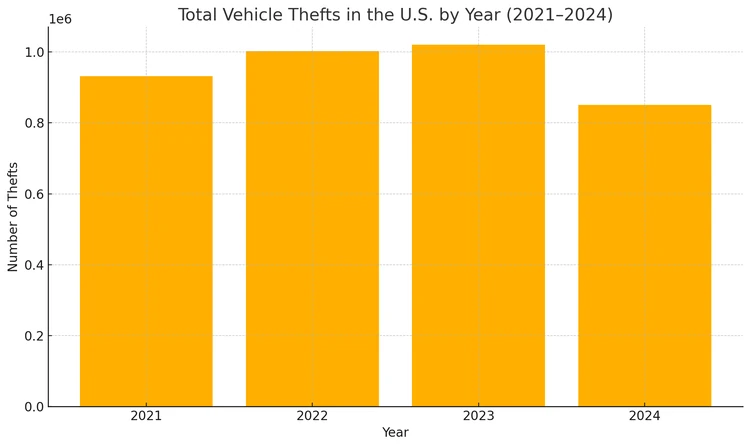
U.S. vehicle thefts dropped 16.6% in 2024, the largest annual decline in over 40 years, as anti-theft measures and improved parts supply curbed incentives for car thieves.
Hyundai and Kia thefts fell by 37.5% after the companies rolled out software updates and security improvements for models lacking immobilizers.
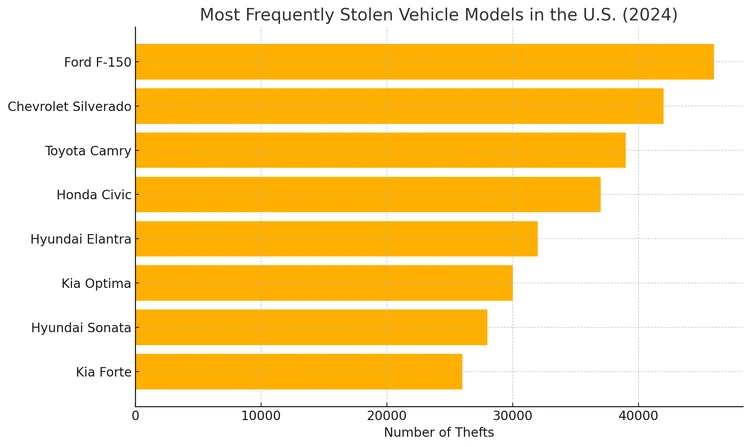
Despite the decline, popular models like the Ford F-150 and Honda Civic remain top targets, and cities like Washington, D.C. still report high theft rates.
Details
Vehicle thefts in the United States fell dramatically in 2024, marking the steepest annual decline in over four decades, according to new data from the National Insurance Crime Bureau (NICB).
The drop comes as automakers, particularly Hyundai and Kia, ramped up anti-theft measures, and the market for stolen car parts cooled amid easing supply chain constraints.
Total vehicle thefts nationwide plummeted 16.6% to 850,708 in 2024, down from a record 1.02 million thefts in 2023. Experts credit improved security features, enhanced law enforcement efforts, and a less lucrative black market for car parts as key factors driving the decline.
Hyundai, Kia lead the turnaround
Hyundai and Kia, which had dominated the list of most stolen vehicles in recent years due to their lack of engine immobilizers in certain models, played a major role in the turnaround. Viral social media trends like the “Kia Boys” had fueled a surge in thefts of these cars, especially among entry-level models.
However, thefts of Hyundai and Kia vehicles fell by approximately 37.5% in 2024, NICB data show. Hyundai Motor America reported that 68% of vulnerable vehicles have now received anti-theft software upgrades, ignition cylinder protectors, or reimbursement for theft-related costs. The measures appear to be working, although four Hyundai and Kia models still landed among the top 10 most stolen vehicles last year.
Changing economics of car theft
The pandemic-era spike in vehicle thefts was largely driven by soaring prices for both new cars and replacement parts amid global supply shortages. But as inventories rebounded in 2024, the incentive for car stripping and resale declined.
“With more parts and vehicles available, the economic allure of stealing cars has weakened,” said Art Wheaton, a transportation expert at Cornell University. “Thieves are less likely to take the risk if the black market payout isn’t worth it.”
Regional trends and hotspots
Several states saw dramatic drops in car thefts. Washington state led the pack, while Nevada, Nebraska, Oregon, and Colorado also posted significant declines.
Despite the nationwide improvement, some regions remain hotspots. Washington, D.C. recorded the highest vehicle theft rate, with 842 thefts per 100,000 residents, though that figure still reflected an 18% year-over-year decrease. California and New Mexico followed, each reporting theft rates around 460 per 100,000 people.
Among the most commonly stolen vehicles were high-volume models like the Ford F-150, Chevrolet Silverado, Toyota Camry, and Honda Civic, which remain perennial targets simply due to their ubiquity.
Law enforcement and policy impact
Experts also point to enhanced law enforcement strategies as playing a role in the downturn. “Targeted operations to disrupt organized theft rings have made a real difference,” said Alex Piquero, a criminologist at the University of Miami.
The Council on Criminal Justice noted that shrinking black-market demand, both domestically and overseas, has likely helped slow theft rates. Combined with technological improvements and greater public awareness, officials are hopeful the trend will continue.