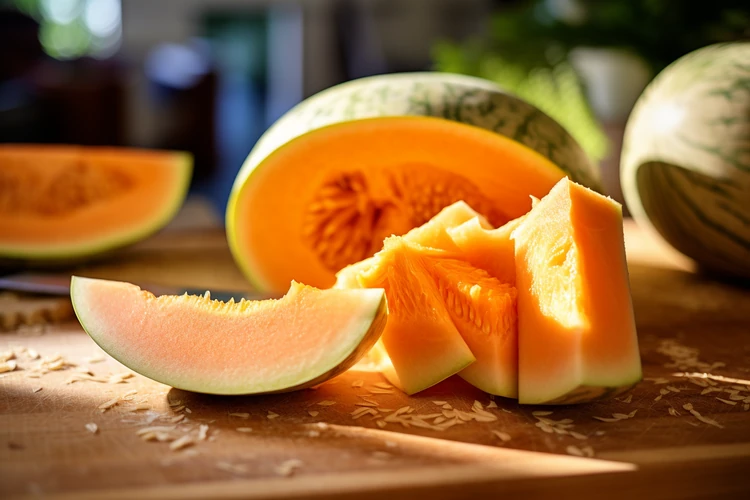

The Centers for Disease Control and Prevention (CDC) and the Food and Drug Administration (FDA) are warning consumers about a new salmonella outbreak from contaminated cantaloupe.
Currently, both whole cantaloupes and pre-cut cantaloupes have been linked to the spread of salmonella, and the outbreak has reached 32 states across the U.S, with 99 total illnesses.
Since the outbreak started on November 17, 45 people across the country have been hospitalized as a result of infection, and two deaths have been reported in Minnesota.
What brands to avoid
Here are the brands and types of cantaloupe that have been linked to the salmonella outbreak, and that consumers should continue to avoid:
Malichita brand whole cantaloupes
Rude brand whole cantaloupes
Whole cantaloupes with stickers that read “4050” or “Product of Mexico/produit du Mexique”
Vinyard brand pre-cut cantaloupes, including: melon medleys, fruit medleys, cantaloupe cubes (sold between October 30, 2023 and November 10, 2023)
Whole cantaloupe and pre-cut cantaloupe bought at ALDI stores (sold between October 27, 2023 and October 31, 2023)
Freshness Guaranteed brand cantaloupes
RaceTrac brand pre-cut cantaloupes
Five states have had the largest number of salmonella cases: Minnesota, Arizona, Wisconsin, Ohio, and Missouri.
However, other states involved in the outbreak include: Arkansas, California, Colorado, Georgia, Iowa, Illinois, Kentucky, Massachusetts, Maryland, Mississippi, Michigan, North Carolina, Nebraska, New Jersey, Nevada, New York, Oklahoma, Oregon, Pennsylvania, Rhode Island, South Carolina, Tennessee, Texas, Utah, Virginia, and Washington.
What to do next
Retailers across the country have recalled the contaminated fruits from their shelves.
To ensure consumers' health and safety, both the FDA and CDC encourage consumers to check the items they have in their homes, including in the freezer. Recalled products shouldn’t be eaten, and should instead be thrown away or returned to the retailer where they were purchased.
On top of that, all areas that have touched the contaminated fruit should be properly cleaned and disinfected. Other foods that have touched the affected fruit should also be thrown away and not eaten.
Typically, it takes consumers anywhere from six hours to six days after eating contaminated food to start experiencing salmonella-related symptoms.
While salmonella infections are common, consumers should contact their healthcare providers if the symptoms become severe. This includes diarrhea for more than three days that’s not improving, vomiting that won’t stop, dehydration, bloody diarrhea, or a fever of 102.