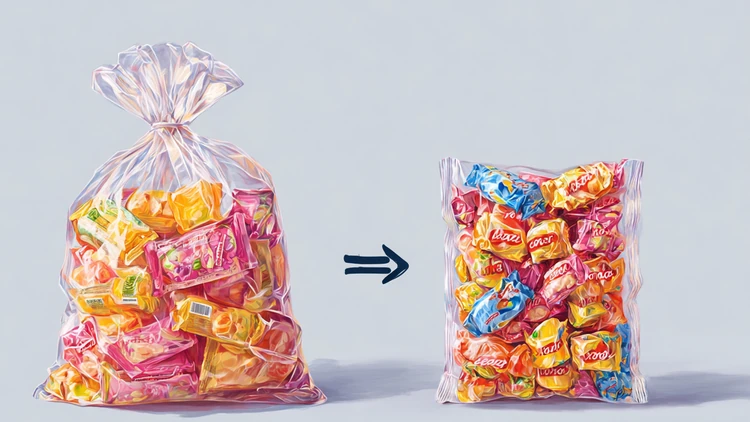

Legislation targets “shrinkflation” — companies selling smaller products for the same price
Bill would require clear packaging changes or labels when product sizes are reduced
Consumer groups back the measure, citing inflation pressures on families
Representative Lou Correa (D-Calif.) on Thursday introduced the Deceptive Downsizing Prohibition Act of 2025, a bill aimed at stopping corporations from quietly shrinking product sizes while charging the same price.
Correa said the practice, commonly known as “shrinkflation,” cheats shoppers who expect to receive the same amount of goods for their money. “From food, to household goods, to personal care products, I continue to hear from my constituents … paying the same amount of money for much less product,” Correa said. “Let’s call it what it is: deceptive downsizing.”
The measure would make it unlawful for companies to keep identical or similar packaging if the product has been reduced in size, unless the label clearly warns consumers about the smaller quantity. The bill gives the Federal Trade Commission the authority to enforce the new rules.
Consumer advocates praised the proposal. “Healthy markets require transparency,” said National Consumers League Vice President of Public Policy, Telecommunications, and Fraud John Breyault. “We appreciate that Congressman Correa is leading the charge on this commonsense policy. Consumers deserve to know if they will receive less product than they expect.”
“Consumers should not be misled when they open a package of their favorite food to find that the bag is filled with more air than product,” said Ruth Susswein of Consumer Action. Lisa Gilbert of Public Citizen called the practice “a clear attempt to rip off consumers,” while John Breyault of the National Consumers League said, “Healthy markets require transparency.”
The bill has support from Representatives Cleo Fields (D-La.), Jonathan Jackson (D-Ill.), Hank Johnson (D-Ga.), Jesús “Chuy” García (D-Ill.), and Eleanor Holmes Norton (D-D.C.). Jackson said the measure would protect workers and families in cities like Chicago, while Norton added: “Shrinkflation is the ultimate scam … there is no greater insult to a consumer’s intelligence than to charge the same price for smaller quantities of essential items.”
Correa previously introduced a version of the bill in the 118th Congress, but it did not advance.
What it means for consumers
Transparency: Companies would be required to either change packaging or add clear notices if product sizes shrink.
Protection: The FTC would have power to fine violators, making it riskier for corporations to mislead shoppers.
Awareness: Advocates say shoppers should check net weight labels carefully, but this law would make it easier to spot downsized products at a glance.
Shrinkflation explained
What it is:
Shrinkflation happens when companies quietly reduce the size or weight of a product — a bag of chips, a roll of paper towels, even a tube of toothpaste — while charging the same price or more. The packaging often looks nearly identical, making it harder for shoppers to notice.
Why companies do it:
Manufacturers say they face higher costs for ingredients, labor, and shipping. Instead of raising prices outright, some reduce package sizes. Critics call it deceptive because shoppers often don’t realize they’re paying more for less.
Examples consumers may recognize:
Snack bags with more air and fewer chips
Cereal boxes that look the same but contain fewer ounces
Toilet paper rolls with fewer sheets per roll
Personal care items, like soap or shampoo, in smaller bottles that cost the same
How to spot it:
Always check the net weight or unit count on the package, not just the box size
Compare the price per ounce or unit, usually listed on store shelf tags
Watch for “new look, same great product” labels — sometimes used when sizes change
The bottom line:
Shrinkflation makes it harder to stretch household budgets. Consumer advocates say the Deceptive Downsizing Prohibition Act would help shoppers make clearer choices by requiring companies to flag downsized products right on the label.