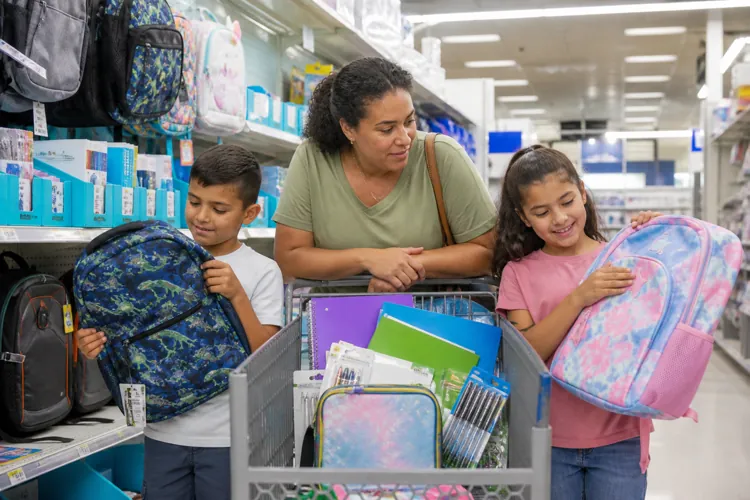

Nearly two-thirds of back-to-school shoppers had already started buying school supplies by early July, continuing a trend toward earlier shopping.
Price-conscious consumers are waiting for discounts, spreading purchases over time, and buying only essentials to stretch their budgets.
Major summer sales events from Amazon, Walmart, and Target have become key drivers of early back-to-school spending.
Nearly two-thirds (62%) of consumers had already begun buying school supplies by early July, according to the National Retail Federation's annual survey with Prosper Insights & Analytics.
While that is slightly below last year's 67%, it remains well above the 55% who had started shopping by the same point in 2024, suggesting that families are continuing to shift their purchases earlier in the summer.
The earlier start reflects a familiar theme for consumers in 2026: affordability.
"Affordability is a concern for families and a top priority for retailers as we enter the back-to-school season," said NRF Chief Economist and Executive Director of Research Mark Mathews. "Shoppers are keeping value front and center as they look for ways to make their dollars go further."
Waiting for better deals
Even shoppers who have started buying aren't necessarily filling their carts all at once.
Among consumers who have not yet purchased at least half of their school supplies:
46% say they are waiting for the best deals before completing their shopping.
23% are spreading purchases over time to better manage their budgets.
47% plan to buy only the essentials before school starts and replenish supplies throughout the year as needed.
The strategy reflects the financial pressures many households continue to face, including higher prices and tighter budgets.
Summer sales reshape shopping calendar
Retailers have increasingly moved major promotions into June and July, giving shoppers more opportunities to save before the traditional back-to-school rush.
More than half (54%) of consumers said they shopped June promotional events — including Amazon Prime Day, Walmart Deals, and Target Circle Deal Days — specifically for school-related purchases.
Those events have helped extend what was once a late-summer shopping season into a months-long period of bargain hunting.
Spending remains resilient
Despite concerns about inflation and household budgets, families continue to prioritize education-related purchases.
NRF recently projected that total back-to-school and back-to-college spending will reach a record $146.8 billion this year, including $43.3 billion for K-12 students and $103.5 billion for college students. Analysts say parents are often willing to cut back in other areas before reducing spending on school needs.
For consumers, the survey suggests that patience may continue to pay off. With many retailers expected to roll out additional promotions throughout the summer, shoppers waiting for deeper discounts could still find opportunities to save before classes begin.