
Retail pricing tricks are everywhere. They can quietly influence how much you spend without you even realizing it.
Question every deal. Compare unit prices, check price history, and don't assume the biggest discount is the best value.
Slow down before you buy. A quick price check — or waiting 24 hours — can help prevent impulse purchases.
Most shoppers assume they make purchasing decisions based on price, quality, and need.
Retailers know it's rarely that simple.
For decades, marketers have studied how consumers think about prices, discounts, and value. The result is a shopping experience carefully designed to encourage larger purchases, faster decisions, and fewer comparisons.
Many of these pricing strategies aren't deceptive — they're simply rooted in psychology. But understanding how they work can help you make better buying decisions and avoid spending more than you intended.
Here are six of the most common retail pricing tricks, and more importantly, how to beat them.
1. The $9.99 illusion
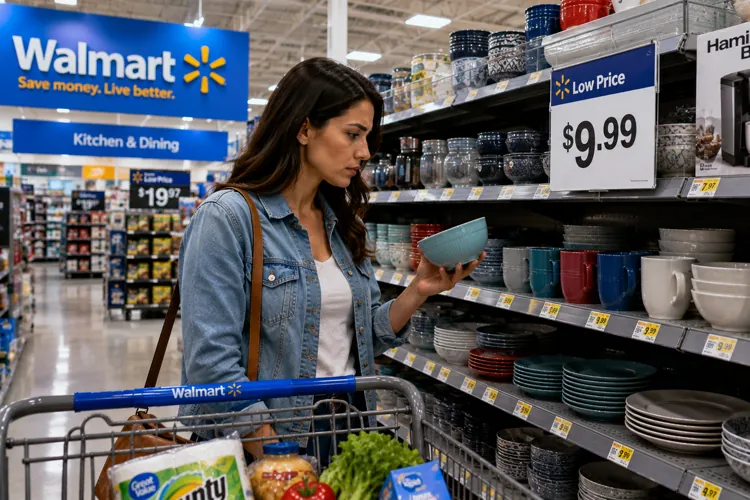
Why does so much merchandise cost $9.99 instead of $10? Because it works.
Behavioral economists call it left-digit bias. Your brain tends to focus on the first number it sees, making $9.99 feel meaningfully less expensive than $10, even though the difference is just one penny.
The strategy is so effective that, according to a recent Wall Street Journal report, some manufacturers are redesigning products, simplifying packaging, or reducing quantities just to keep prices below important psychological thresholds like $10.
Consumer tip: Ignore the last two digits. Ask yourself, "Would I still buy this if it cost exactly $10?" That simple question helps shift your attention from the price tag to the product's actual value.
2. "Originally $79.99 — Now Only $49.99"
Sale signs grab attention because they create the feeling that you're saving money.
But the size of the discount doesn't always tell the whole story.
Some retailers compare today's price to the manufacturer's suggested retail price (MSRP), while others compare it to a previous selling price that may have been in effect only briefly.
While that doesn't necessarily mean the sale isn't real, it just means the advertised discount may not reflect what shoppers typically pay for the item.
For example, you find a patio umbrella advertised as "Originally $79.99, Now $49.99." On the surface, it looks like you're saving a quick $30. But the reality is some stores will sell it for $49.99 for most of the summer, only to raise the price to $79.99 a week before the sale.
Consumer tip: Before purchasing a higher-priced item, be sure to spend a minute checking the price history online. Many products go on sale several times a year, and today's "lowest price ever" may not actually be the lowest.
3. Free shipping isn't always free
You see it all the time, "Spend $50 and get free shipping." It's one of the most effective promotions in online retail.
Instead of paying an $8 shipping fee, many shoppers will happily add a $15 item to their cart just to qualify for free delivery, even though they've spent more money overall.
Retailers understand that consumers often dislike paying shipping charges more than they dislike buying another product.
Consumer tip: Before adding an extra item, compare the cost of shipping with the amount you're about to spend. Sometimes paying for shipping turns out to actually be the cheaper choice.
4. The 'good, better, best' setup
Ever notice that many products come in three versions?
A basic model.
A mid-range model.
A premium model.
That's rarely an accident. Retailers know many shoppers naturally gravitate toward the middle option because it feels like the smartest compromise between price and quality.
Sometimes the highest-priced version only exists to make the middle option appear like the better deal.
Consumer tip: Decide which features matter the most before you ever look at the prices. That way you're choosing based on your needs — not on how the options are presented.
5. Checkout aisles are designed for impulse buying
Whether it’s candy bars, phone chargers, travel-size toiletries, gift cards, or seasonal decorations, these items aren't sitting near the register by chance.
They're inexpensive enough that many shoppers won't think twice before tossing one into the cart while waiting in line. Retailers count on these small purchases adding up over thousands of customers every day.
Consumer tip: Before grabbing anything near the checkout, ask yourself one question: "Was I planning to buy this before I got in line?" If the answer is no, it's safe to assume it’s an impulse purchase designed to drain your budget.
6. Limited-time offers create urgency
"Ends tonight."
"Only two left."
"Flash Sale."
Retailers know that urgency reduces comparison shopping. When shoppers fear missing out on the deal, they're less likely to research competitors or think carefully about whether they actually need the item.
Sometimes these countdowns are indeed legitimate. But most of time you’ll see similar (or identical) promotions return regularly.
Consumer tip: Unless you're buying something truly scarce or time-sensitive, give yourself at least 24 hours before making a larger purchase. A short waiting period often separates genuine needs from emotional buying decisions.
The bottom line
Retailers aren't just competing on price — they're competing for your attention and influencing how you perceive value.
Most of these pricing strategies aren't deceptive. In fact, they're widely used because they work.
But knowing the tactics that retailers use gives you, the consumer, a solid advantage.
The next time you shop, don't focus solely on the price tag. Compare unit prices, question dramatic discounts, resist those unnecessary add-ons, and avoid making rushed decisions simply because a countdown timer tells you to.