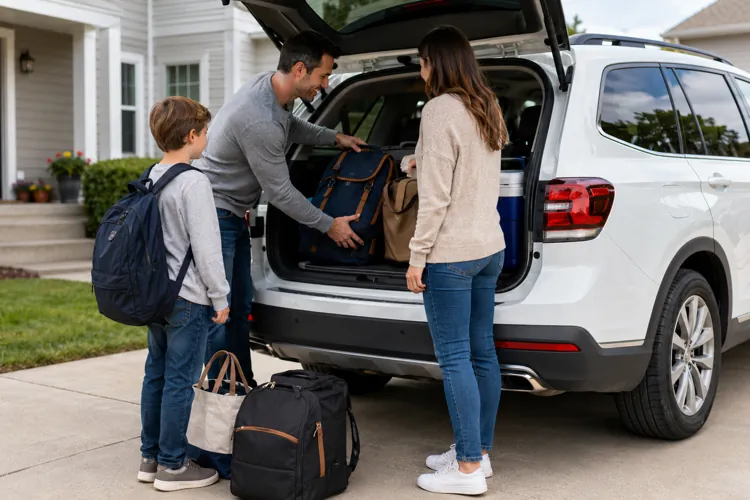

Many families are buying larger SUVs than they need, increasing costs for insurance, fuel, maintenance, and repairs.
Look beyond the monthly payment and compare the total cost of ownership before choosing your next family vehicle.
Don't overlook the minivan — it often offers more practical space and better value than a three-row SUV.
The American family has gotten smaller, but our vehicles have gotten bigger.
A new study from Bumper found that only 10% of households have three or more children — the type of family that originally made the minivan a household staple. Yet 44% of respondents drive an SUV, while just 5% drive a minivan. Even more surprising, 63% said their ideal family vehicle is an SUV, compared with just 12% who chose a minivan.
That preference may be costing families far more than they realize.
Buying the biggest or trendiest vehicle isn't always the smartest financial move. Before you sign on the dotted line, here's how to make sure you're buying the right vehicle for your family, and not just the one everyone else seems to want.
Buy for your family today — not the one you might have someday
It's easy to justify buying a three-row SUV "just in case."
But if you have one or two children and rarely travel with extra passengers, chances are you'll spend years paying for seats you seldom use.
Ask yourself these questions:
How often is every seat occupied?
Do you really need a third row every week or only just a few times each year?
Would renting a larger vehicle for vacations cost less than owning one year-round?
The answers may surprise you.
Look beyond the monthly payment
Many shoppers compare only the sticker price or monthly payment and fail to look at the big picture.
Instead, compare the total cost of ownership, including:
Insurance premiums
Fuel costs
Tire replacement
Maintenance
Registration fees
Those ongoing expenses can add thousands of dollars over the life of the vehicle.
Pro tip: Before buying, get insurance quotes for several models. The difference between two similar vehicles can easily add up to hundreds of dollars per year.
Don't underestimate the humble minivan
For years, minivans have battled an image problem, but practicality hasn't gone out of style.
Having raised three kids, I can vouch for the sliding doors making it so much easier to load and unload children in tight parking spaces.
Plus, most minivans offer more usable cargo space than many three-row SUVs, while providing similar seating capacity. They also tend to be easier and less expensive to repair because they're built on car-based platforms rather than truck-based designs.
If functionality tops your priority list, a minivan deserves a strong second look.
Separate wants from needs
The Bumper survey found an interesting contradiction.
When people were asked what matters most when shopping for a family vehicle, seating capacity, fuel economy, and price topped the list. Yet the vehicle that performs well in those categories — the minivan — remains one of the least popular choices.
That suggests many buyers are making emotional decisions instead of financial ones.
There's nothing wrong with buying a vehicle you love. Just make sure you're paying for features you'll actually use.
Think about the money you'll keep
Every extra dollar spent on a vehicle is money that can't be saved, invested or used for other family financial goals.
If a less expensive vehicle meets your needs just as well, the savings could help fund a family vacation, pay down debt, boost your emergency fund, or add to a college 529 plan.
That's a trade-off worth considering before you head to the dealership.