
HHS Secretary Robert F. Kennedy Jr. said Tuesday that the Cyclospora outbreak is “under control” and that investigators have identified its source.
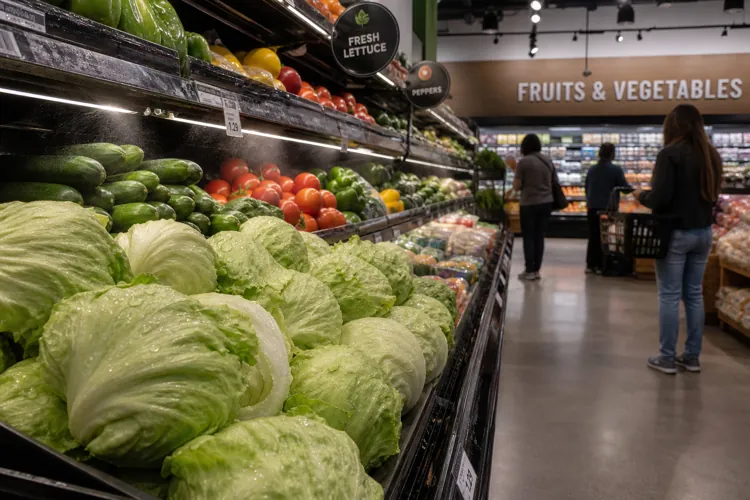
Federal health officials continue to link a five-state cluster to iceberg lettuce supplied by Taylor Farms de Mexico, despite the FDA withdrawing a positive laboratory result as a false positive.
The lettuce recall remains in effect, and consumers should discard affected products or return them for a refund.
Health and Human Services Secretary Robert F. Kennedy Jr. said Tuesday that the nation’s unusually large Cyclospora outbreak is under control, even as federal and state health officials continue investigating thousands of reported illnesses.
“We have the outbreak under control,” Kennedy said during a July 21 press briefing. He said federal investigators had conducted “extensive forensics” and epidemiological work, identified the outbreak’s source, and obtained recalls from the companies involved.
Kennedy’s comments follow several confusing developments involving iceberg lettuce supplied by Taylor Farms de Mexico.
One cluster linked to Taco Bell
The Centers for Disease Control and Prevention (CDC) and Food and Drug Administration (FDA) say epidemiological and product-tracing evidence links a five-state cluster of illnesses to shredded iceberg lettuce served at some Taco Bell restaurants in Indiana, Kentucky, Michigan, Ohio, and West Virginia.
On July 17, Taylor Farms de Mexico recalled all iceberg lettuce sourced from central Mexico. The recall covers products distributed to restaurants and other food-service customers as well as Marketside-brand iceberg salad and shredded lettuce sold at Walmart.
Taco Bell told regulators that its restaurants stopped using lettuce from the supplier on July 17.
False positive did not end the recall
The FDA initially reported that a lettuce sample from Taylor Farms de Mexico had tested positive for Cyclospora. However, agency laboratory specialists reviewed the results again and determined that the finding did not represent a true positive.
As of July 19, the FDA said it had no confirmed positive product samples.
That reversal does not mean the recall has been canceled or that investigators have cleared the lettuce. The FDA said its traceback investigation found that a single supplier — Taylor Farms de Mexico — provided shredded iceberg lettuce to Taco Bell locations where customers reported eating before they became ill.
The CDC similarly says epidemiological and traceback evidence implicates the lettuce. Federal officials continue to advise consumers not to eat the recalled products while the investigation proceeds.
Kennedy said Tuesday that cuts to the CDC’s FoodNet surveillance program had not prevented investigators from responding to the outbreak. He said the reductions involved redundant surveillance and that states were still conducting the necessary investigative work.
Thousands of cases under review
The CDC reported last week that it had received reports of 1,645 confirmed domestically acquired cases since May 1. The agency was also reviewing more than 5,100 additional cases to determine whether they met its definition for domestically acquired cyclosporiasis.
Among the confirmed patients for whom information was available, 141 — about 9% — had been hospitalized. No deaths had been reported.
Federal officials caution that state and national numbers may differ because some states include both probable and confirmed cases. The CDC’s national surveillance figures include only confirmed illnesses.
Not every case reported nationally is connected to Taylor Farms lettuce or the five-state restaurant cluster. The CDC is investigating several clusters and illnesses that may have different food sources.
What consumers should do
Cyclospora is a microscopic parasite generally spread through food or water contaminated with feces. The most common symptom is frequent, watery diarrhea. Other symptoms may include stomach cramps, nausea, fatigue, loss of appetite, weight loss, bloating, and increased gas.
Symptoms usually begin about one week after exposure, although the incubation period can range from two days to two weeks. Without treatment, the illness can last for weeks and may appear to improve before returning.
Consumers should check the FDA recall notice for affected package sizes, dates, and lot codes. Recalled lettuce should be discarded or returned to the place of purchase.
The FDA also recommends cleaning and sanitizing containers and surfaces that touched the lettuce. Washing contaminated produce may reduce some contamination but is not considered sufficient to eliminate Cyclospora.
Anyone who develops persistent watery diarrhea, particularly after eating iceberg lettuce, should contact a healthcare provider and mention the possible exposure. A specific laboratory test is generally needed to diagnose cyclosporiasis, which can be treated with prescription antibiotics.