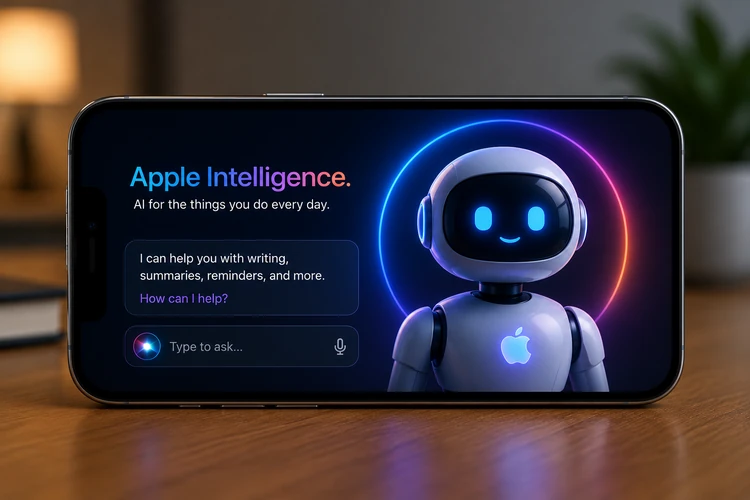

Apple is bringing artificial intelligence directly to the iPhone, integrating AI features across apps and system functions rather than offering a standalone chatbot.
Many AI tasks will run on the device itself, helping protect user privacy while delivering faster responses and personalized assistance.
The rollout could reshape how consumers interact with smartphones, making routine tasks more automated and potentially increasing demand for newer iPhone models.
Apple's long-awaited entry into consumer artificial intelligence is arriving on the iPhone, one of the company's most significant software shifts since the introduction of Siri more than a decade ago.
The company has begun rolling out what it calls "Apple Intelligence," a suite of AI-powered features designed to help users write messages, summarize notifications, edit photos, and manage everyday tasks more efficiently. Unlike some competitors that have focused on standalone AI chatbots, Apple is embedding AI capabilities throughout its operating system and applications.
For consumers, the most immediate impact may be convenience. AI tools can help rewrite emails, generate text, organize information, and surface relevant content across apps. The technology is also expected to improve Siri's ability to understand context and handle more complex requests.
Emphasis on privacy
Apple says a key difference in its approach is its emphasis on privacy. Many AI functions run directly on the device using Apple's custom silicon, reducing the amount of personal information that must be sent to cloud servers. For more demanding tasks, Apple says it uses a system called Private Cloud Compute, designed to provide additional processing power while maintaining security protections.
The introduction of AI could also influence purchasing decisions. Some advanced features require newer iPhone models equipped with the latest processors, potentially encouraging users with older devices to upgrade.
Industry analysts view the move as Apple's response to a rapidly evolving competitive landscape, with Google, Microsoft, Samsung, and other technology companies investing heavily in generative AI.
By integrating AI into the iPhone ecosystem, Apple is betting that consumers will value practical, everyday assistance over standalone AI experiences. Whether the strategy succeeds will depend on how useful the new features prove to be in daily life.