


Key insights
Pods typically cost less than traditional movers but offer fewer protections and services.
Jump to insightPods for local moves can cost around $500, while professional movers cost over $1,000.
Jump to insightLong-distance moves add complexity, delivery-time uncertainties, access challenges and regulations.
Jump to insightPODS vs. movers: Key differences
Using a moving container, such as PODS, is essentially an assisted DIY move. If you hire a traditional moving company, they handle most tasks for you. Moving companies offer a range of services, up to a full-service experience, while moving containers offer flexibility and lower costs.
Main differences between professional movers and pods
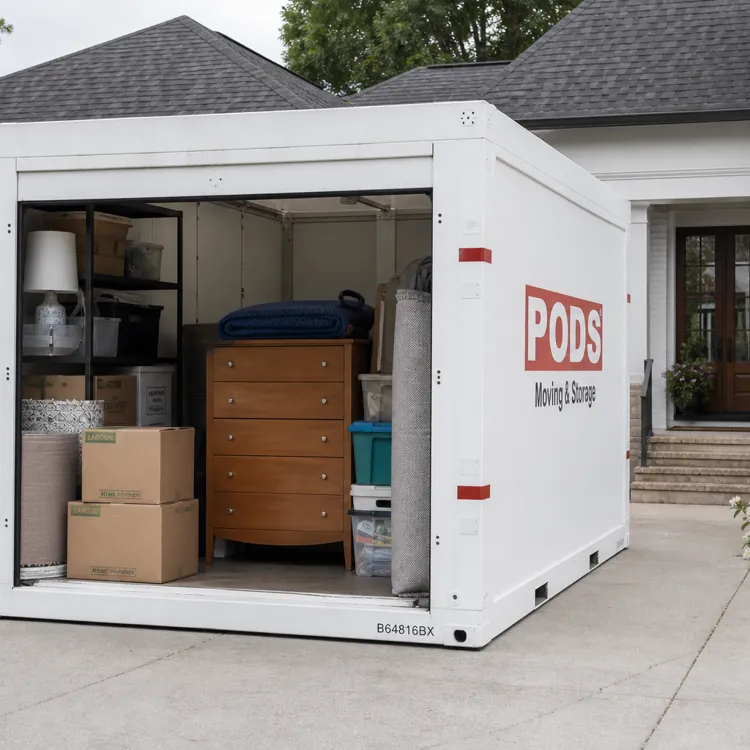
Pods, also called portable on-demand storage or moving containers, are a popular alternative to traditional professional moving companies. The flexibility and simplicity make it attractive for many. However, there are downsides to using a pod to consider.
| Factor | Pods | Professional Moving Companies |
|---|---|---|
| Costs | Lower upfront costs, but monthly fees add up quickly. | Higher upfront costs. |
| Labor | You are responsible for all loading and unloading. | Loading and unloading are usually included. |
| Packing responsibility | You are responsible for packing. | An optional service, usually offered for additional fees. |
| Scheduling | Fairly flexible and quick to schedule locally. Longer shipping can take more time to arrange. | Varies widely by company. |
| Transit times | Varies widely by company. | Varies widely by company. |
| Storage | Quickly arranged for additional shipping fees and increased monthly rates. | Varies widely between carriers. |
| Damage risks | Dependent mostly on your packing skills. Insurance not often available outside of storage facilities. | Varies by services performed and carrier. Insurance usually available. |
| Theft risks | Location-dependent, with storage facilities generally lower. | Varies by carrier and how long your items are on the road. |
| Permits | Generally not needed if the moving container doesn’t need to be left on the road. Some HOAs, apartments and townhomes may require permissions. | Carrier generally handles any required permits. |
Regulation differences between professional movers and pods
Traditional moving companies are highly regulated, whereas pods are treated more like freight, so the regulations differ.
Moving containers like pods are typically regulated by what materials are prohibited to store inside them, such as flammable liquids, rather than a focus on protecting the person renting the container.
Traditional moving companies face multiple federal and state regulations. For example, in North Carolina, traditional moving companies must charge by the hour for moves up to 35 miles and by weight for any move over 35 miles. Federal rules cover safety, salvage, liability, dispute resolution and even what items must be on the quote and invoice for interstate moves.
Pods vs. movers local move cost breakdown
Local moves are defined differently by almost every mover. Some call any mileage under state regulations local (over a certain mileage is charged per pound), while others define moving within the same zip code as local. Since moving containers and portable on-demand storage (pods) are usually classified as freight, they are regulated differently and often have simpler pricing.
Price examples for professional movers and pods
We got quotes for a moving container and for traditional moving for an in-state move in North Carolina to highlight differences in moving costs. Bear in mind that factors like the time of month, the type of furniture being moved, weight, optional services and distance will affect the exact costs of your move.
What’s included in the pricing for pods vs. professional movers
Traditional moving is regulated differently from container moving, with professional movers facing more regulations and required to include more line items in quotes.
Traditional movers also offer more optional services, such as packing and packing materials. Moving container costs are generally lower up front but offer far fewer services.
» READ: How much does a moving truck cost?
| Item | Pods-style moving container | Professional Movers |
|---|---|---|
| Base rate | ||
| Container or truck | ||
| Packing labor | ||
| Packing supplies | ||
| Loading and unloading | ||
| Insurance | ||
| Storage | ||
| Fuel surcharges and delivery fees |
Pods vs. movers for long-distance
Long-distance moves face extra regulations, with pricing often restricted and charged per pound. While moving containers don’t have as many regulations, long-distance moves, especially those across state lines, do face more hurdles than local moves. Price differences between carriers often depend on timelines and extra services.
Delivery windows and transit times
Very few moving companies are willing to give you a firm delivery date for long-distance moves. Usually, there is a few-day window, but move times can range anywhere from three days to three weeks on average. Distance, traffic, weather and the level of special care your items need all affect timelines.
With moving containers, multiple pods may be loaded onto one truck, increasing transit times for long-distance moves. However, the ease of delivering pods to storage facilities adds more flexibility to scheduling to fit your needs.
Storage needs between homes
Pods offer more flexibility in storage and last-minute changes. If the home you are moving to faces a delay, it’s simple to send a pods unit to storage or keep it in your yard for a week, a month or more. Moving companies usually have less flexibility with storage, and the need to unload and reload trucks can quickly add costs.
Pods parking challenges and permits
Getting a moving container to your property may be more challenging than you think. Because portable moving containers must be lifted onto and off a truck, height, side clearance and the truck’s maneuvering space must be considered.
The best moving container companies will be up front about clearance needs. Common requirements include over 13 feet of free space, avoiding power lines and tree branches, a flat, load-bearing surface, and 12 feet of side clearance. For many homeowners, that means the street is the only option.
For moving containers on the street, city permits may be needed. Even in driveways, HOA restrictions may be an issue. Renters in apartments and rental homes will also need their landlord's permission.
How much can you self-load?
Be realistic about how much you can self-load when considering a moving container. Beyond the weight and awkwardness of large items, organization in the container is a concern. Consider these issues when thinking about a pod.
- Large items: Will you have help for items that are too large for one person to safely move?
- Home access: Will you need to move items up or down stairs or via an elevator? Also, many older homes have narrow doors and hallways. Think about the last time you had furniture delivered, and if they had trouble getting things into your home. You’ll have the same issues getting it out.
- Moving container size: If you underestimate the container size you need, you’ll need to rent a second container.
- Organization: A moving container is a bit like a Tetris puzzle. Are you confident you can organize your items to fit securely in the container?
- Weight: How much can you physically lift safely? Do you know how much your belongings weigh so you can stay under container weight limits?
» FIND OUT: How to pack a moving pod
How to choose between pods vs. movers
Choosing between traditional movers and pods requires tradeoffs in convenience, pricing simplicity, insurance protections and scheduling. Pods usually offer more flexibility, but traditional movers offer more complete services.
Identifying moving scams
Moving scams are a large reason for so many regulations placed on traditional moving companies. However, there are also moving container scams. A little due diligence goes a long way to avoid scams. Moving scam red flags include:
- No verifiable DOT registration for interstate movers
- Interstate mover is not registered with the Protect Your Move federal website
- No verifiable physical address for the company
- No verifiable business license
- Lowball estimates with few details on the quote
- No written estimate
- Overly large deposit requirements
- The company does not own its own trucks
- The storage container company does not have its own storage lot
- All five-star ratings on Google and reviews have vague wording
- A large number of complaints
What should a moving company quote include?
Some items on a moving company’s quote are required by law but vary for in-state and out-of-state moves. The basic moving quote items to look for, regardless of the move type, include:
- Binding or non-binding notice: Non-binding quotes are preliminary quotes subject to change if services or conditions (such as the number of floors in the home) change. Most moving companies require detailed inventory lists or video walkthroughs of the home for binding quotes.
- Contact information: Company contact information and details.
- Payment terms: Deposit required, payment types, available financing and payment deadlines.
- Dispute resolution: Details on how disputes are handled.
- Job details: Exactly what services will be included.
- Insurance details: Often called valuation, shipment insurance should detail the insured amount, the deductible and any alternative options, such as $x per-pound coverage.
- Hourly or weight billing: Whether the job is billed hourly or by weight, with details on how time and weight are calculated.
- Schedule: Proposed schedule with days and times for pickup and delivery.
- Location details: Pickup and delivery locations should be specified, along with expected conditions, such as the distance from the road to the home.
- Itemized pricing: Breakdown of pricing by item, such as hourly, mileage, labor and insurance.
- Any extra charges: Notes on extra charges, such as extra costs for individual items weighing over 250 pounds.
What happens if something goes wrong with your move?
Chances are, you know someone who had a problem during their move. While it isn’t an every-move issue, delays, extra charges, damage and lost items do occur. Protection starts with your quote and understanding the carrier’s dispute resolution terms. Reputable companies will have procedures for handling delays and losses.
Reputable moving companies also offer moving insurance and don’t rely on their business liability insurance to protect customers from lost or damaged items. In general, to handle problems, you need to:
- Communicate with your mover immediately about the problem.
- Refer to the agreement terms.
- Document everything.
- Make insurance claims promptly.
- Report suspicious handling of issues to the regulating agency. This is the Federal Motor Carrier Safety Administration (FMCSA) for interstate moves or the appropriate state agency for in-state moves, usually the state Public Service Commission.



FAQ
What are the downsides of using pods?
The downsides of pod-type moving containers include the clearance required for placement, no help with packing or unpacking, no help with loading or unloading and a lack of climate control.
What should you not pack in a pod?
You should not pack anything living, valuable items or hazardous and flammable materials in a pod. Pod companies offer lists of prohibited items.
Can movers keep my stuff?
Moving companies can hold your stuff in some situations if you don’t pay the agreed-upon price. However, moving companies cannot hold your goods hostage to get you to pay new fees not previously agreed upon.
How long can you keep a pod at your house?
How long you can keep a pod at your house depends largely on local ordinances. Generally, most moving storage containers like PODS offer month-to-month rental options so you can keep the pod as long as you need, within local guidelines.
Article sources
ConsumerAffairs writers primarily rely on government data, industry experts and original research from other reputable publications to inform their work. Specific sources for this article include:
- North Carolina Utilities Commission, "Moving 101 - A Consumer's Guide." Accessed May 13, 2026.
- Federal Motor Carrier Safety Administration, United States Department of Transportation, "Search for a Registered Mover." Accessed May 13, 2026.
- Federal Motor Carrier Safety Administration, "What Should You Do If You Have a Dispute With Your Mover?" Accessed May 13, 2026.
- Federal Motor Carrier Safety Administration, "Can Movers Hold Your Stuff Hostage?" Accessed May 13, 2026.